WHAT MAKES AN HONEST OLIVE OIL?
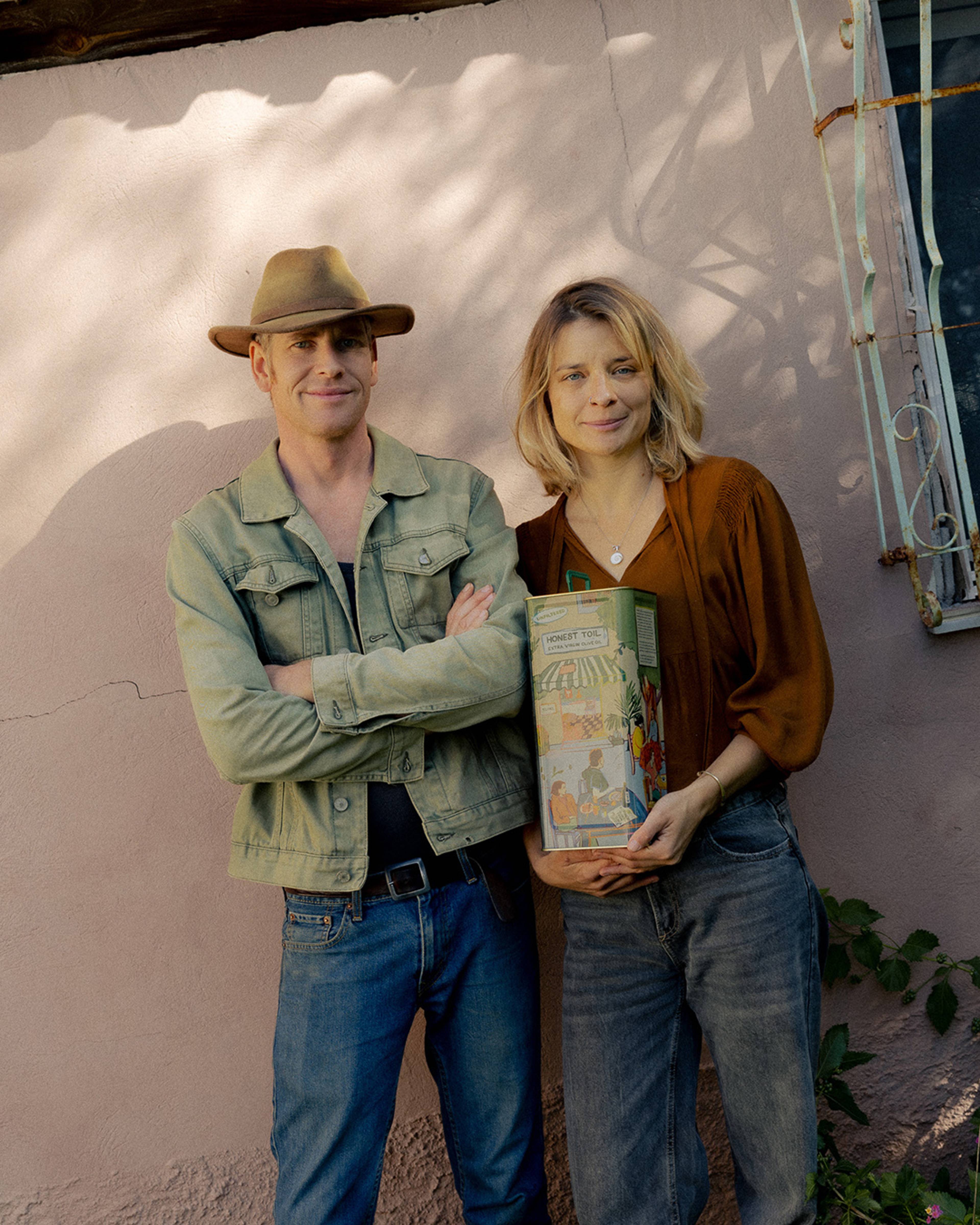
Tom & Juli, founders of Honest Toil. All photography by Sarah Rainer @sarah__rainer
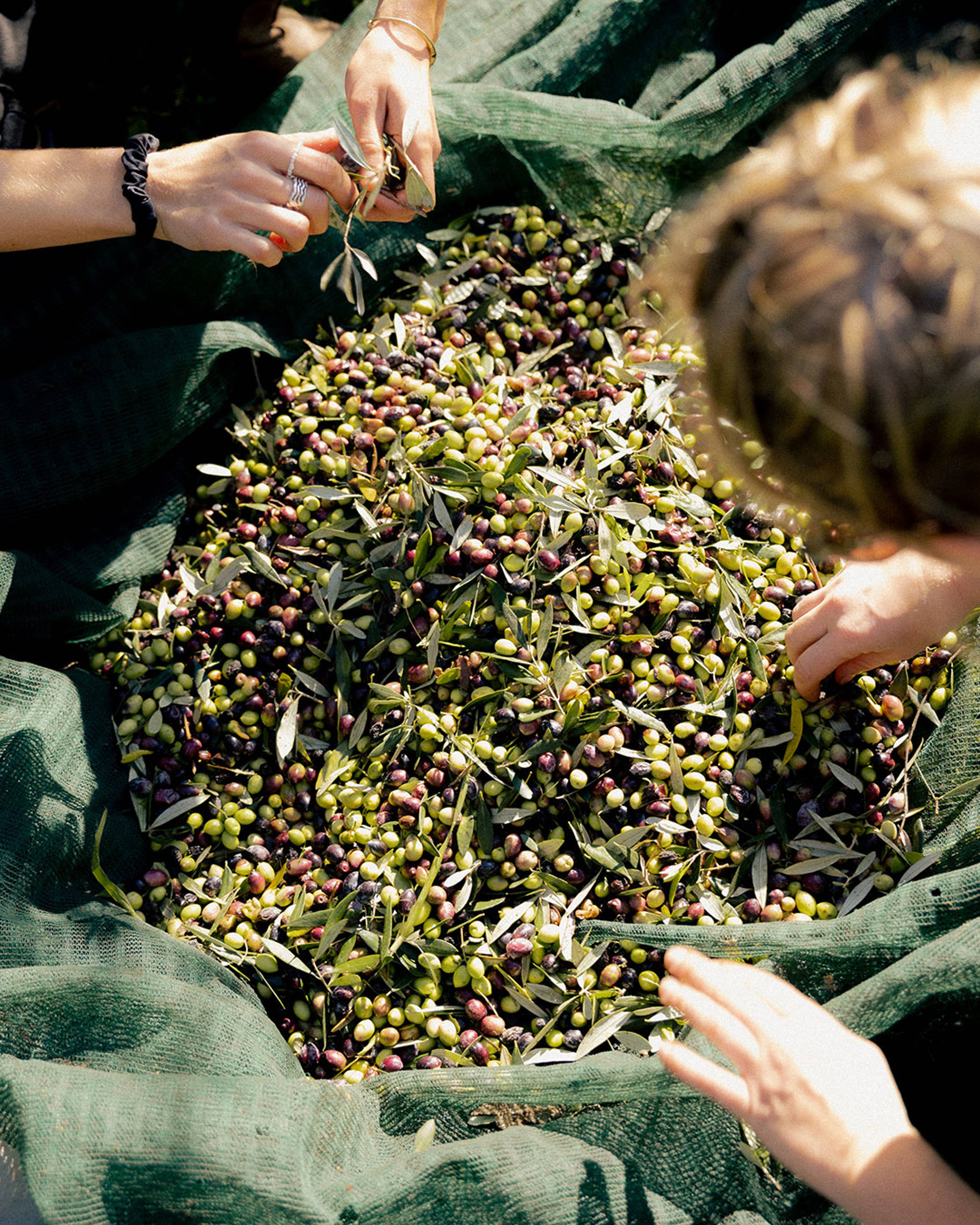
Tom and Juli of Honest Toil reflect on harvest time in Greece and the making of their unfiltered extra virgin olive oil.
The air in the village smells thick of crushed olives, and people hang around longer than they need to – talking, sharing and drinking homebrewed wine while the oil starts to flow.
It is a place where time stretches. Where long, salt-streaked coastlines meet scrappy mountains, and olive trees run in every direction. Not the polished version of Greece, but something more weathered, more real.
For Tom and Juli, this is where Honest Toil began. Not with a business plan as such, but with a harvest. With work that was (and continues to be) muddy, unglamorous and physical.
The idea sparked as they tasted the cloudy, almost neon-green liquid straight from the press, realising that what they were drinking was not just olive oil, but a perfect expression of land and labour.
Today, Honest Toil produces extra virgin olive oil that is unfiltered, unblended, and uncompromisingly fresh, made in small batches in Kyparissia, Greece. From there, it makes its way to the UK, where it’s used by home cooks and chefs across London, appearing on tables everywhere from Holy Carrot to Bubala.
It is not a faceless operation.
“It’s made in a very human manner and by people we know. In our small way, we’re keen to help keep the small-scale village presses alive, which are a real dying breed due to competition from the bigger, more monied industry.”
TOM & JULI, FOUNDERS OF HONEST TOIL
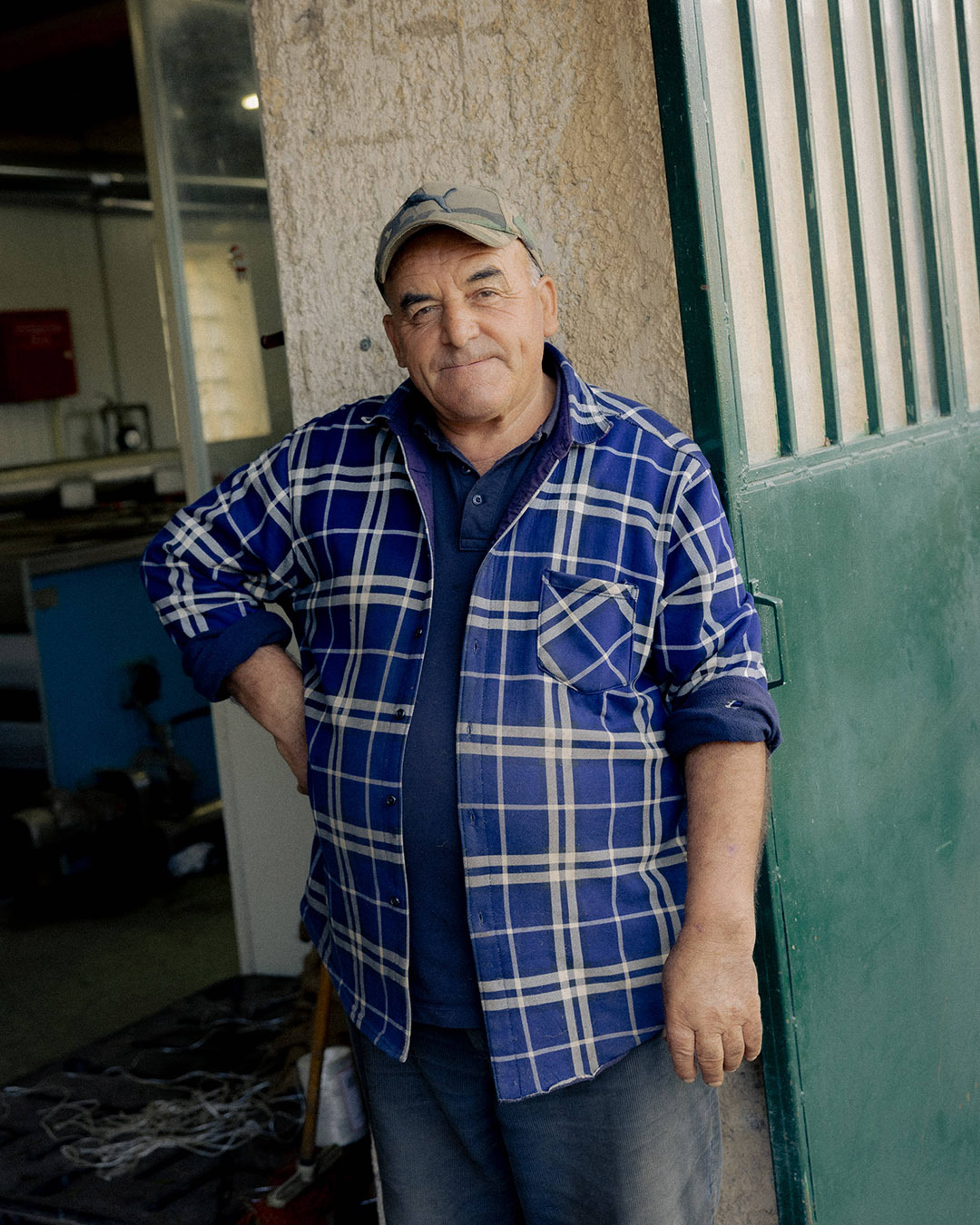
With much of the olive oil on supermarket shelves being blended and processed, with little trace of the people behind it, what’s hard to find is something close and connected to its origin – family-made and true to the tree it came from.
Tom and Juli are at the very heart of Honest Toil, supported by a wider network of neighbours, growers, friends and family.
Alongside their own groves, they work with local small-scale producers, sustaining a way of working that is increasingly rare. One that is rooted in the community, wholeheartedly.
Find Honest Toil Extra Virgin Olive Oil in our stores and on the app.
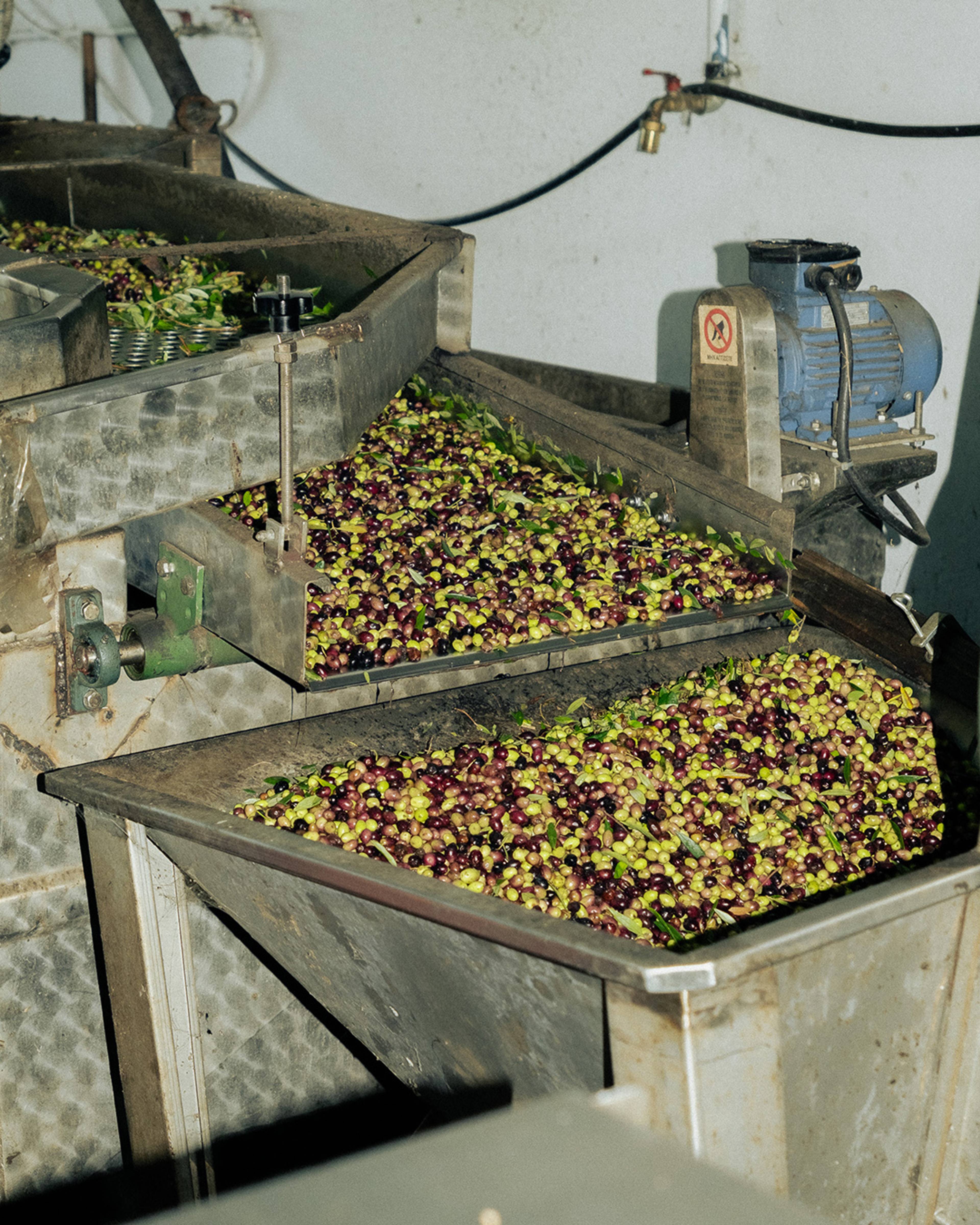
What follows is a conversation with Tom and Juli about place, process, seasonality, and what it really means to make extra virgin olive oil honestly.
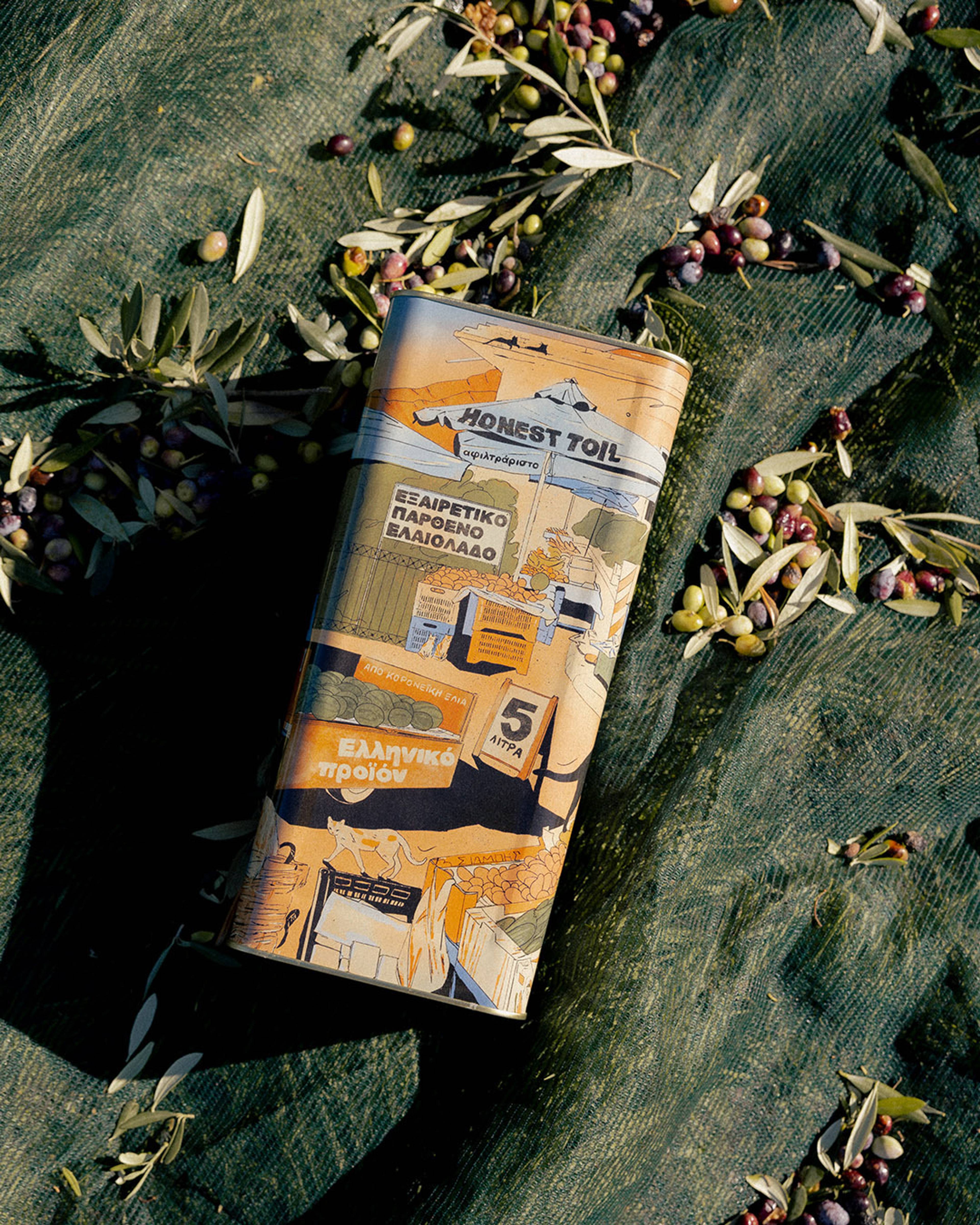
What’s the story behind Honest Toil, and what first inspired you guys to start producing extra virgin olive oil?
We definitely didn’t set out to start an olive oil “brand” – we just found ourselves in Kyparissia roped into an olive harvest and were innocently wowed by the place and the taste. Living here, it’s pretty hard not to get pulled into the olive harvest. Everyone’s involved - from the taverna owner to the village priest to the guy slinging gyros from his shop, and before long we were too.
The first time we tasted the oil straight from the press, unfiltered, cloudy and almost neon green, it was a bit of a revelation. We were floored by this raw, cloudy oil – a direct result of our own work and the soil and trees we’d come to know. We happily agreed to be paid (rather romantically) in oil for our labour. We were totally charmed by the whole thing.
Once we got more oil than you needed for ourselves and friends, we started selling at markets. Tasting like it did, it grew pretty naturally from there, without much more of a plan!
There are quite a few olive oils popping up now that are built more from a concept – branding, positioning, all of that – which is all quite foreign to us. For better or worse, Honest Toil really evolved the other way around.
You’re based in Kyparissia, Greece – what drew you there, and why was it the right place to build Honest Toil?
We arrived in Kyparissia through family and travelling, rather than any plan to make olive oil.
It’s a part of Greece that’s pretty rough around the edges - long stretches of coastline, met by scrappy mountains, olive trees everywhere. Not much of the polished, ‘holiday’ version of Greece you might imagine.
Olive oil production here is amazingly fragmented: the groves are a real patchwork owned and cared for by hundreds of families, most of them producing just enough for themselves and a little extra, and the presses here still run on a cooperative basis. It is definitely not built for efficiency or scale. It all revolves around people and continuing tradition. That felt important to us. So we didn’t choose to keep making the oil here because it’s scalable (or even convenient to be honest). But because it’s made in a very human manner and by people we know. And in our small way, we’re keen to help keep alive the small-scale village presses, who are a real dying breed because of competition from bigger, more monied industry.
How does the landscape and environment shape the flavour of your oil?
The flavour is really a reflection of what has happened in the landscape that year, because everything is done so locally on a real micro-scale, and we don’t blend across harvests.
Kyparissia is (usually!) an optimum micro-climate. The trees sit both close to the sea and on the mountain, so you get a mix of salty air, dry heat, and cooler, wetter winters. But more than anything, it’s the specific season that shapes the oil. A dry year will give you something more intense and bitter; a wetter, warmer autumn can soften things out.
Because everything is done locally, coming from that same network of micro-groves, those conditions are really expressed in the flavour. It’s never exactly the same twice. And that’s kind of the point. It’s a direct expression of that place and the conditions that year. There are probably parallels to be found with wine in that sense – it changes year to year depending on the conditions.
For people who don’t know, does olive oil have a “season” like fruit or vegetables? When would you say it’s at its best?
It does, although most people don’t think of it that way! I suppose because it’s less visible than with fruit or vegetables… but it really is a living product.
Harvest starts in October or November and can occasionally run through to January, but we usually pick earlier. The oil is at its most vibrant straight after harvest through to spring. That’s when you get the full intensity. It’s almost electric: cloudy, almost lurid green, peppery and grassy. It’s punchy, and it can be a bit of a shock if you’ve only ever had more neutral oils. As the months go on, it settles: the bitterness mellows, the flavour becomes rounder and more buttery. It turns a more golden hue.
When it’s at its ‘best’ really depends on what you’re after. A lot of people prefer the more mature, mellow-flavoured oil for cooking. But for us it’s hard to beat those first weeks and months after pressing, when the oil tastes super alive and bright.
What does a typical day look like for you both?
Hahaha… If only there was such a thing as a typical day!
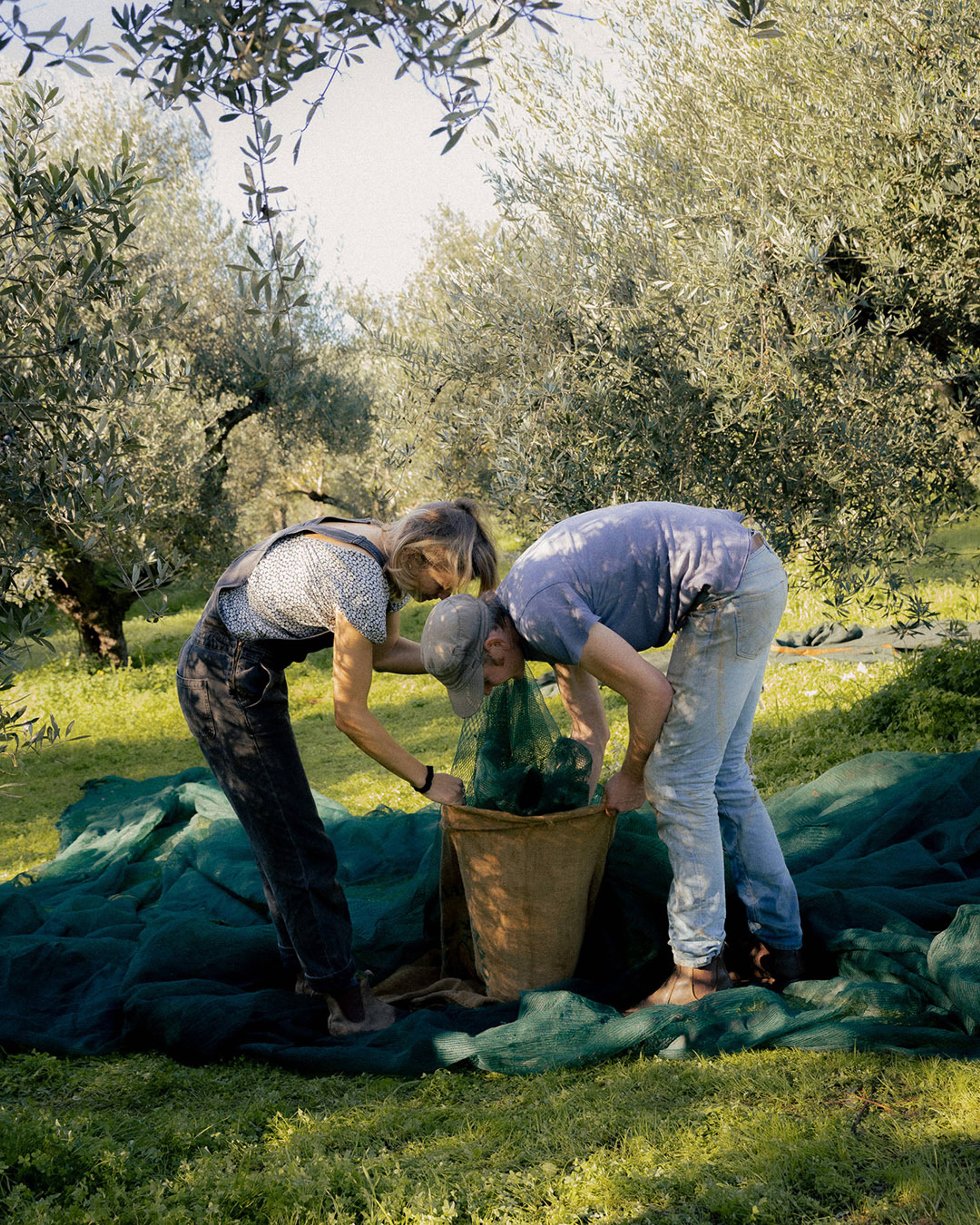
It depends a lot on the time of year, I suppose. During the harvest, it’s the grove in the morning and the press at night – physical, long days. Everything revolves around getting the olives picked and pressed as quickly as possible. There’s a steady rhythm to it. Nets going down, olives falling, the slow gathering into sacks, then a different kind of energy in the evening when everything moves to the mill. The air in the village smells thick of crushed olives, and people hang around longer than they need to, talking and sharing (questionable-quality) homebrew wine, while the oil starts to flow. And, trying to squeeze in some admin, logistics and emails in the moments we can grab in-between. We’re based here year-round, so the rest of the year is more about packing, orders, problem-solving, keeping everything moving… though most of that is also done from the grove and juggling pruning and packing and chasing bottles across Europe.
Honest Toil EVOO comes from your own groves, but you also work with some small-scale farmers in the area, too. Can you tell us more about the community of growers you work with? Why is it important to you to work with small, often family-run producers?
Olive growing here is very fragmented, in the best possible way. It is not an area of large estates. People here might have a few dozen or a few hundred trees, usually passed down through generations. It’s not really set up as “farms” in the conventional sense, more something people run alongside everything else they do.
Even a well-maintained tree doesn’t give you that much yield, maybe around 10 litres of oil in a good year. So, most people here are producing for themselves first, and then a bit beyond that. During harvest, you end up working quite collectively. People share tools, help each other pick, and then bring their olives to the same village press.
You notice small things that wouldn’t really exist in a more industrial system. Like, there are often little churches tucked into the groves, which, when you think about it, is a pretty inefficient use of space! You wouldn’t see that in a mega industrial plantation that only cares about optimising for yield. But that says something about how embedded the groves are into people’s lives here – not only economically, but in a more cultural, even spiritual way.
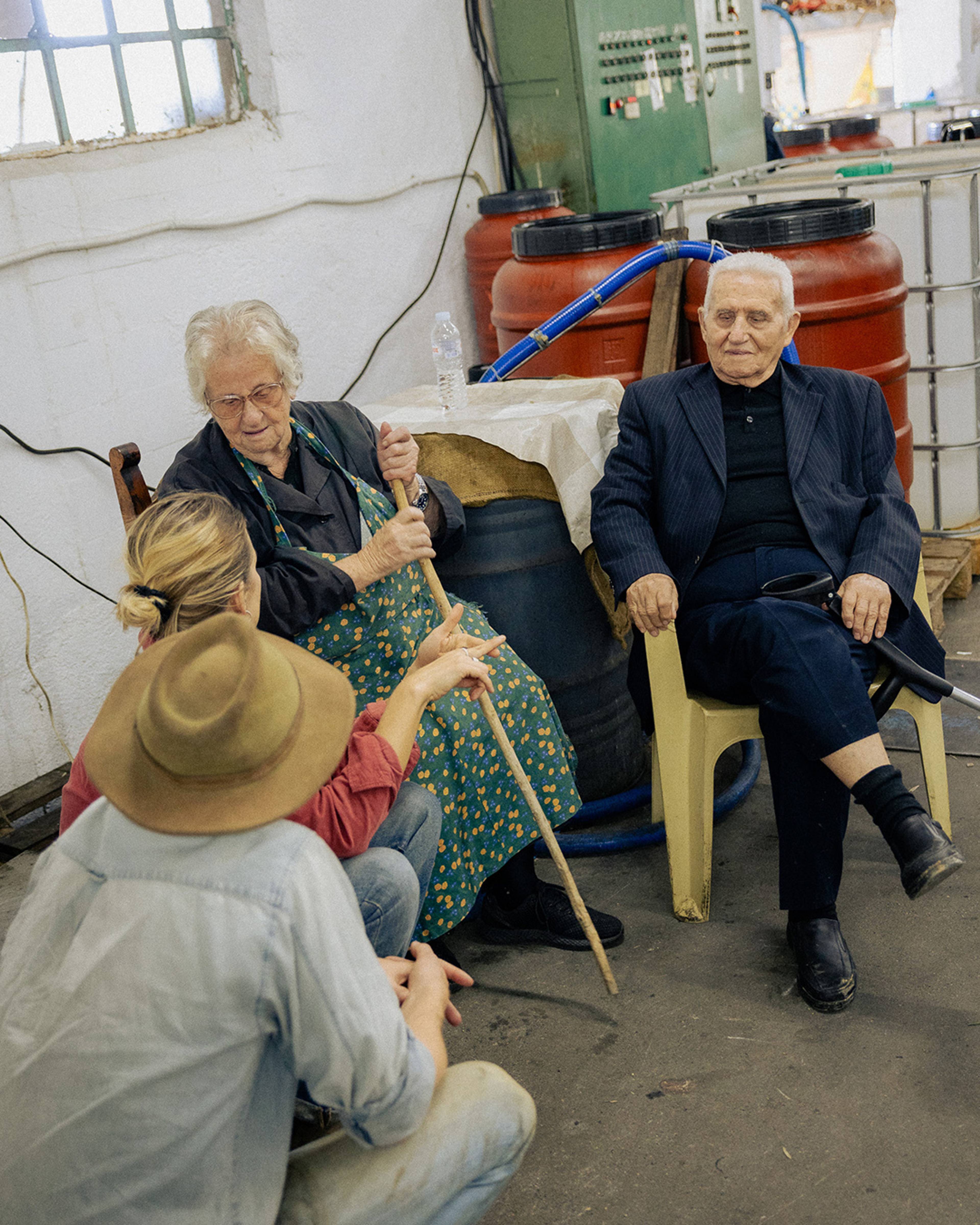
The press is run by people like Dimitris, who’s been doing it for years. His 80+ mum Eleni is usually there too, moving these 50kg tubs around like it’s nothing. You bring your olives in, and a percentage of the oil goes to the press in exchange for the work. It’s all quite trust-based: everyone knows each other, and there’s a lot of conversation around what kind of oil is coming out that year.
Working like this keeps everything close and transparent. You know where the olives have come from, who’s picked them, and how they’ve been handled. It means that the value of the oil stays within the area, rather than being absorbed into a bigger, more anonymous system. It’s sad that this way of working is slowly disappearing in other olive regions.
It also keeps the oil interesting compared to a more centralised production. This way you keep the variation, the local knowledge, the sense of place. Working with small growers helps keep all of that intact.
Many people are used to processed or blended oils. How would you explain the difference when they taste yours?
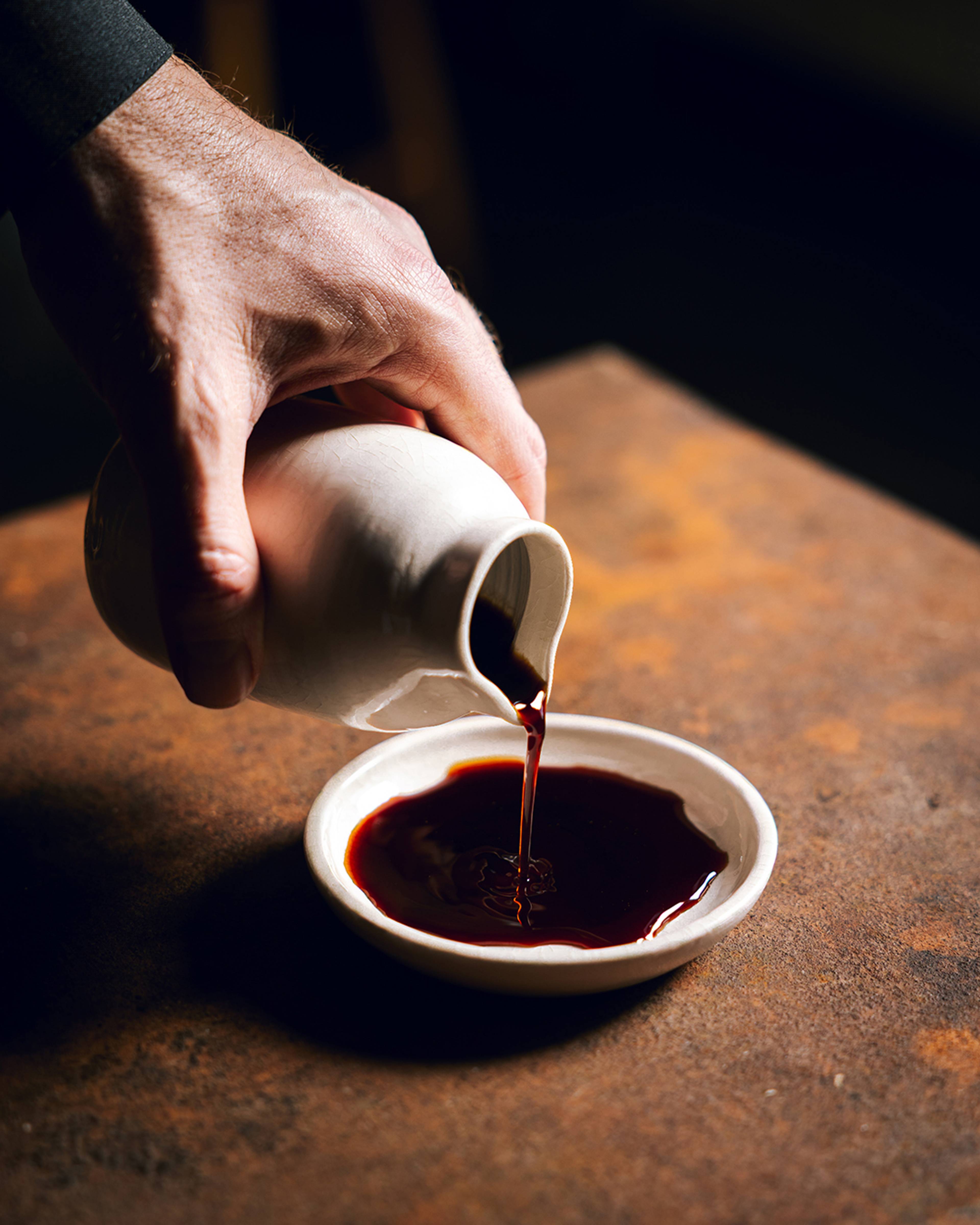
The main difference is that it actually tastes of something(!) The flavour is much stronger than blended oils. Ours really is produced ‘as is’; just the juice of crushed, squashed olives. Because that's what true extra virgin olive oil is (unlike other cooking oils). Literally the squeezed juice of the olive fruit.
The result is it’s green, a bit wild, sometimes slightly bitter, with that peppery heat that builds at the back of your throat. It can sometimes catch people off guard - but it’s a sign of freshness and that those much-coveted, health-giving polyphenols that everyone is buzzing about these days are at their peak. It’s quite hard to go back to something flatter after tasting what it’s meant to taste like!
What should people look for in a really good extra virgin olive oil?
Look for flavour first: something green, a bit bitter, with a peppery finish. Then freshness – a recent harvest. Good producers will include the harvest date on the bottle. The more specific the information – the exact region, the olive variety, even the people behind it – the better. It gives you a sense of how the oil was made and how close it is to its source. And ideally something that hasn’t been blended across different batches, so you’re tasting the oil as it actually is and from a specific moment rather than something standardised.
You’ve described olive oil production as a collective effort – family, friends, whole communities coming together. What has that taught you about collaboration?
It’s very different from the idea of collaboration as something you plan or organise. During harvest, everyone’s involved in some way. People help each other pick, carry olives, hang out at the press... all fluid, no one’s really keeping score, and it just works because it always has.
I think what we’ve taken from that is a sense of trust and a way of working that’s less transactional. That’s shaped how we think about collaboration more broadly too: it really doesn’t feel like a strategy, it is just a natural extension of working with people you actually like, whether that’s here in the grove or with restaurants and collaborators further afield.
How do you carry that same spirit of collaboration through the rest of your business?
A lot of what we do is built around people we already have a relationship with. Restaurants, bakers, shops… It's usually quite organic. Someone uses the oil, we get to know each other, and things grow from there. We’ve never really approached any of it as building a network or strategy.
From the beginning, we were making bottle labels with artist friends, and that’s still the case. They change every year, and every size has pretty distinctive artwork, which we’ve been told is commercial suicide… but it means we’ve ended up supporting lots of interesting, up-and-coming makers along the way. Plus, it’s more fun that way.
What’s something you wish more people understood about extra virgin olive oil?
Probably that it’s a fresh product and it follows the rhythm of the seasons in the same way vegetables do.
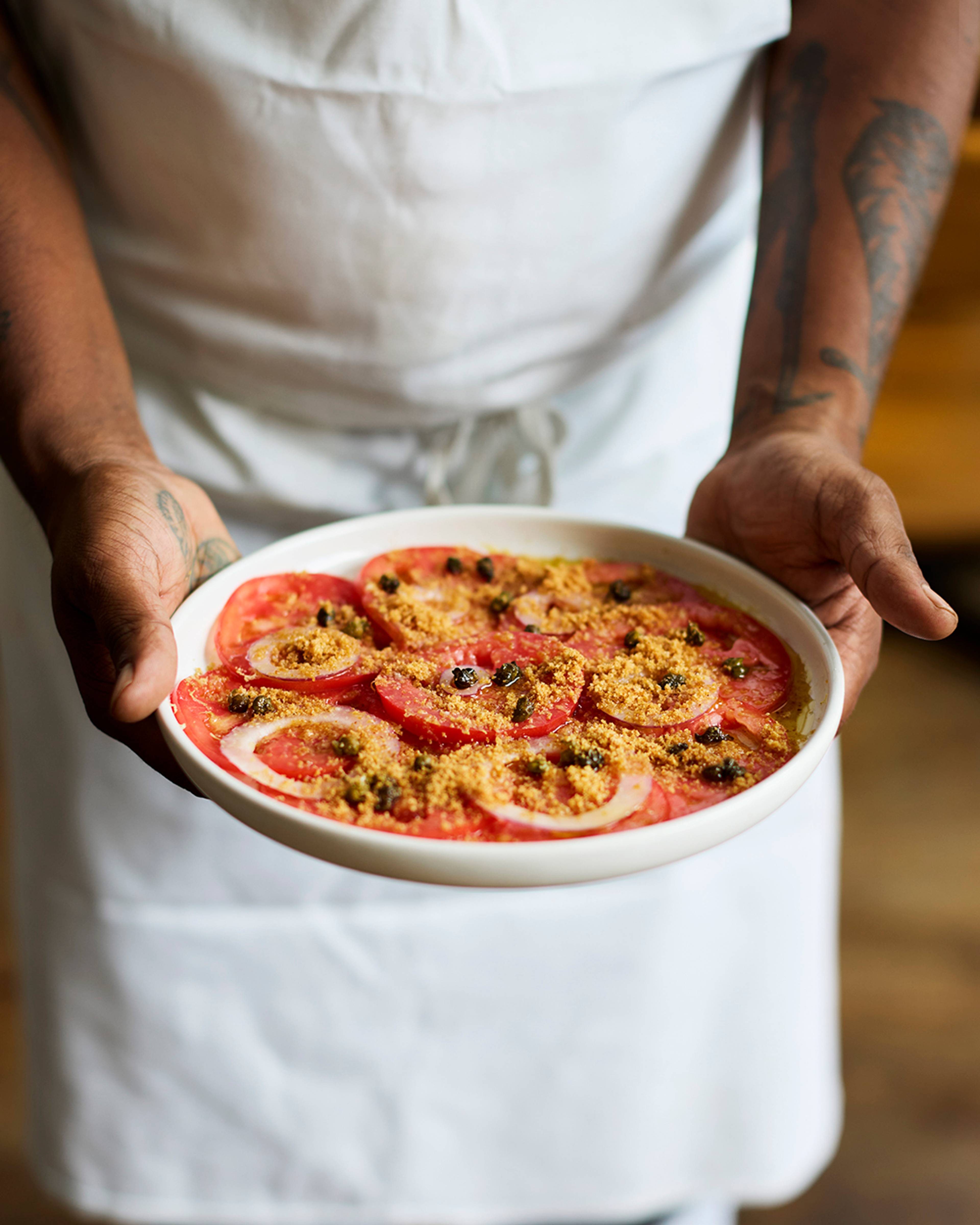
Early in the year, when the oil is still fresh from harvest, it’s greener and more punchy – that works well with winter vegetables, which can be softer and more muted in flavour. A good glug of oil can give potatoes, greens or beans a bit more edge. As the months go on, the oil settles and becomes more mellow, and by summer, when tomatoes and other vegetables are at their peak, you don’t really want to overpower them, and the oil just brings everything together.
So it’s not something fixed. It moves with the season, just like everything else, and there’s something quite beautiful about that.
What keeps you inspired to keep doing this work?
I think “inspired” might be overselling it slightly… A lot of the time it’s about just being here and doing what needs to be done. It’s muddy, repetitive, and not particularly glamorous to be honest! But then there are moments that cut through all of that – tasting the harvest’s first magical oil fresh from the press, or seeing it on a table somewhere so far away from us, which still, even after 15 years, feels a bit strange when you’re out in the sticks here. Places like Bubala, Erst, The Dusty Knuckle, Elliot’s, Chatsworth Bakehouse, kitchens and chefs we really respect using oil that came from a few small groves and a noisy press here in Kyparissia. That’s pretty cool.
Stories
Voir tout
We exist to fix the food system.
People are more cut off from the origins of their food than ever. This makes flavour, nutrition and farming practices that protect the planet, almost impossible to find.
By working directly with growers, we create a more sustainable way forward for farming. By giving everyone the tools to understand the power of our food choices, we empower everybody to become drivers of change.
Now is the time for action. Join the food system revolution.

Go beyond four seasons
Each fruit and vegetable has its own season, with subtle shifts which happen every day. Follow their microseasons to unlock flavour at every stage.
WHAT’S IN SEASON?

Know where your food comes from
We know the name of the people behind everything we source. Recognise their growing artistry to find out exactly where your food comes from (and why that matters).
MEET THE GROWERS

Make your diet diverse
Our growers work with varieties chosen for quality and nutrition, not yield. By selecting their crops you keep heritage seeds in play, add to ecosystem biodiversity and preserve unique flavours.
PEAK SEASON BOX
United Kingdom
© 2026 Natoora Ltd.