TEMA ARTICHOKE FETTUCCINE WITH ED GRACE
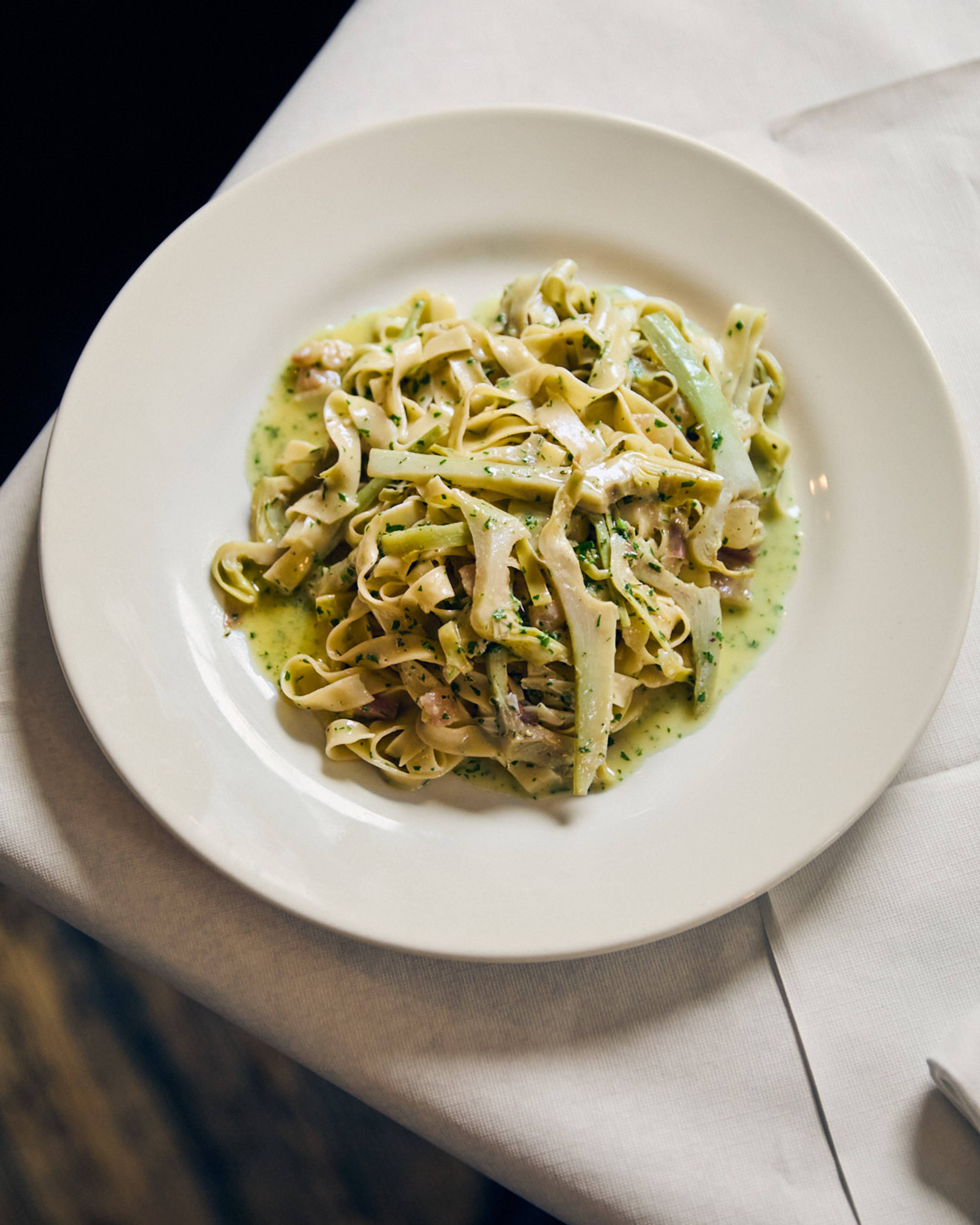
Trullo’s head chef, Ed Grace, sautées Tema Artichokes with salt-cured guanciale, garlic and rosemary, folding them through silky, egg-rich fettuccine.
As a staple deeply ingrained in Italian cuisine, it’s easy to believe more carciofi, or artichokes as we know them, are grown and enjoyed in Italy than anywhere else in the world.
Versatile by nature, their edible flower buds (or ‘hearts’) lend themselves to a wide range of seasonal dishes. Deeply delicious boiled, grilled, braised, stuffed and baked, and a vehicle for flavours like lemon, garlic and Mediterranean herbs.
If you’re cooking artichokes for the first time, they might seem a little daunting. But once you’ve tasted them, you’ll see why they’re so beloved across Italy, and why diners at Islington restaurant Trullo return for them again and again.
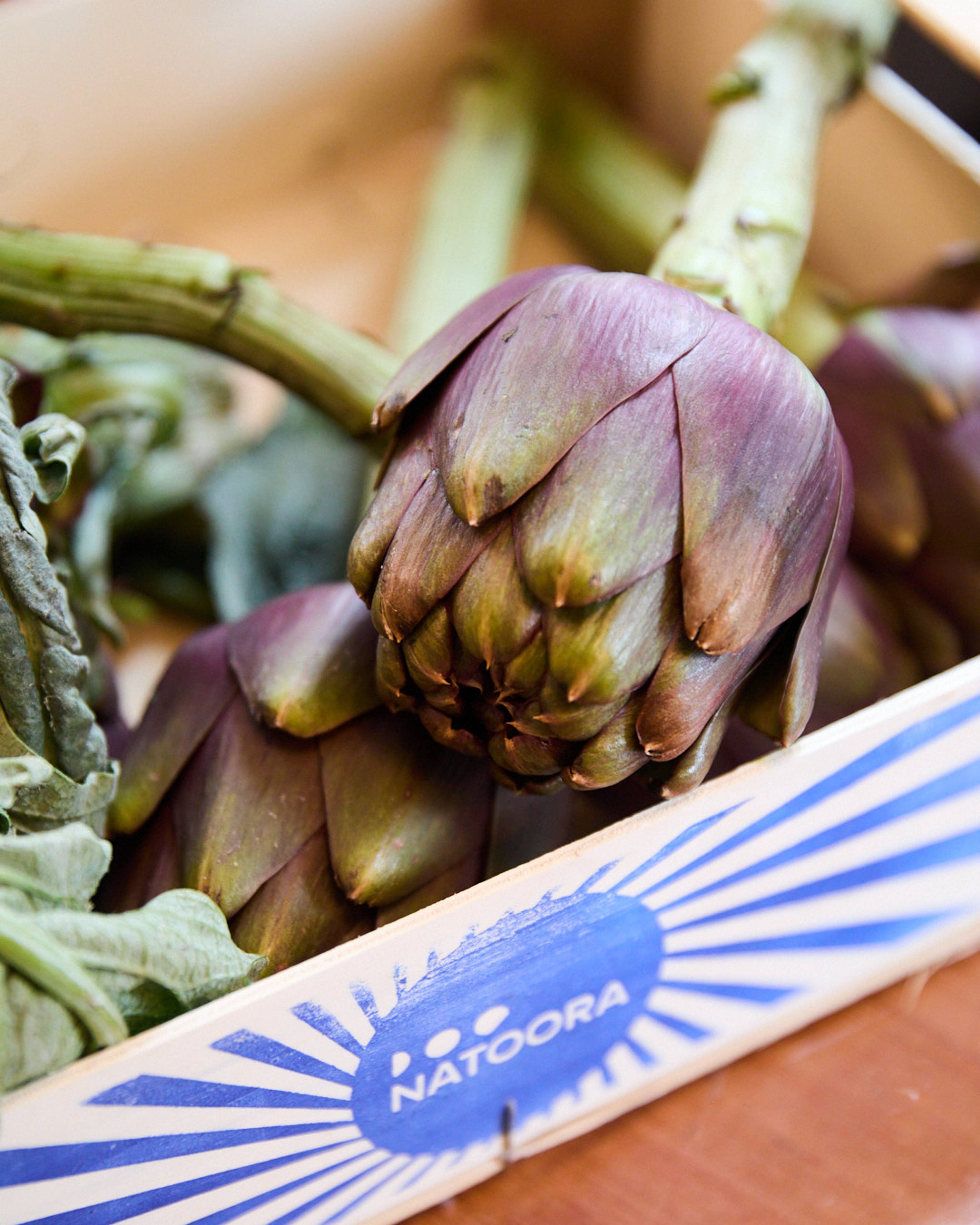
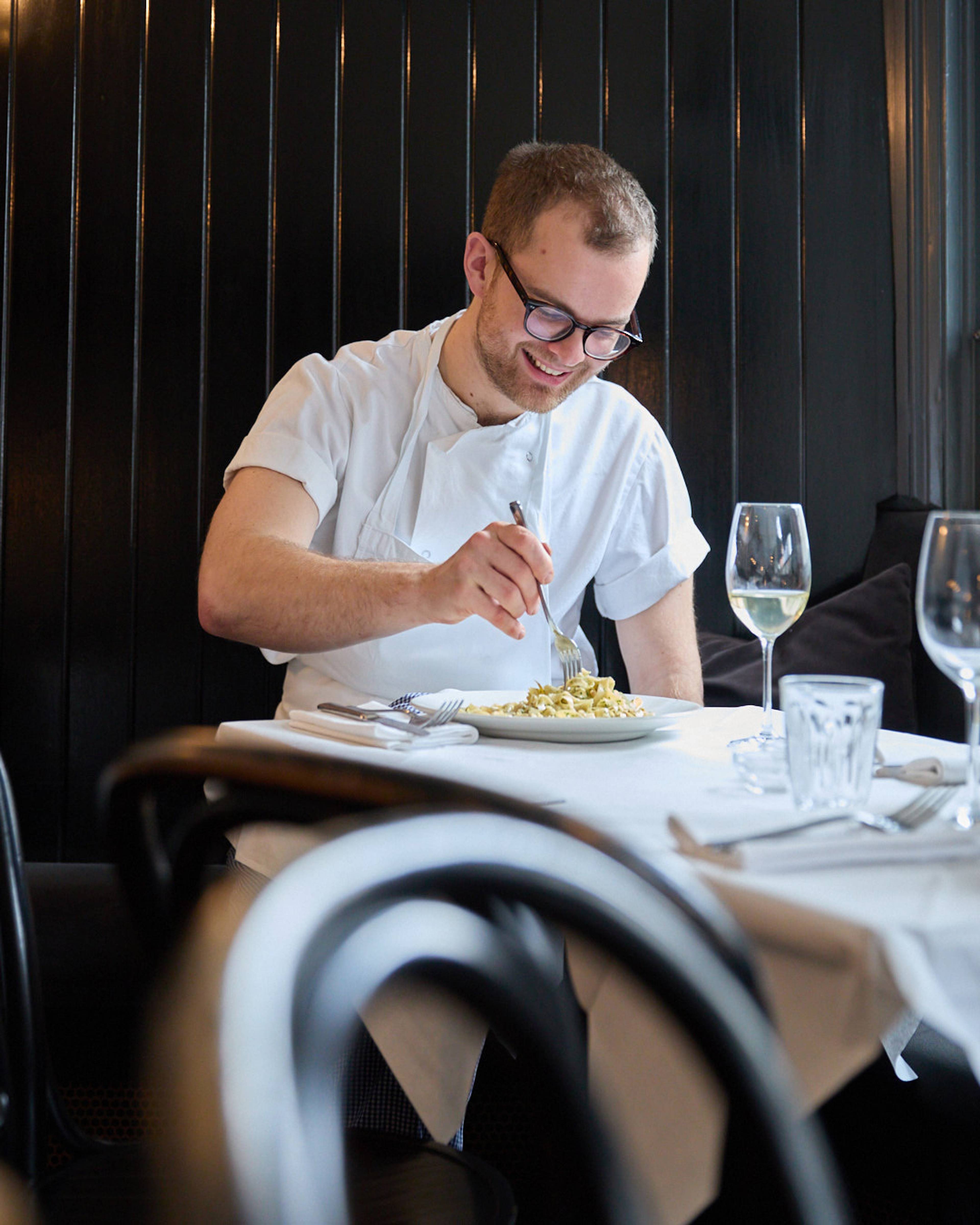
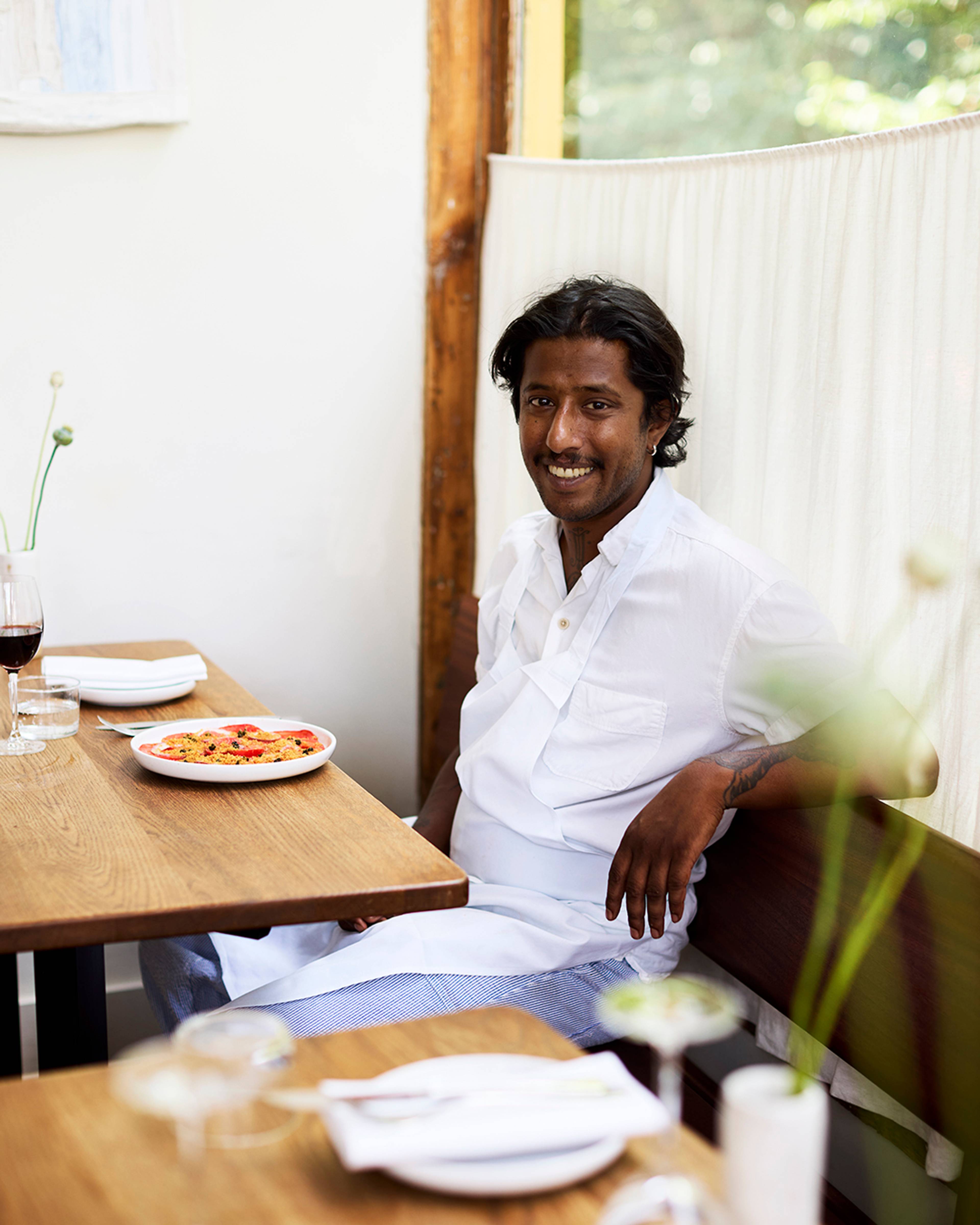
Praised as one of the best local restaurants in London, Trullo is known for its confidently unfussy Italian cooking. And after more than 15 years in business, it continues to hold onto its reputation and understated charm.
“I always look forward to artichoke season,” Ed tells us when we visit the restaurant on St Paul’s Road. “Whether it's Tema, Spiky or Baby, I love finding ways to get them onto the menu”.
At Trullo, artichokes have appeared in many forms. Carciofi alla giudia, a Roman Jewish dish of whole, deep-fried artichokes and alla romana, gently poached with wine and olive oil. Today, Ed is sautéing them with salt-cured guanciale, garlic and rosemary, before folding them through silky, egg-rich fettuccine and finishing with a squeeze of lemon.
Preparing the artichokes takes time, but it’s worth it.
“I actually find it quite therapeutic working through a box or two, even on a busy afternoon,” says Ed. “Once you get into a rhythm, it’s easy”.
In the recipe below, he outlines a few simple steps for prepping them at home, starting with removing the fibrous outer bracts and fuzzy centre (known as the ‘choke’) to reveal the valuable inner core.
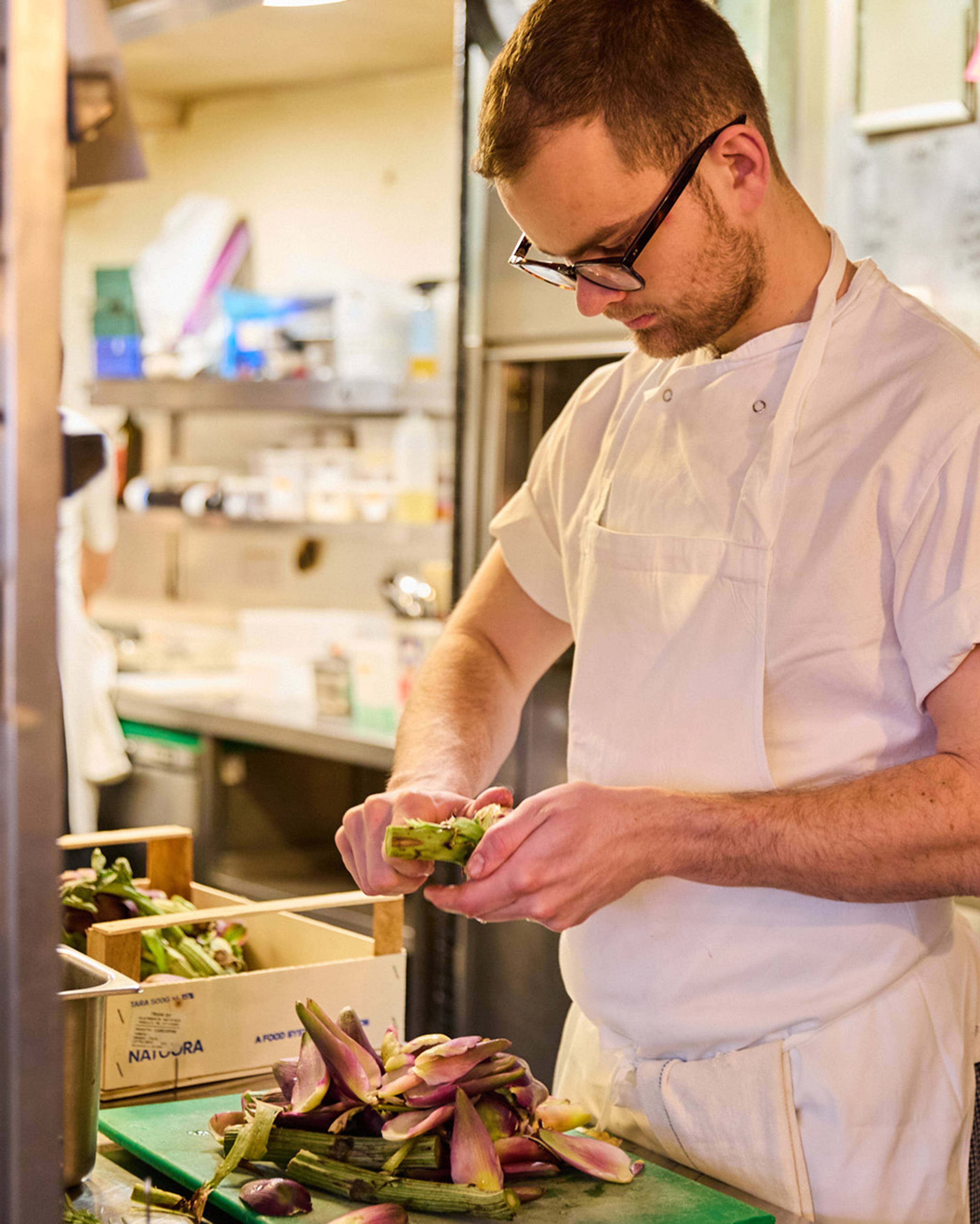
It’s the Tema he’s working with today, a Sardinian variety from growers Marco and Sanna.
Unlike French artichokes which peak in the summer months, these thrive in cooler seasons. Valleys and regions moderated by coastal breezes, like Medio Campidano, create ideal stable microclimates encouraging slow, steady growth. Here, it’s neither too cold – which would stunt the plants – nor too hot, which leads to rapid flowering, producing tough stalks with excessive chokes.
The result is artichokes with violet-hued heads and tender, meaty hearts. The flavour is delicate, the texture buttery. So much so that Sanna and Marco’s can even be eaten raw.
“I like pairing the fresh, green quality of a nicely cooked artichoke with something fatty, so in this case guanciale or pancetta - whatever you’ve got around - and cooking it down in that lovely pig fat,” Ed explains.
“Everything else is simply chosen to highlight the artichoke”.
TEMA ARTICHOKE FETTUCCINE with GUANCIALE AND ROSEMARY
INGREDIENTS
2 Tema Artichokes
500g guanciale, cut into 5mm dice
1 garlic clove, finely sliced
2 sprigs of rosemary
30ml white wine
15g unsalted butter
2 tbsp parsley, finely chopped
100g fettuccine pasta
METHOD
- Prepare the artichokes by removing the fibrous bracts, then turn and de-choke them.
- Once prepared, shave the artichoke using either a mandolin or a chef’s knife. Place them in a bowl of cold water with the juice of a lemon to prevent oxidising.
- Bring a large pot of water to a rolling boil.
- In a separate pan, gently render the guanciale over low heat, then add the garlic and rosemary. Fry for another minute, or until the garlic turns golden.
- Add the artichokes and sauté until they are golden brown.
- Deglaze with the white wine.
- Add the cooked fettuccine and emulsify with additional pasta water and the butter.
- Finish with a squeeze of lemon and adjust seasoning to taste.
Stories
See all
We exist to fix the food system.
People are more cut off from the origins of their food than ever. This makes flavour, nutrition and farming practices that protect the planet, almost impossible to find.
By working directly with growers, we create a more sustainable way forward for farming. By giving everyone the tools to understand the power of our food choices, we empower everybody to become drivers of change.
Now is the time for action. Join the food system revolution.

Go beyond four seasons
Each fruit and vegetable has its own season, with subtle shifts which happen every day. Follow their microseasons to unlock flavour at every stage.
WHAT’S IN SEASON?

Know where your food comes from
We know the name of the people behind everything we source. Recognise their growing artistry to find out exactly where your food comes from (and why that matters).
MEET THE GROWERS

Make your diet diverse
Our growers work with varieties chosen for quality and nutrition, not yield. By selecting their crops you keep heritage seeds in play, add to ecosystem biodiversity and preserve unique flavours.
PEAK SEASON BOX
United Kingdom
© 2026 Natoora Ltd.