FORCED RHUBARB TART WITH ADAM MARCA OF BORGO
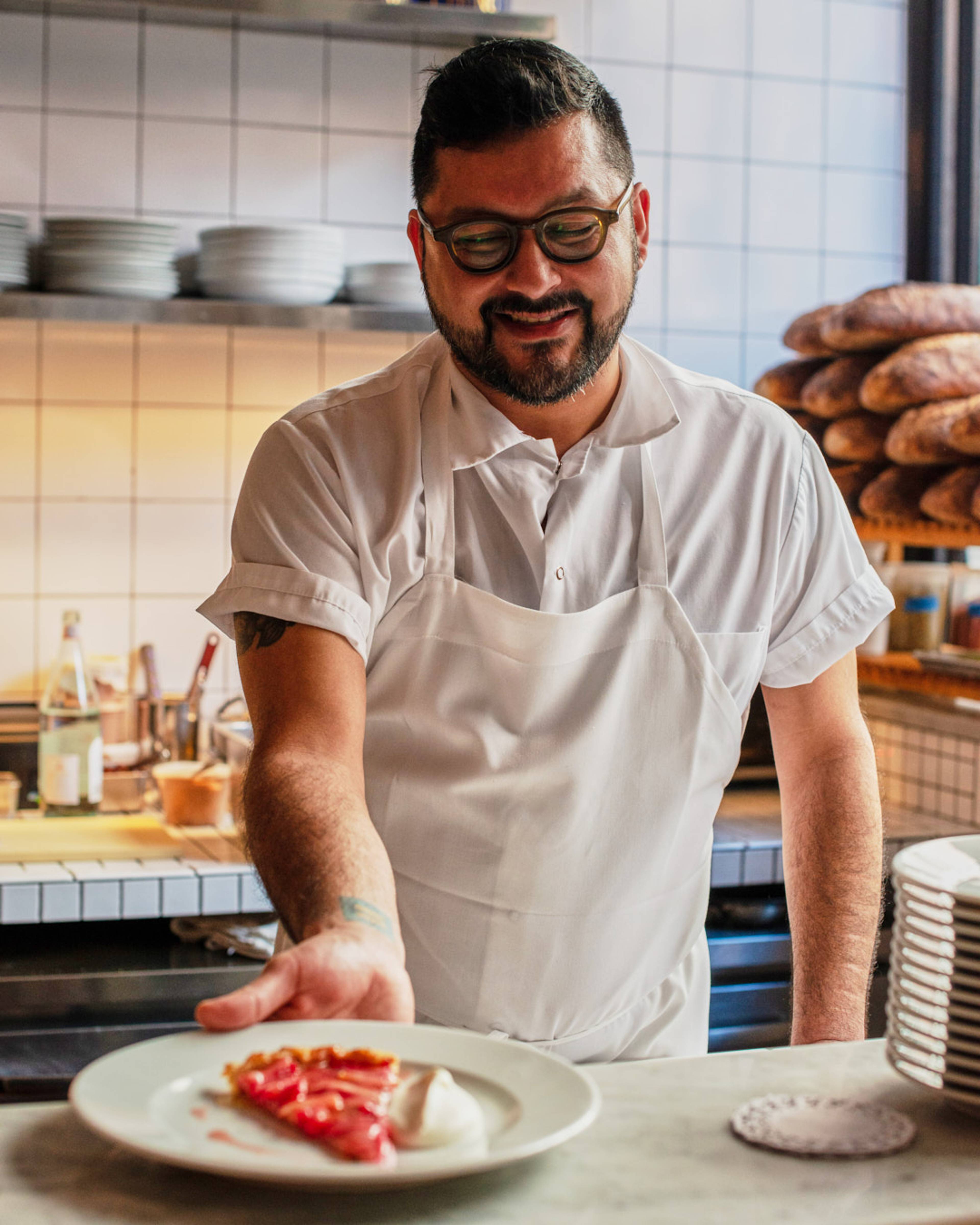
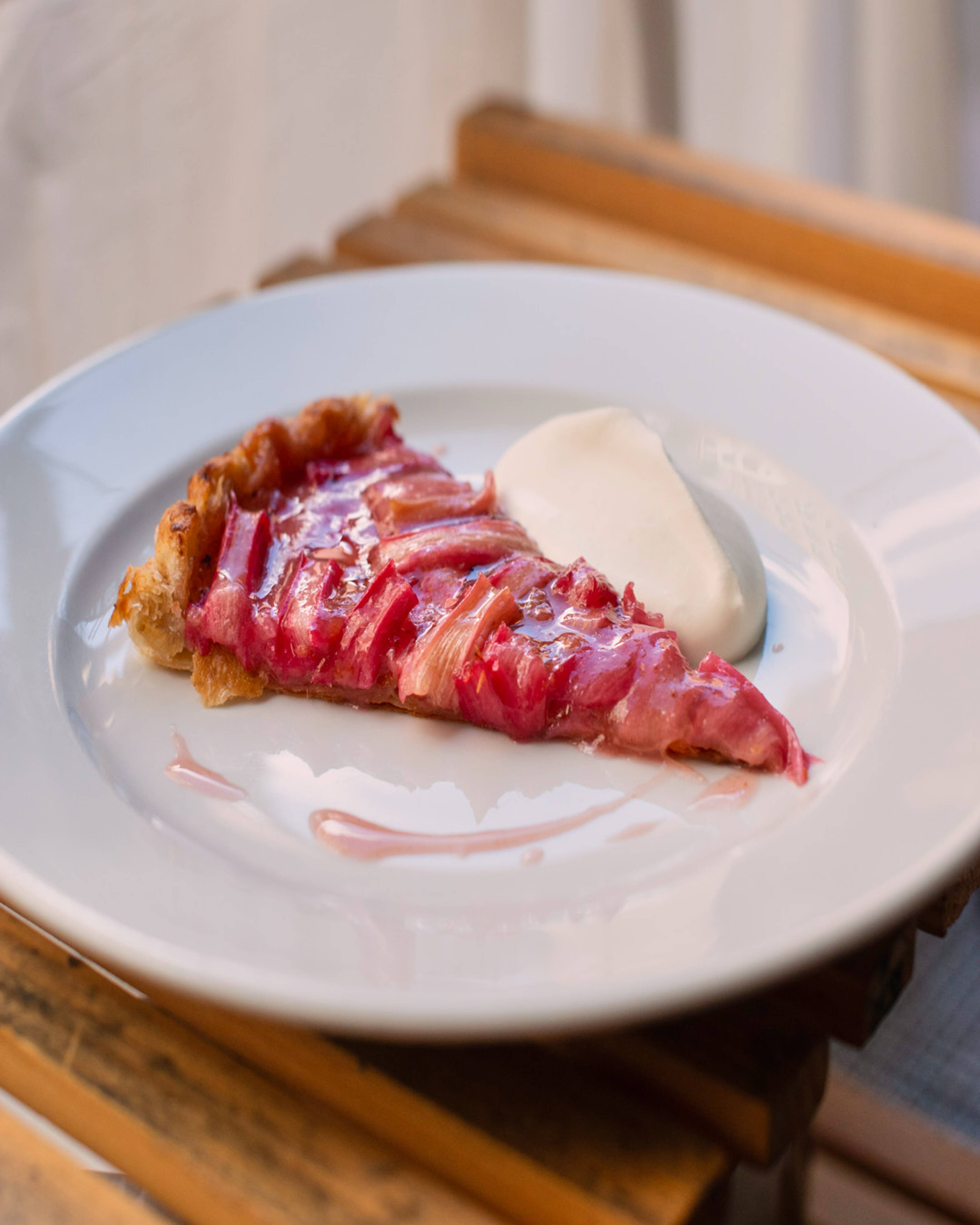
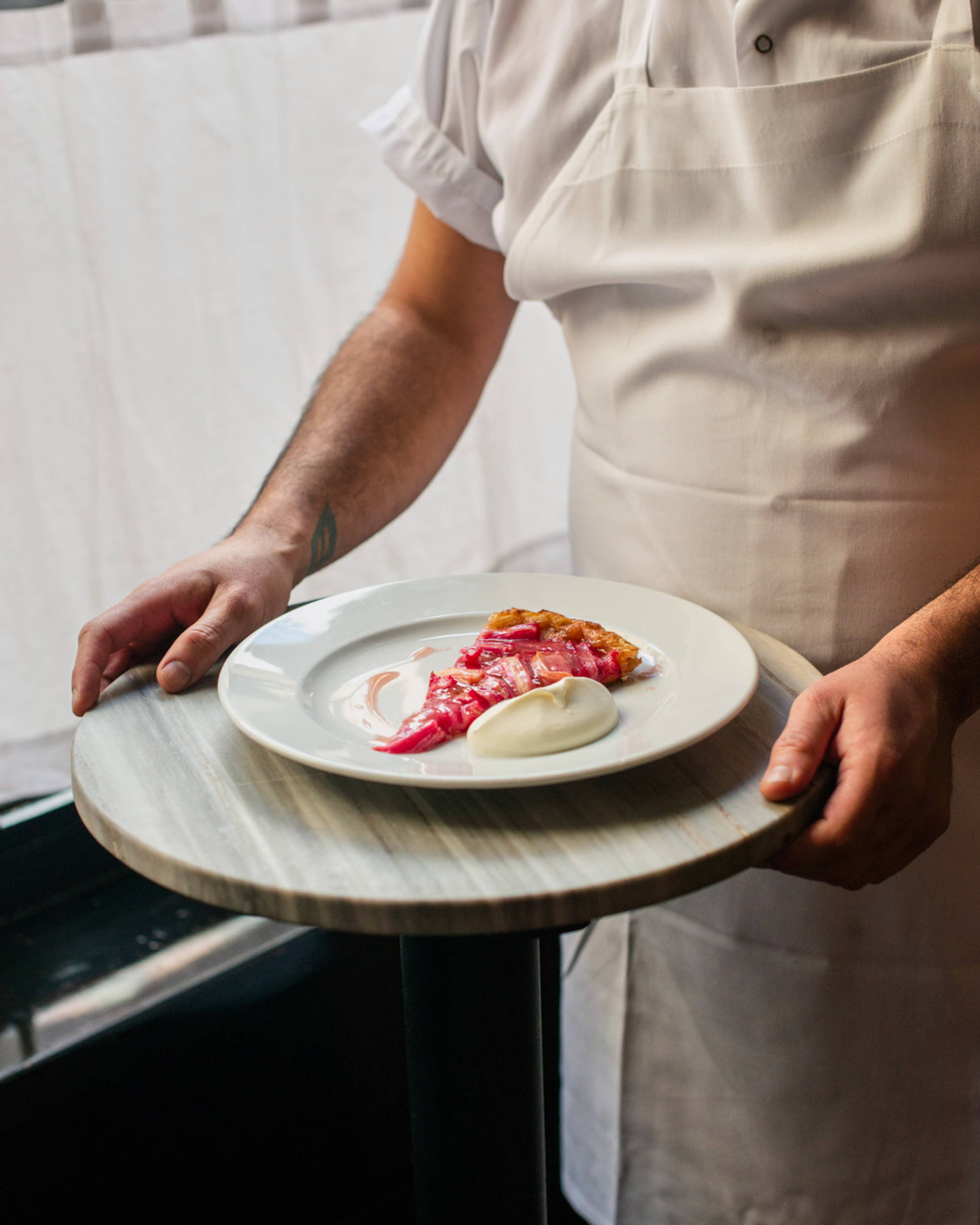
Vivid pink, and bright with acidity, balanced with a thin layer of almond cream, baked into a rustic tart and served warm with barely sweetened cream. That's Adam Marca's Forced Rhubarb Tart at Borgo — the perfect bite as the last of winter gives way to spring.
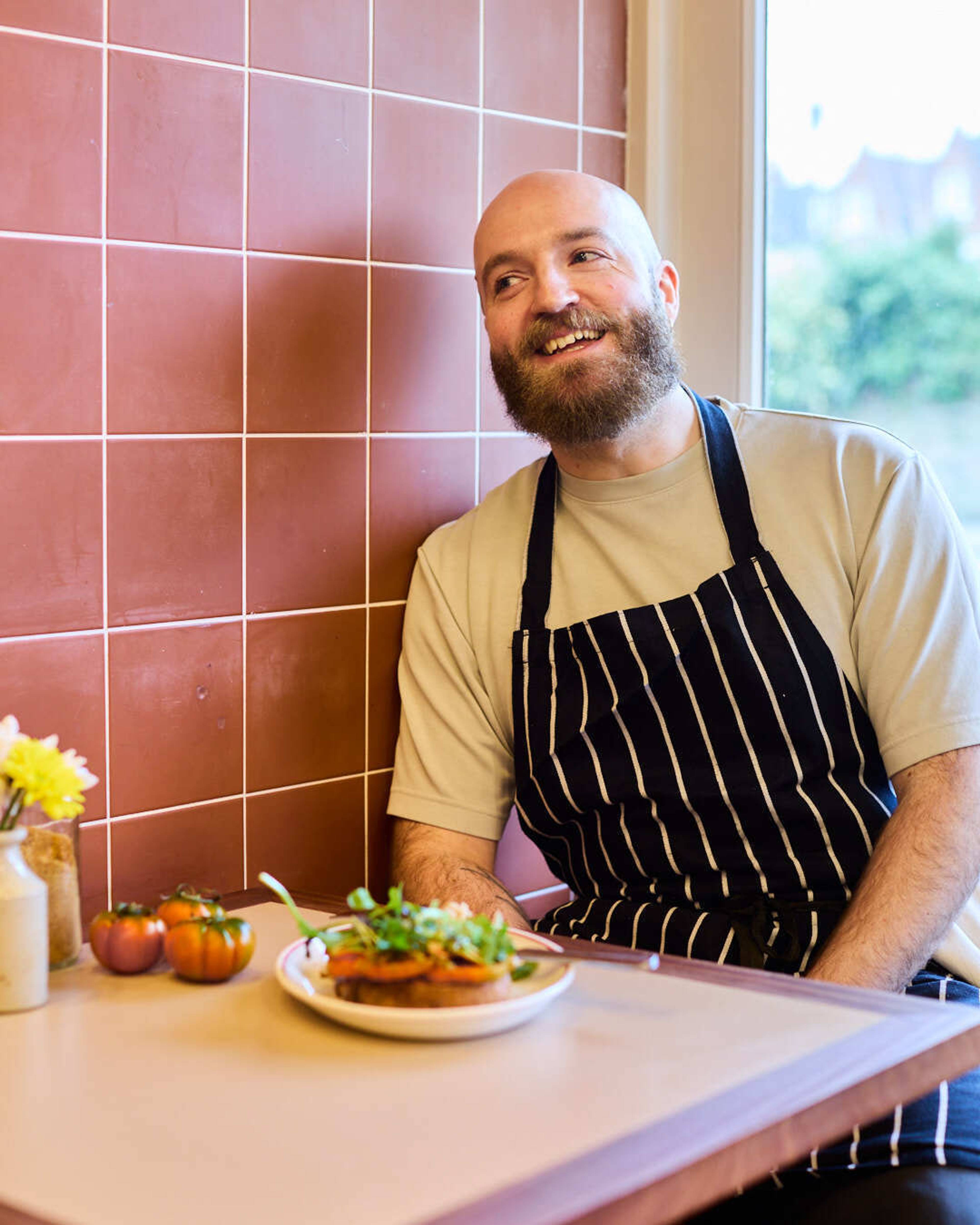
At Borgo, pastry chef Adam Marca oversees a dessert menu based on fresh produce. Raised in the Bay Area, he grew up eating fruit at its peak—an instinct that shapes everything he makes. As a result, his desserts may appear simple, but they maximize flavor and keep the produce as the focal point.
Borgo has a calm elegance — warm and sophisticated, but never pretentious. We visited on a Saturday just before lunch. Sunlight streamed in as the dining room steadily filled with families and friends settling in for long, unhurried meals. It's the kind of room that suits a tart like this.
When Forced Rhubarb comes into season, it goes straight onto the menu. The desserts here are, as the New Yorker put it, "gracefully simple" — and this tart is no exception. A deeply flaky, crunchy dough, a layer of almond cream enriched with noyeux, and rhubarb cut into batons and roasted until tender and caramelized at the edges. The whole team was sneaking bites of the extra pieces before service.
"You don’t have to do much to it," Adam tells us. "The Rhubarb is amazing as is." The one variable to adjust: the sugar in the filling based on how each box of rhubarb tastes. No two batches are identical. The tart is better for it.
FORCED RHUBARB TART
INGREDIENTS
FOR THE CRUNCH DOUGH*
1800 g All-Purpose Flour (Beehive, Central Milling)
32 g Organic Sugar
8g Kosher Salt
1600 g Unsalted Butter, cold, cut into ½-inch cubes
640 g Ice Water
FOR THE ALMOND CREAM
250g Whole Tuono Almonds, toasted
5ea Noyeux (stone fruit kernels)
200g Almond Paste
230g Sugar
300g Unsalted Butter, room temperature
220g Horseshoe Ranch Eggs (~4 large)
5g Salt
FOR THE FILLING (enough for one tart)
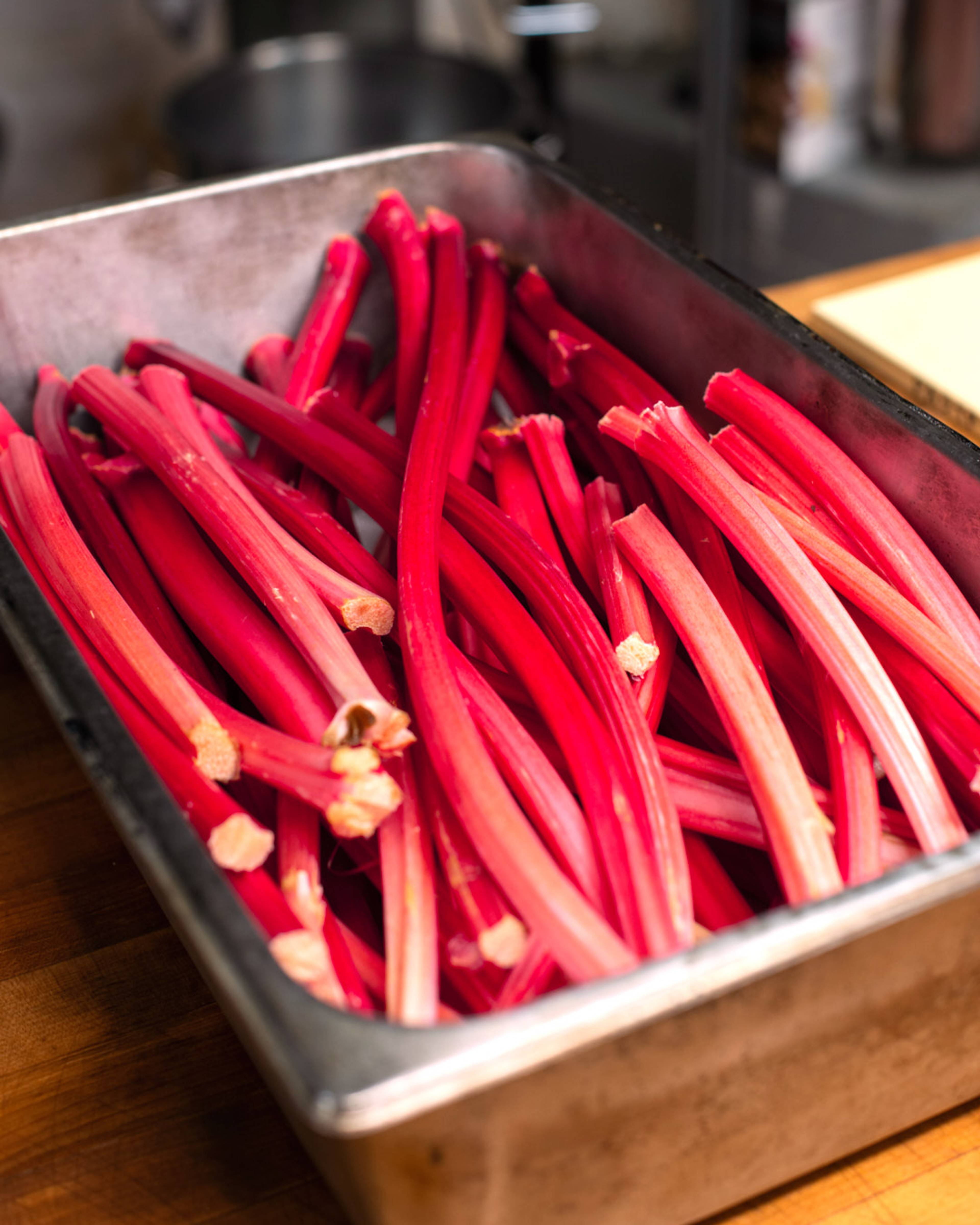
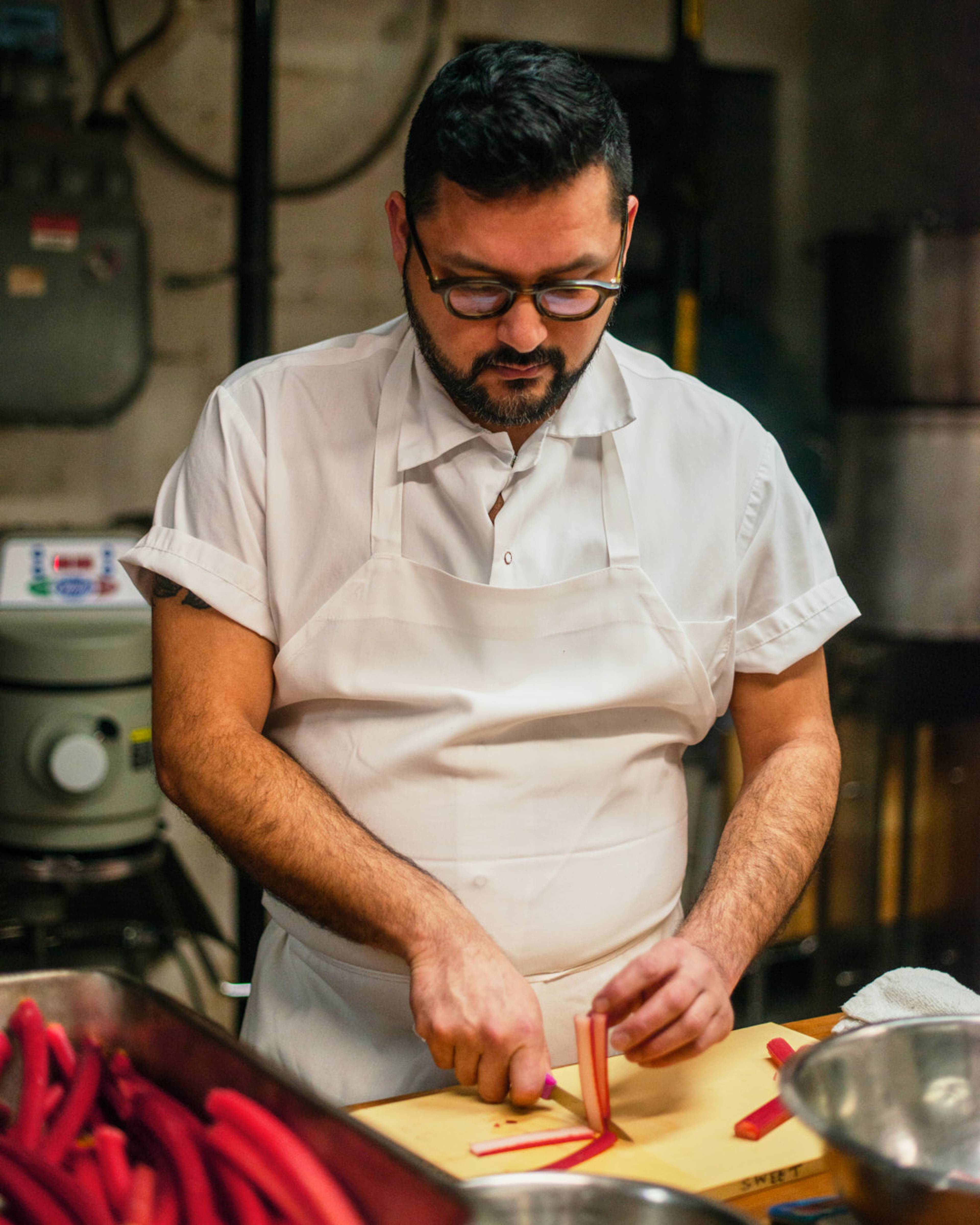
625g Forced Rhubarb, cut into batons (3–4 inch lengths)
225g Sugar
25g Tapioca Starch
Pinch Kosher Salt
Pinch Citric Acid
FOR ASSEMBLY
Butter, as needed
Spelt flour, for dusting
Mixed crumbs (breadcrumbs, pâte à choux crumbs, gingerbread, cookies — whatever you have), as needed
Turbinado or pearl sugar, optional
METHOD
FOR THE CRUNCH DOUGH
1. Fill a large measuring jug with ice — a 4L jug filled to about the 3L line — then fill with water to the same line. Set aside.
2. Combine the flour, sugar, and salt in a wide, shallow mixing bowl. Cut the butter into ¾-inch cubes and toss in the flour until completely coated. Let the mixture rest for about 10 minutes (adjust based on your kitchen temperature — the goal is for the butter to be as cold as possible while still malleable).
3. Working quickly, smash each cube of butter between your thumb and the side of your forefinger to form a flattened disc with a small lip around the edges. Move through all the butter before it has a chance to warm up.
4. Use a small strainer to remove the ice and measure out 640 g of water. Drizzle about 75% of it into the flour and butter mixture, distributing as evenly as possible.
5. Using your dominant hand, mix the dough by spreading your fingers wide then curling the fingertips down to form a claw — what baker Michelle Polzine calls a "muskrat rake." Rake your fingers through the dough to distribute the water, then add the remaining 25% and continue raking and turning the bowl until a shaggy, ropey mass begins to form. Do not overmix.
6. Loosely gather a palm-sized piece of dough. From the top of the mound, firmly push down and drag the dough across the surface — you should see chunks of butter smear into longer strands. Gently roll these up and continue, stacking the pieces loosely on top of each other, until you've worked through all the dough.
7. Divide into 500g portions, pulling the ropey chunks apart gently rather than compressing them. Distribute any remaining dough evenly between the eight pieces.
8. Place each portion on a large sheet of plastic wrap. Gather the edges and twist to form a rounded parcel with a long tail on one side. With the flat side of the puck facing you, use your thumb to push outward from the center to the edge, smoothing the back with your forefinger as you go — take care not to let any cracks form at the edges. Work your way around until you have a flat disc with smooth, rounded edges. Loosen the plastic slightly and spin the dough the other direction to prevent the wrap from setting into it.
9. Refrigerate for at least 2 hours, preferably overnight. The dough freezes well — pull discs as needed.
FOR THE ALMOND CREAM
1. Process the toasted almonds and noyeux together in a food processor to a fine meal. Stop when the texture resembles coarse sand — do not over-process into a paste.
2. In a stand mixer fitted with the paddle, combine the butter, sugar, and almond paste. Beat on medium speed until light and fluffy, about 3–4 minutes. Scrape the bowl well.
3. With the mixer on medium-low, add the eggs one at a time, allowing each to fully incorporate before adding the next. Scrape down between additions. The mixture may look slightly broken — this is fine.
4. Add the ground almond-noyeux meal and salt. Mix on low just until incorporated. The cream should be smooth, thick, and spreadable.
5. Transfer to an airtight container. Refrigerate up to 5 days or freeze for 1 month. Bring to room temperature before spreading.
FOR THE RHUBARB FILLING & ASSEMBLY
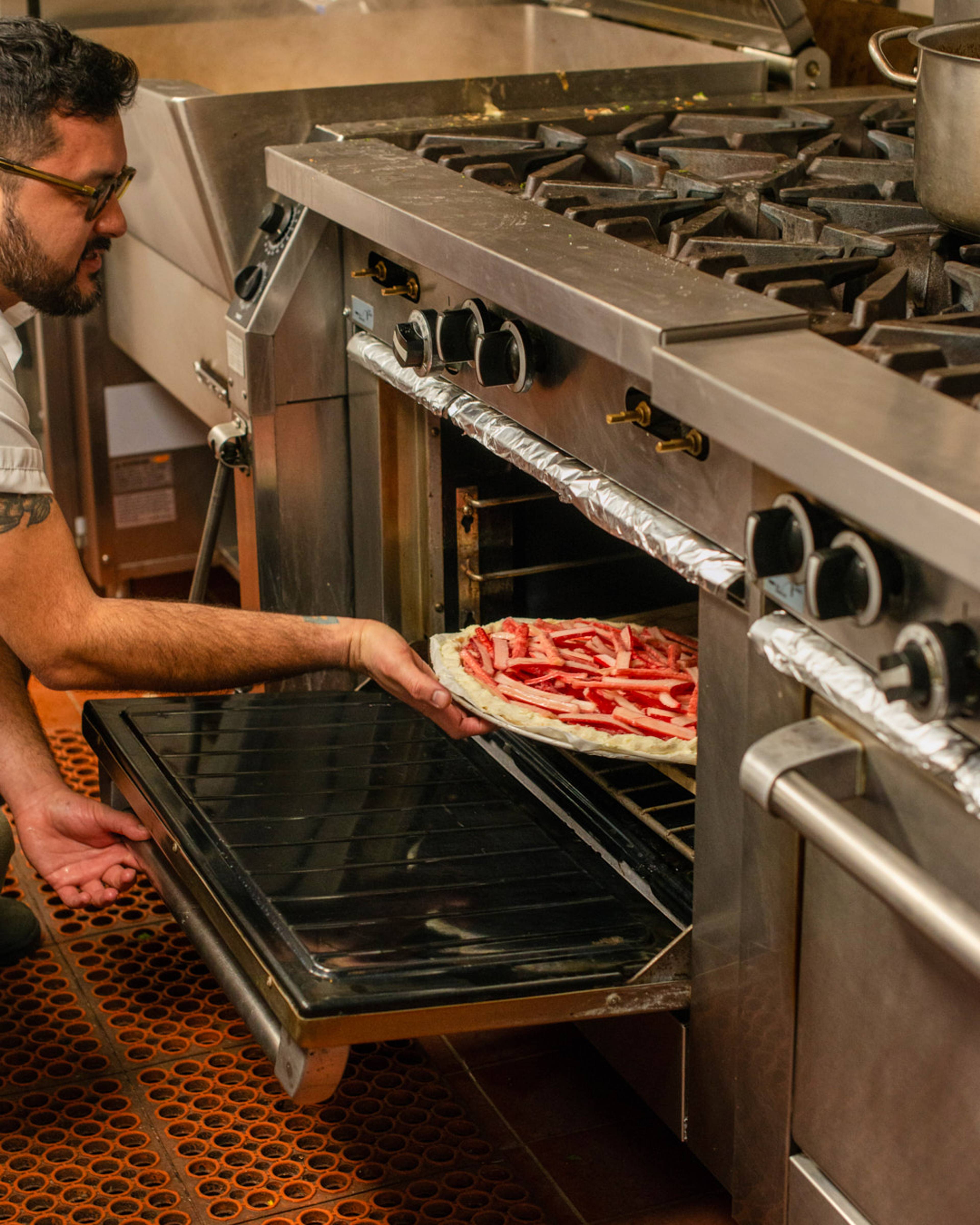
1. Place a pizza stone in the oven and preheat to 450°F / 230°C.
2. To roll: on a surface dusted with spelt flour, roll each disc to approximately 16 inches in diameter and ⅛-inch thick. Allow the spelt flour to build up deliberately on the surface of the dough — this adds flavour without incorporating spelt into the dough itself, which would toughen it. Transfer to parchment-lined sheet trays and refrigerate until ready to assemble.
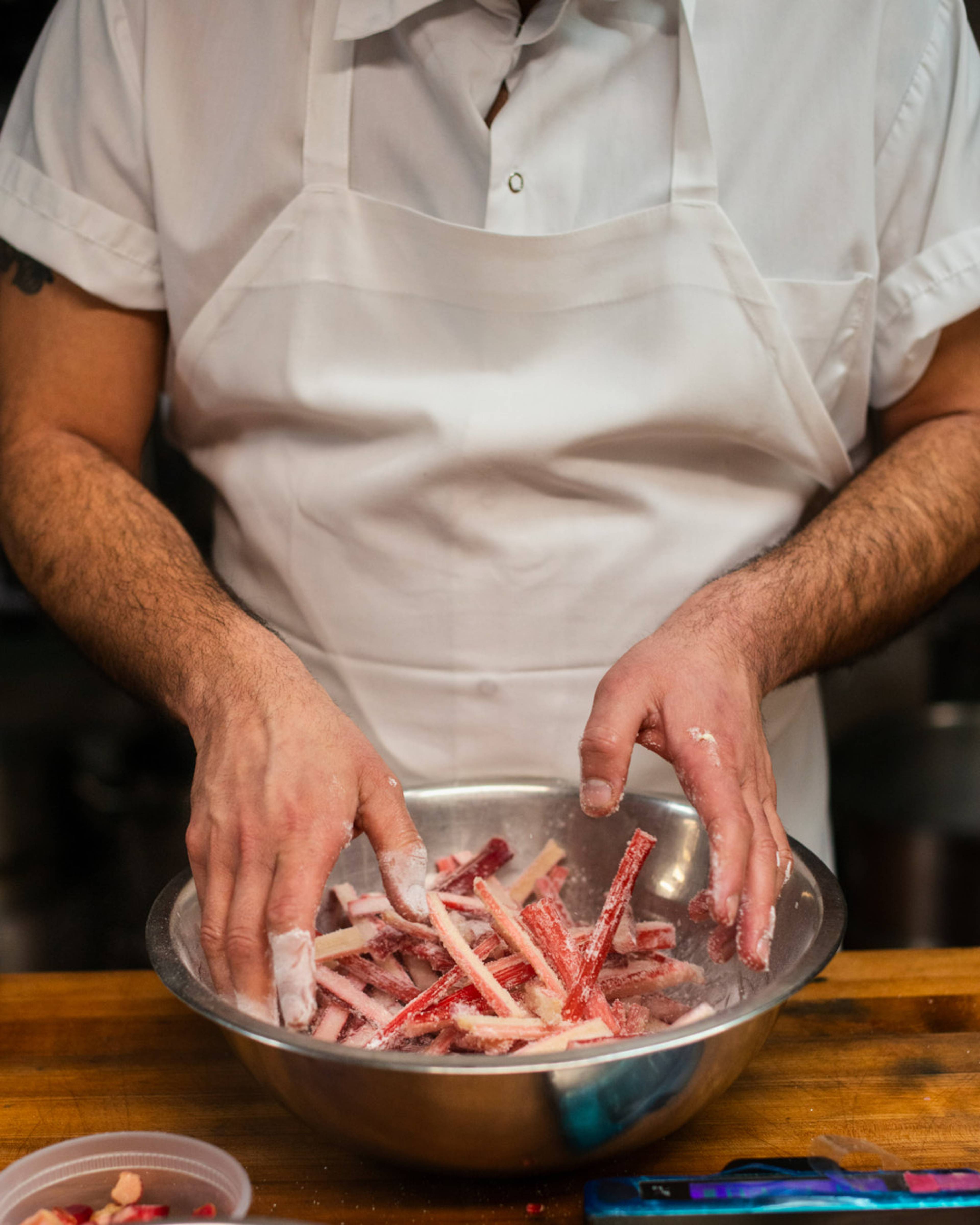
3. Toss the rhubarb batons with the sugar, tapioca starch, salt, and citric acid. Set aside.
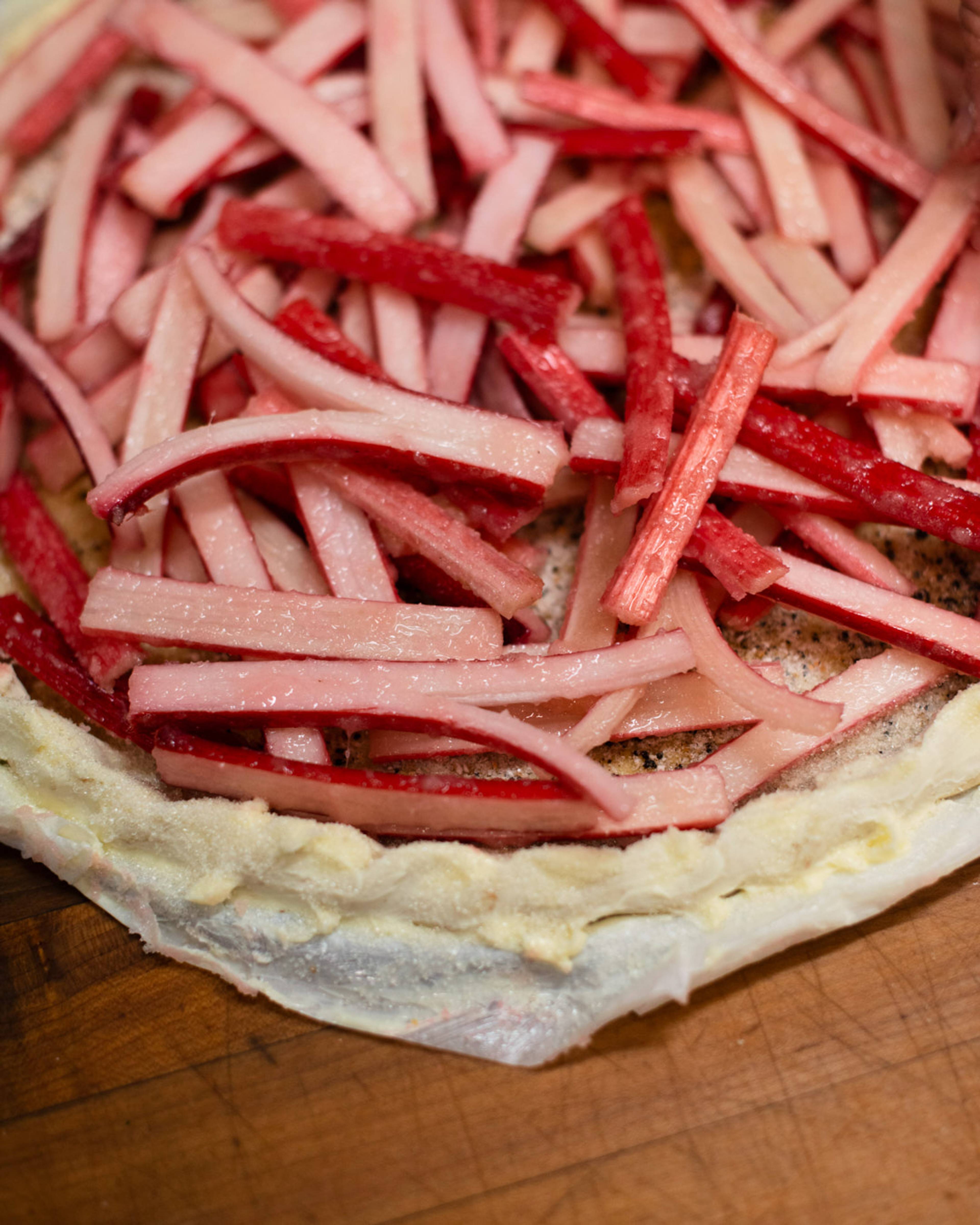
4. Remove a rolled dough round from the refrigerator. Spread almond cream across the entire surface all the way to the edge — this creates a stuffed crust of almond cream around the rim.
5. Scatter a generous layer of mixed crumbs over the almond cream —breadcrumbs, pâte à choux crumbs, gingerbread, cookies, whatever you have to hand.
6. Fold the dough border up and over to create a rim, pleating as you go. Press gently to hold. The center remains open.
7. Brush the folded crust with butter. Sprinkle with turbinado or pearl sugar if desired.
8. Arrange the tossed rhubarb batons over the crumb layer in a single, tight layer. Drizzle any remaining liquid from the bowl over the top.
9. Bake on the pizza stone until the crust is deeply golden, and the rhubarb is tender and caramelized at the edges, approximately 40–50 minutes. The almond cream should be set and lightly puffed.
10. Rest on the tray for at least 15 minutes before slicing. Best served warm with barely sweetened cream.
Stories
Voir tout
We exist to fix the food system.
People are more cut off from the origins of their food than ever. This makes flavor, nutrition and farming practices that protect the planet, almost impossible to find.
By working directly with growers, we create a more sustainable way forward for farming. By giving everyone the tools to understand the power of our food choices, we empower everybody to become drivers of change.
Now is the time for action. Join the food system revolution.

Go beyond four seasons
Each fruit and vegetable has its own season, with subtle shifts which happen every day. Follow their microseasons to unlock flavor at every stage.
WHAT’S IN SEASON?

Know where your food comes from
We know the name of the person behind everything we source. Recognize their growing artistry to find out exactly where your food comes from (and why that matters).
MEET THE GROWERS

Make your diet diverse
Our growers work with varieties chosen for quality and nutrition, not yield. By selecting their crops you keep heritage seeds in play, add to ecosystem biodiversity and preserve unique flavors.
GO #OFFTHEPASS
United States
© 2026 Natoora Ltd.