Fat, powder, fruit and sugar with Imogen Kwok
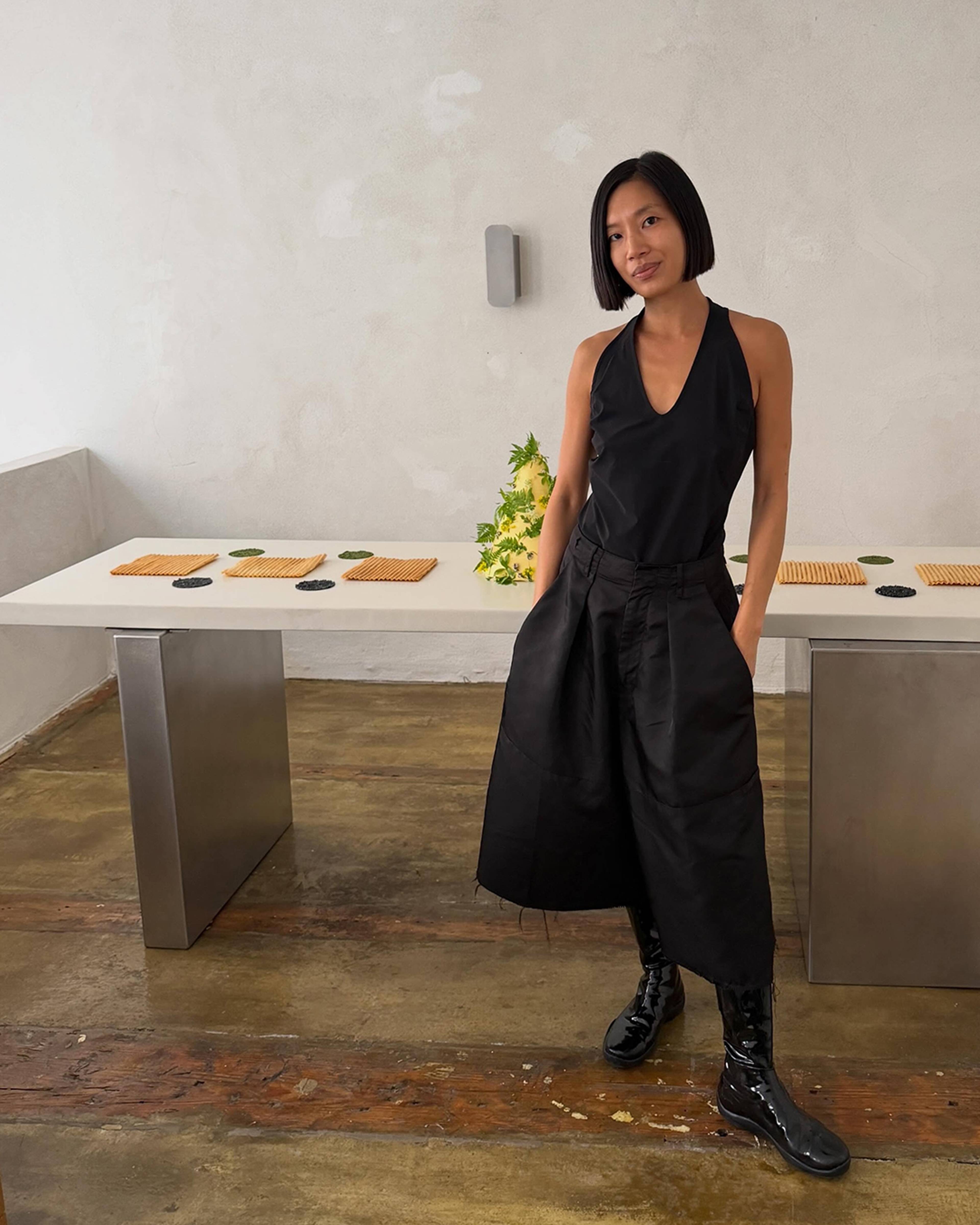
Imogen Kwok at 3daysofdesign, Copenhagen. Photography by Michael Falgren @michaelfalgren
There is a fleeting moment before we eat, when food belongs neither to the maker nor the person about to taste it. It has been shaped, arranged and considered, but remains – albeit briefly – untouched.
It is this still, suspended moment that London-based chef Imogen Kwok explored in her edible piece presented during Copenhagen's 3daysofdesign festival.
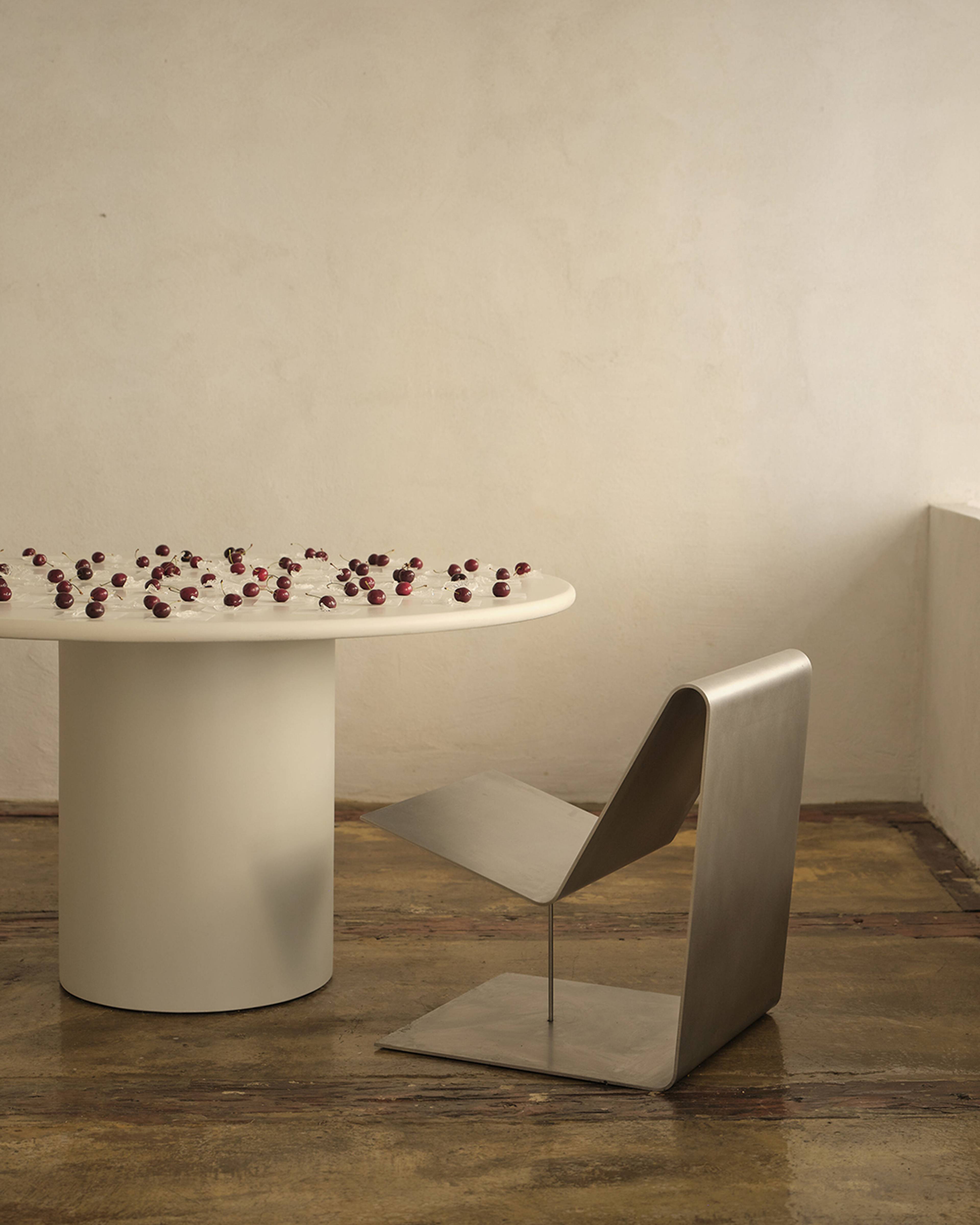
Working with seasonal cherries, Imogen brought together cooking and craft in an edible installation that was as beautiful to behold as it was to eat.
"Eating is ephemeral. It lasts for a moment. I'm always thinking about how to work with that: through cooking, I carve out a moment of stillness, and find beauty in it right before the first bite, the first taste, the first touch.”
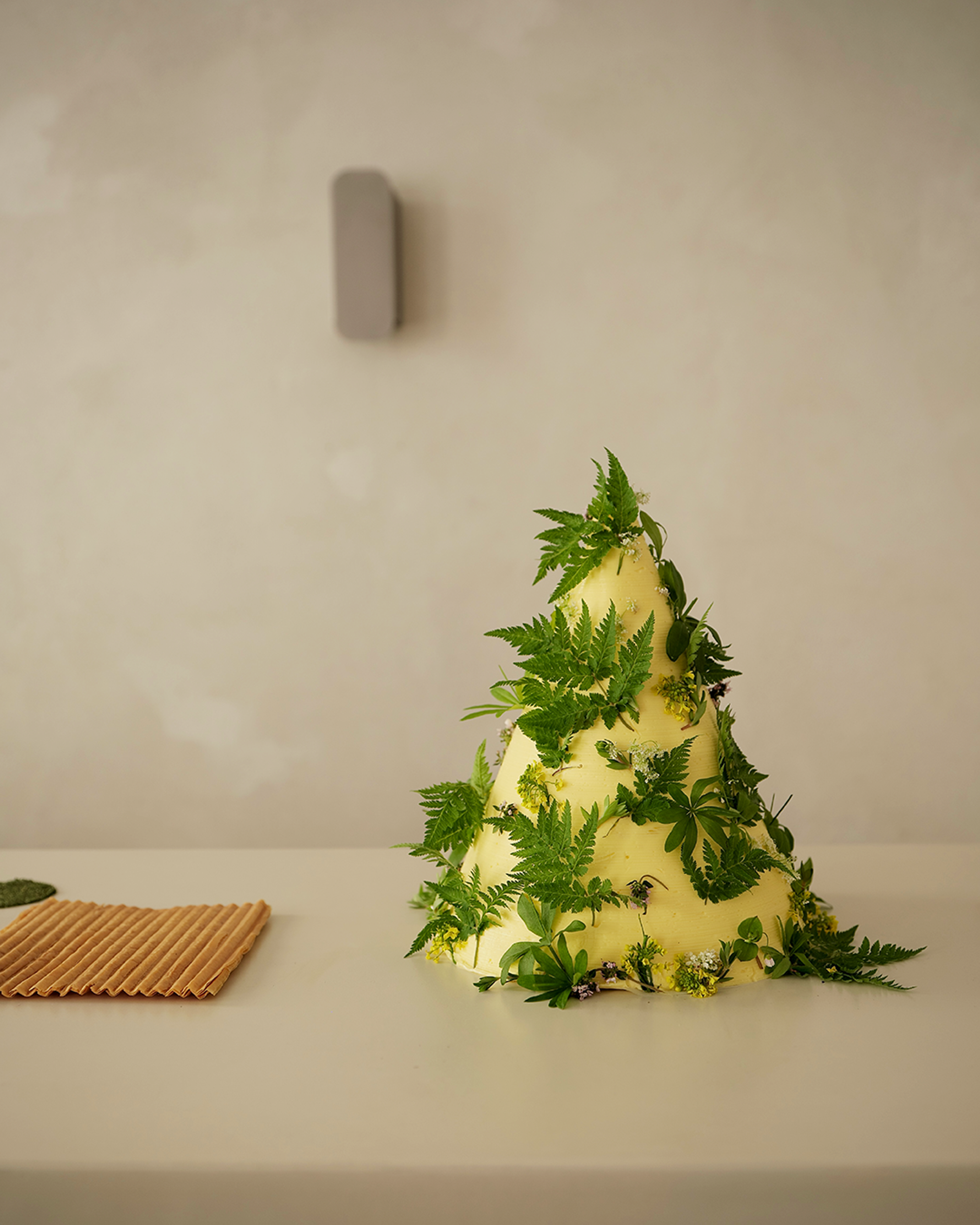
Her living installation was a landscape of carefully handled organic materials waiting to be undone, where butter became a cone, cherries became sculptures and a table became an exhibition.
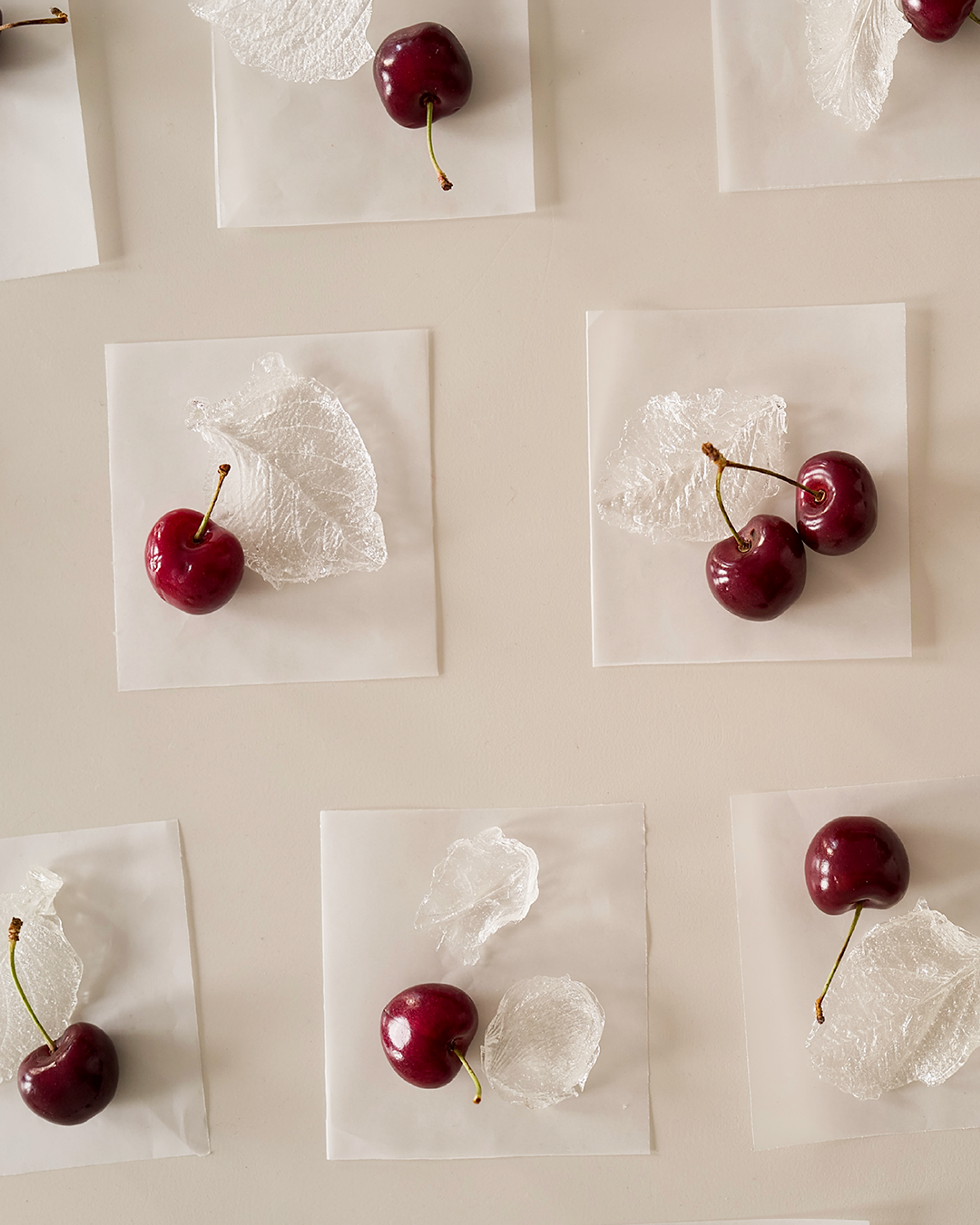
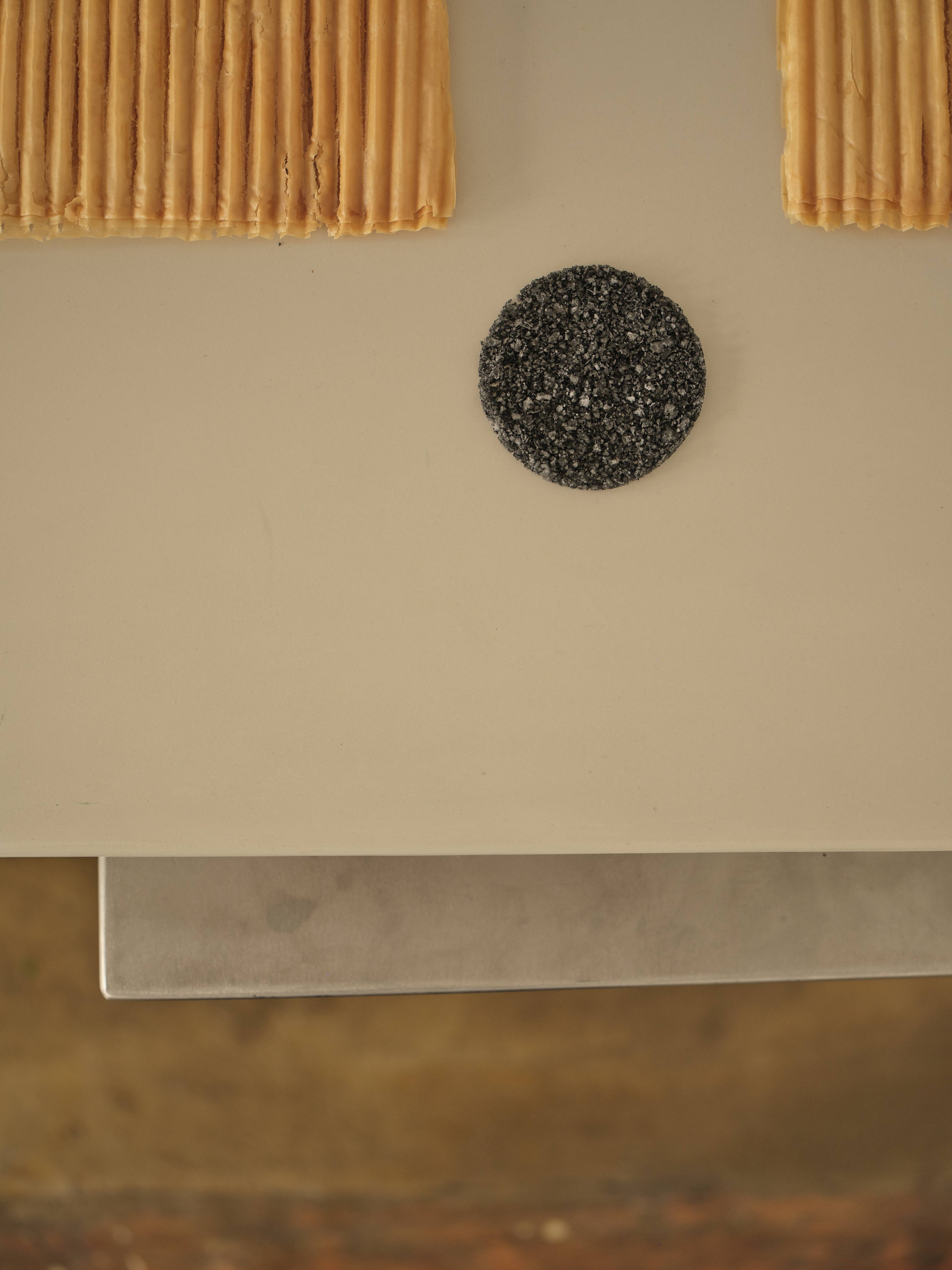
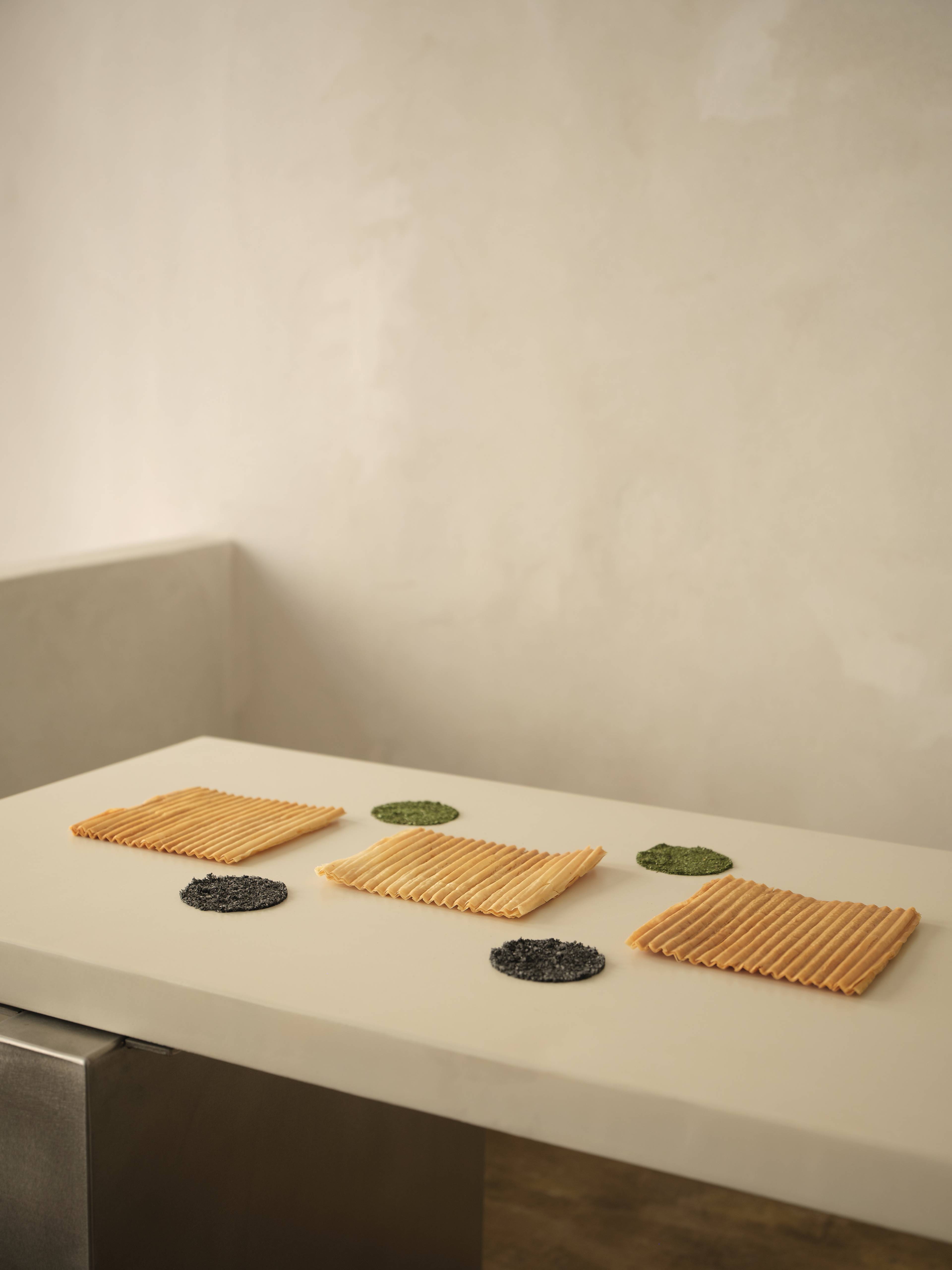
In one setup: butter was whipped and moulded into a precise cone, adorned with foraged herbs, leaves and flowers, alongside crackers made from a dough baked into corrugated sheets, and a dehydrated garlic leaf powder and salt. On another, delicate, transparent leaves made of sugar sat next to wild cherries.
Working with the cherries, Imogen became fascinated by their individuality. "Each had its own personality," she remarked. "Some arrived in twos, occasionally a trio, every stem with its own curve." In paying close attention to these subtle differences, familiar produce became something worthy of looking at anew.
For Imogen, the success of her work wasn't measured by whether visitors admired the installation as an artwork, but whether they left seeing ingredients differently. "If someone leaves noticing a small detail in colour variation, or a texture, or just feeling like they paid attention to something different than what they knew as an ingredient, that means everything to me."
Of course, the work only truly comes to life when people begin to eat it. “Everything on the table was meant to be eaten, nothing was there just to be looked at,” Imogen explained. The most common reaction, she discovered, was people assuming it wasn’t there to be touched. "They think it's a sculpture, so there's a real moment of surprise, and relief, when they realise they can eat everything."
"If someone leaves noticing a small detail in colour variation, or a texture, or just feeling like they paid attention to something different than what they knew as an ingredient, that means everything to me."
Sometimes those interactions are entirely unexpected. Imogen recalled once serving whole pickled grapes still attached to the vine. One guest enjoyed them so much he quietly filled his jacket pockets with bunch after bunch of wet grapes. "I still don't fully understand the impulse," she laughed, "but we let him do it. Perplexing and a bit funny, but at least it means they were delicious."
Perhaps that's the point. Imogen’s installation leads us to question when an object becomes sculpture, when an ingredient becomes food, and how quickly those meanings dissolve.
In the end, every carefully crafted form is destined to disappear. What remains is not the object itself, but the fleeting moment of attention we gave it before the first bite.
IN CONVERSATION WITH IMOGEN
To start, could you tell us about the living installation you created for 3daysofdesign? What was the original idea behind it, and how did it evolve?
It started with a question I kept thinking about: at what exact point do we start giving meaning to objects? In a world made up of surfaces, textures, reflections, angles, repetitions, I wanted to think about that through what I know best, which is food, and its relationship to the materials that make up those objects in the first place.
The installation was made up of two parts that each had a food element meticulously made by hand placed in juxtaposition with fresh produce left completely in its natural state, untouched. So in one setup: delicate, transparent leaves made of sugar sat next to wild cherries. On another, butter that had been whipped and moulded into a precise cone was adorned with foraged herbs, leaves and flowers, alongside crackers made from a dough baked into corrugated sheets, and a dehydrated garlic leaf powder and salt. Everything on the table was meant to be eaten, nothing was there just to be looked at.
What I was really exploring was the relationship between the permanent object and ephemeral organic material. Craftsmanship, design and cuisine weren’t treated as separate disciplines here – they came together as one living installation. It evolved the way most of my work does: not from a fixed image, but from testing, resetting, doing it again, and reacting to what the raw materials were doing that day next to the pieces I’d shaped.
Your work exists in this fascinating space between food and art. For this installation, people weren’t just looking, they were invited to touch and eat it. How did you think about that interaction when designing the experience?
In art, people are used to looking at installations, not touching them and definitely not eating them. Being a chef whose work straddles these two worlds, I really need to consider how people are going to react and then interact with it. When I’m building shapes within a space I’m considering the whole choreography of it – how someone walks in, what they see first, how they approach, when they touch, when they taste. It’s not passive. Everyone in that room experiences the same fleeting moment at the same time, but the focus is still individual. That combination is what makes something so temporary feel impactful instead of just decorative. Usually people need a bit of encouragement at first. There’s a real moment of surprise when they realise they’re allowed to touch, taste, eat everything. That shift is one of my favourite parts to watch.
The installation was remade each morning, knowing it would only exist for a short time before disappearing. What draws you to creating work that’s designed to be fleeting?
Eating and food is ephemeral; it only lasts for a moment. I’m always thinking about how to work with this – through cooking it’s my way of carving out just a moment of stillness and finding beauty in that moment right before the first bite, the first taste, the first touch.
So much time is spent in the process of making and creating the finished product but I always have to embrace the idea that of course after you put all of this time and effort into making something it’s made to be destroyed, to be eaten. That’s part of the understanding; through eating. And understanding the thought process as well as the actual technique behind making my food often makes people pause and see food from a different perspective. If someone leaves noticing a small detail in colour variation, or a texture, or just feeling like they paid attention to something different than what they knew as an ingredient – that means everything to me.
What first drew you towards working with food as a creative medium? Was there a particular moment, person or experience that inspired you?
Honestly, it wasn’t a childhood dream. I studied art history at university thinking I would work in the art world and I actually performed pretty badly there. I turned to cooking as a way to reset. I needed something tactile, visceral and intimate. Food ended up being that thing, and I don’t think I could have predicted it at the time.
Are there any flavours or ingredients you find yourself returning to again and again? What keeps drawing you back to them?
I’ve been using seaweed/kelp so often recently, sneaking it into recipes where you wouldn’t expect it. It’s gives you so much and changes depending on how you treat it, kelp can be almost meaty and savoury, or it can be crisp or you can dry it down and powder it, it can be made into a broth that carries so much depth and umami adding an extra layer of flavour. I’m half Korean and grew up using seaweed in many traditional ways but now have had so much fun experimenting with it.
Seasonality seems central to the way you work. How does the changing rhythm of ingredients influence both your creative process?
Seasonality is one of the biggest reminders of embracing the beautiful chaos of nature. I've come to like that tension rather than fight it. I'm not actually in control, either of nature or of my own work, no matter how precise the final form looks to everyone else. Temperature, humidity, rainfall, daylight, — so much changes how a plant grows and what's actually available. So a lot of my process is about staying open-minded, rather than forcing an idea onto a material that isn't ready for it. I source ingredients not just for flavour, but for the associations they carry — where they've come from, what they remind you of, what they make you expect. Seasonality is totally part of that story too.
When you’re developing a new piece, do the ingredients tend to lead the
concept, or do you begin with an idea and then search for the ingredients that can express it?
Honestly, the two are so inextricably linked that it’s hard to say where one starts. Sometimes an ingredient will show up and just insist on something — a texture or a colour that tells you what it wants to become. Other times, I start with an idea, a feeling I want someone to have, and then I go looking for the ingredient that can actually carry that. But even then, what’s seasonally available, what’s working that week, shapes the idea as much as the idea shapes the ingredient choice. I don’t think I could separate the two even if I tried.
For 3daysofdesign, I knew the sugar leaves needed to be paired with a fruit of the right size and scale to sit right next to them. It had to be something you could eat as is, immediately, without peeling, ideally in one bite. I told the Natoora team these ideas, and otherwise we were at the whim of whatever was ready in time. I was relieved and pleased that the cherries came through when they did — each one had its own personality, some arrived in twos, occasionally a trio, every stem with its own curve. The sugar leaves were hyper-realistic, with real detail in the veining and a bit of movement in the flip of the tip. I spent a lot of time just sifting through boxes of cherries, finding the leaf that would speak to each one, looking for the best dynamic pairing. That’s an instinctive feeling, not something that can be taught — you just have to spend enough time with the material to feel when it’s right.
Then the structure of the whipped butter (made into a very precise cone shape) had to be balanced with wild elements, again to bring us back to this interplay between untouched organic material and design that has been manipulated by the hand. So, Natoora’s farm partners just went out and brought back everything that was growing and at its most beautiful at the time – I didn’t even know what many plants or herbs would look like until they arrived and it was so exciting; with tendrils and flowers, all foraged, so wild. Going through each bunch and selecting ones that would bring that life into the installation was the best part of redoing it every morning. I was constantly discovering a new scent or a new shape of leaf.
We also had these beautiful garlic leaves that initially I thought would be added to the butter but then realised they would be better used and respected by dehydrating them and making them into a very concentrated powder that could be added onto the butter with salt.
What do you hope people feel, question or experience the moment they encounter one of your creations?
Since food is ephemeral and only lasts for a moment, I’m always thinking about how to work with that: through cooking, I carve out a moment of stillness, and find beauty in it right before the first bite, the first taste, the first touch. So much time goes into the process of making, into creating the finished product, but I have to embrace the fact that after all that time and effort, it’s made to be destroyed — to be eaten. That’s part of the understanding, and it happens through eating itself. Understanding the thought process, as well as the actual technique behind how I make my food, often makes people pause and see it from a different perspective. If someone leaves noticing a small shift in colour, a texture, or just feeling like they paid attention to something they thought they already knew.
Watching people interact with your installations must be fascinating. Have audiences ever responded in a way that completely surprised you?
Watching people interact with the work is one of my favourite parts, honestly. The most common reaction is that people assume it’s not meant to be touched — they think it’s sculpture, so there’s a real moment of surprise, and relief, when they realise they can eat everything. I love explaining the work and then watching that shift happen. But yes, people surprise me. I once made these pickled grapes, left whole on the vine, and one guest loved them so much he kept putting whole bunches into his jacket pockets — wet grapes, straight into his pockets, more than once. I’d never seen that before, and I still don’t fully understand the impulse, but we let him do it. Perplexing and a bit funny, but at least they were delicious.
What’s inspiring you at the moment? It could be a book, a place, a colour, a piece of music… anything that’s feeding into your thinking.
Alain Passard. Such an icon of course but recently I’ve fallen in love all over again with his techniques, his plating, the way he works with fruits and vegetables, how he shapes them and treats them and really cares about them.
Many people still think of food primarily in terms of nourishment or hospitality. What do you think food can communicate that other creative mediums can’t?
Food gets to enter your body. That intimacy is something you can’t replicate in any other medium. You don’t just look at it or listen to it, you ingest it — it becomes part of you, at least for a moment. It’s tied to nostalgia, to deeply personal memory, to a completely individual experience.
Stories
Voir tout
We exist to fix the food system.
People are more cut off from the origins of their food than ever. This makes flavour, nutrition and farming practices that protect the planet, almost impossible to find.
By working directly with growers, we create a more sustainable way forward for farming. By giving everyone the tools to understand the power of our food choices, we empower everybody to become drivers of change.
Now is the time for action. Join the food system revolution.

Go beyond four seasons
Each fruit and vegetable has its own season, with subtle shifts which happen every day. Follow their microseasons to unlock flavour at every stage.
WHAT’S IN SEASON?

Know where your food comes from
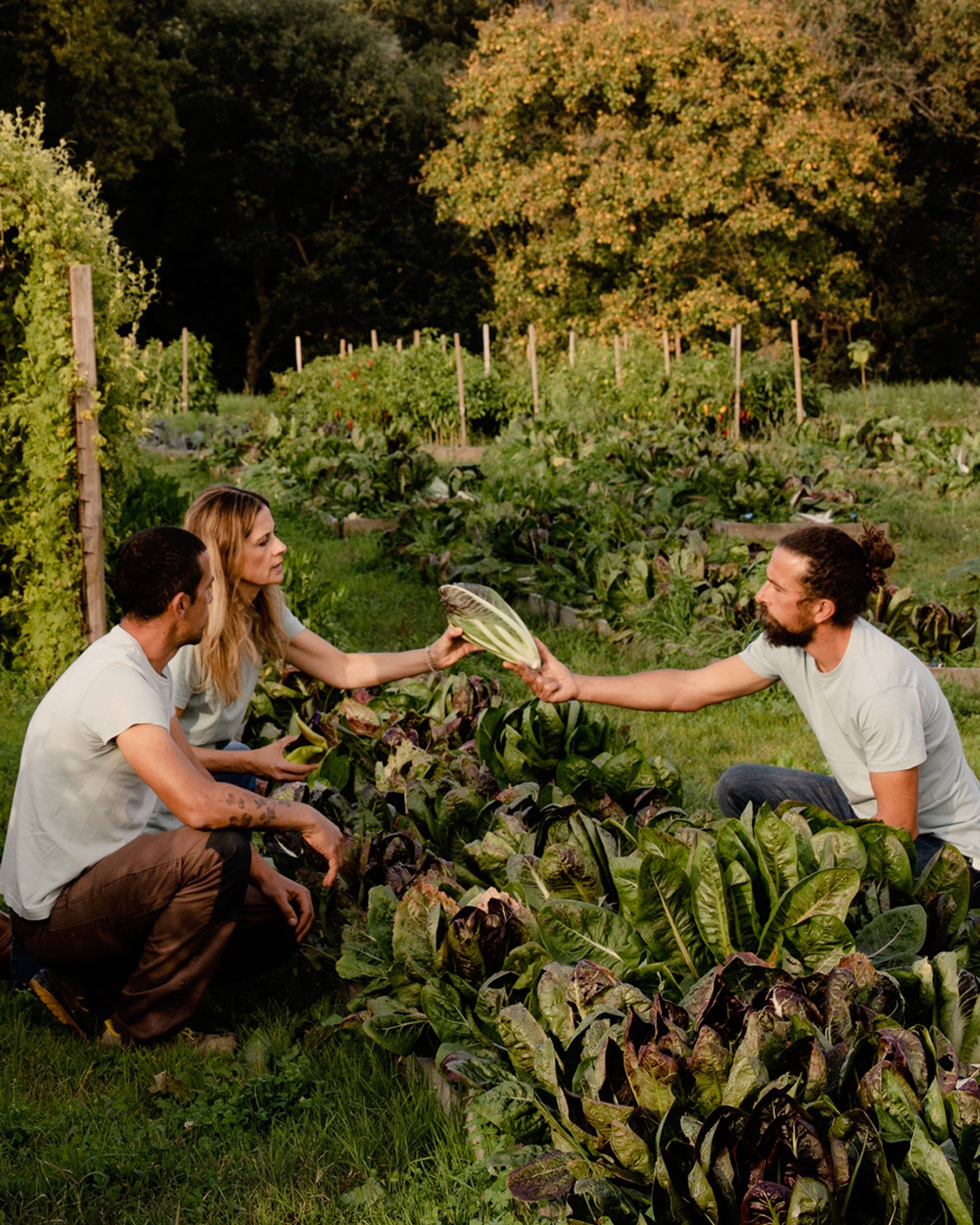
We know the name of the people behind everything we source. Recognise their growing artistry to find out exactly where your food comes from (and why that matters).
MEET THE GROWERS

Make your diet diverse
Our growers work with varieties chosen for quality and nutrition, not yield. By selecting their crops you keep heritage seeds in play, add to ecosystem biodiversity and preserve unique flavours.
PEAK SEASON BOX
United Kingdom
© 2026 Natoora Ltd.