IN CONVERSATION WITH HAMISH POWELL
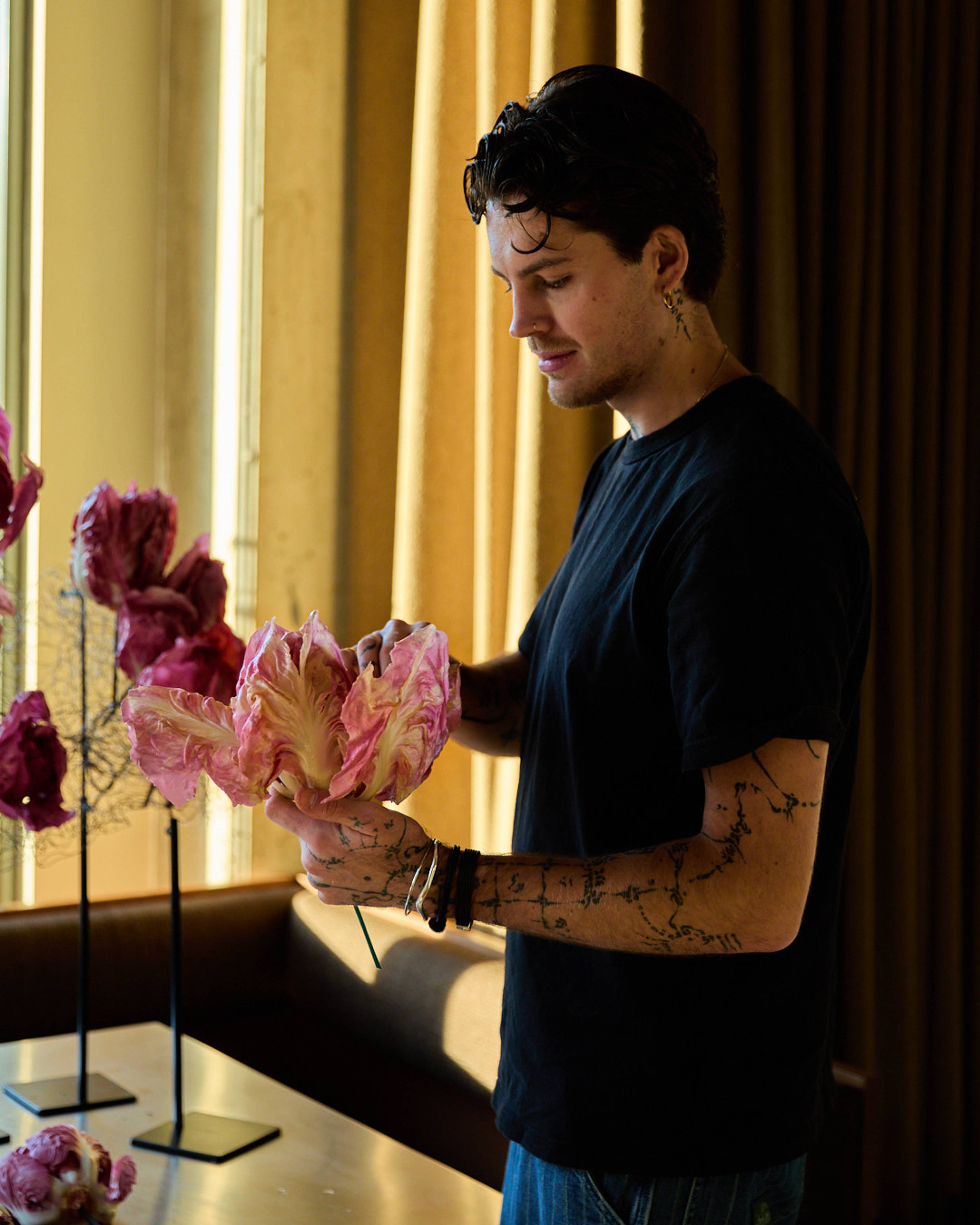
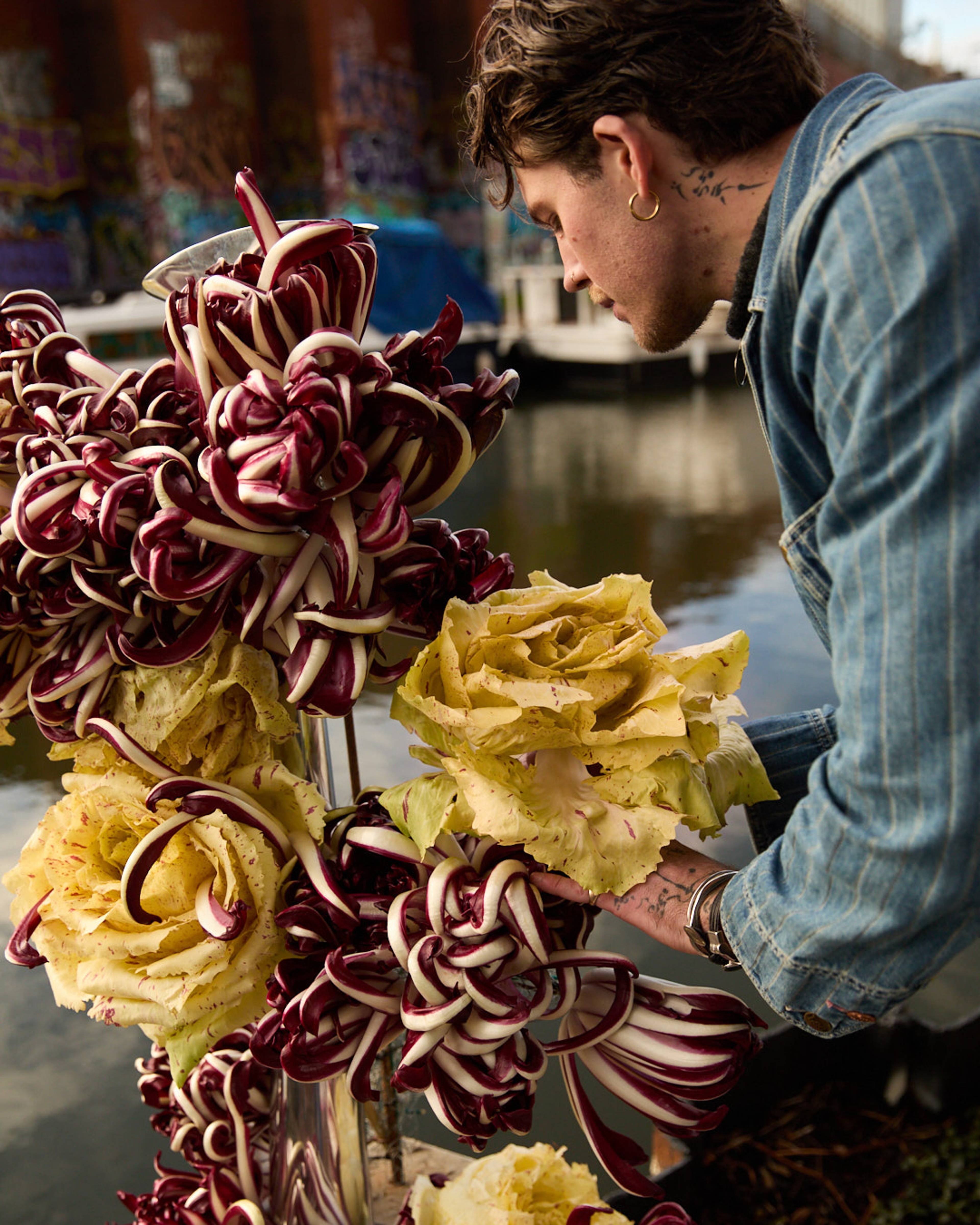
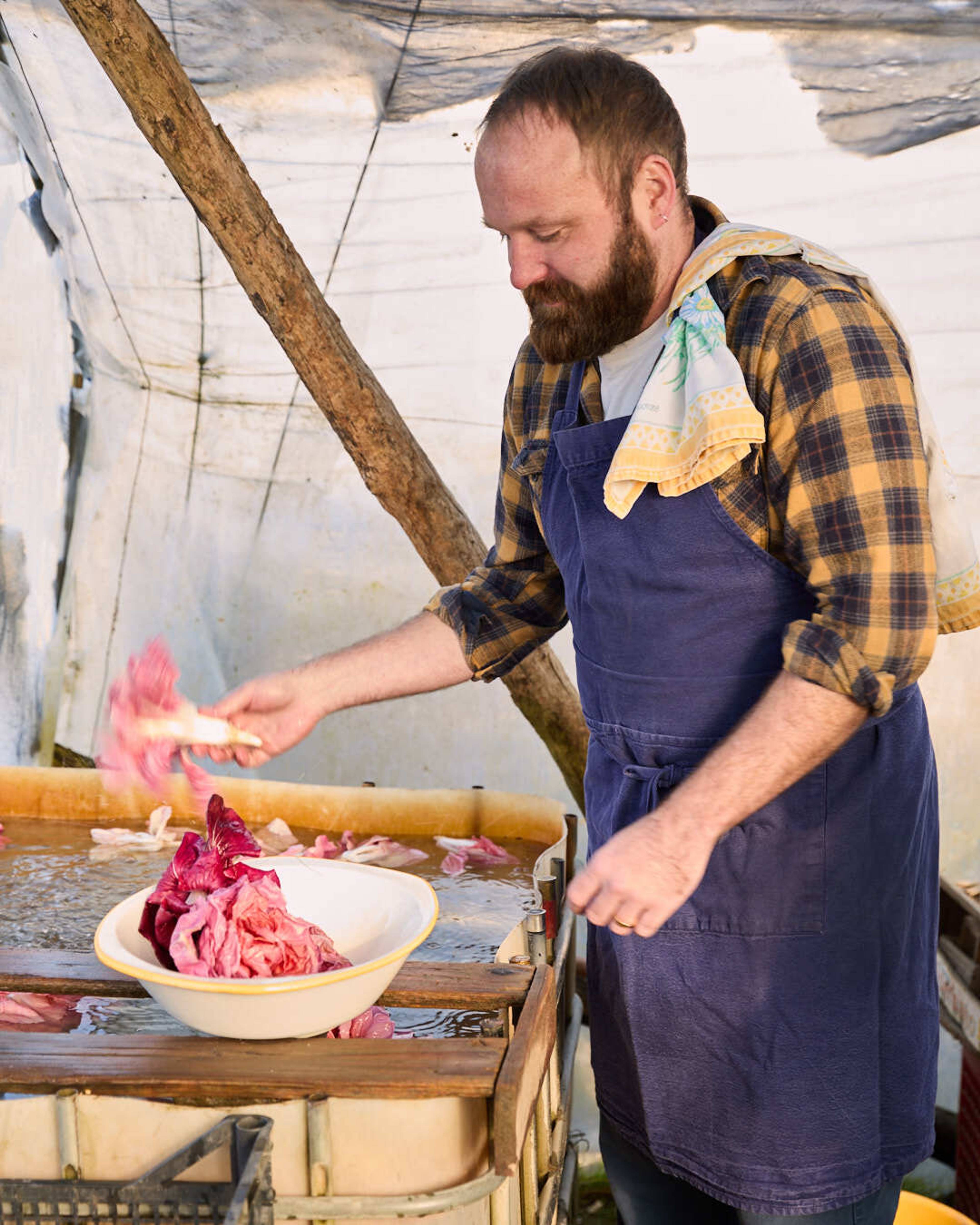
Hamish Powell for Radicchio, not Roses at Canal Restaurant, London.
Hamish Powell is a multidisciplinary floral artist whose work seeks to reawaken our connection to nature. With a background in botanical science, he approaches floristry not as decoration, but as a living, time-bound art form. Plants are both his muse and his medium, selected for their character and often fleeting beauty.
Hamish's instinctive, materially led practice has seen him collaborate with some of the world’s most influential brands, including Hermès, Burberry, Loewe, Diptyque and Claridge’s. Across fashion houses, galleries and intimate spaces, his work is united by a deep respect for living materials and a commitment to working with nature rather than imposing upon it.
Seasonality, as he puts it, leads to honest art. It opens up the door to surprise and exploration.
“Working seasonally brings character back. It introduces variation, surprise... even limitation. These things give the work depth. You’re responding to what the land is offering rather than imposing an image onto it. The result feels more honest, and often more memorable.”
Hamish Powell
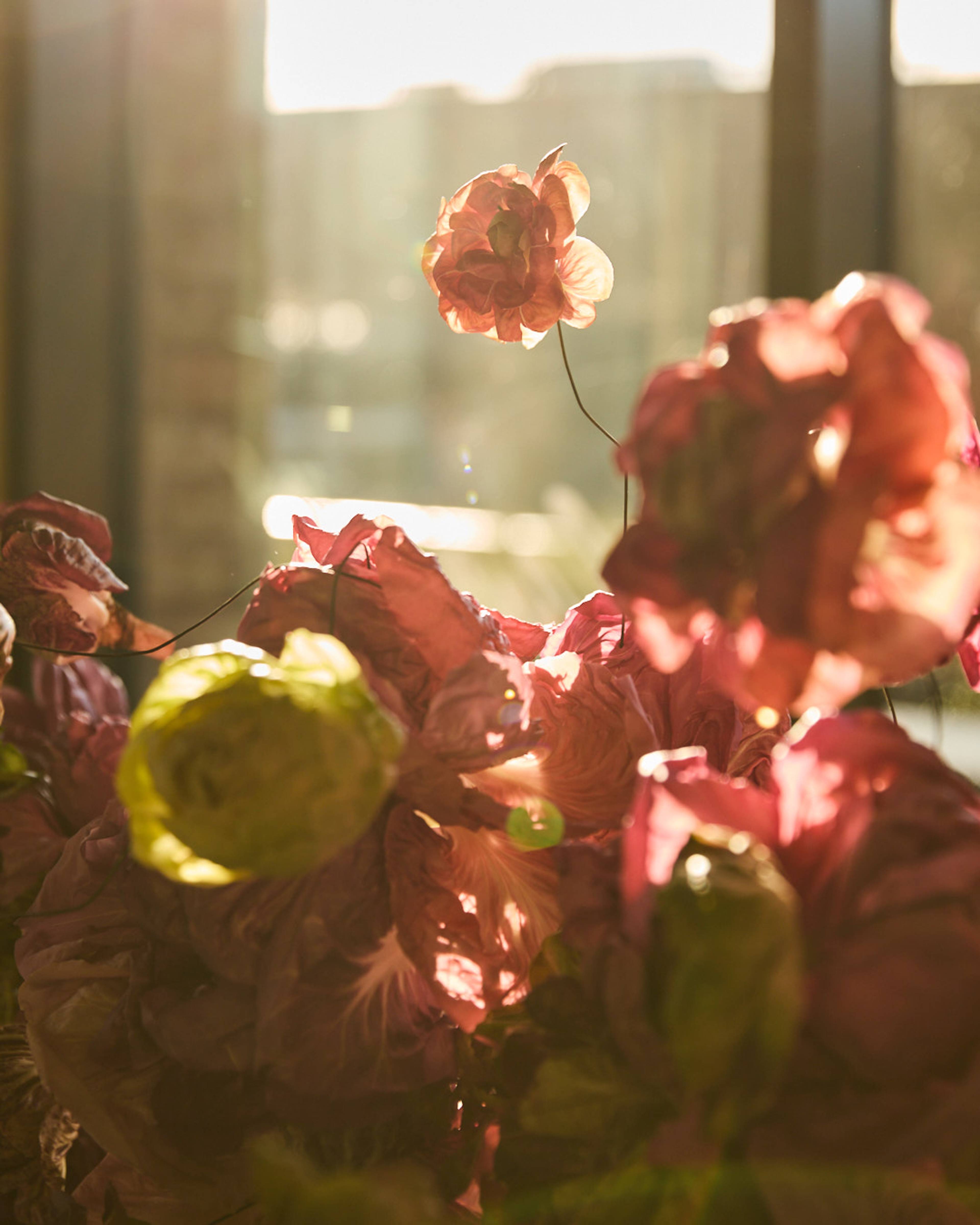
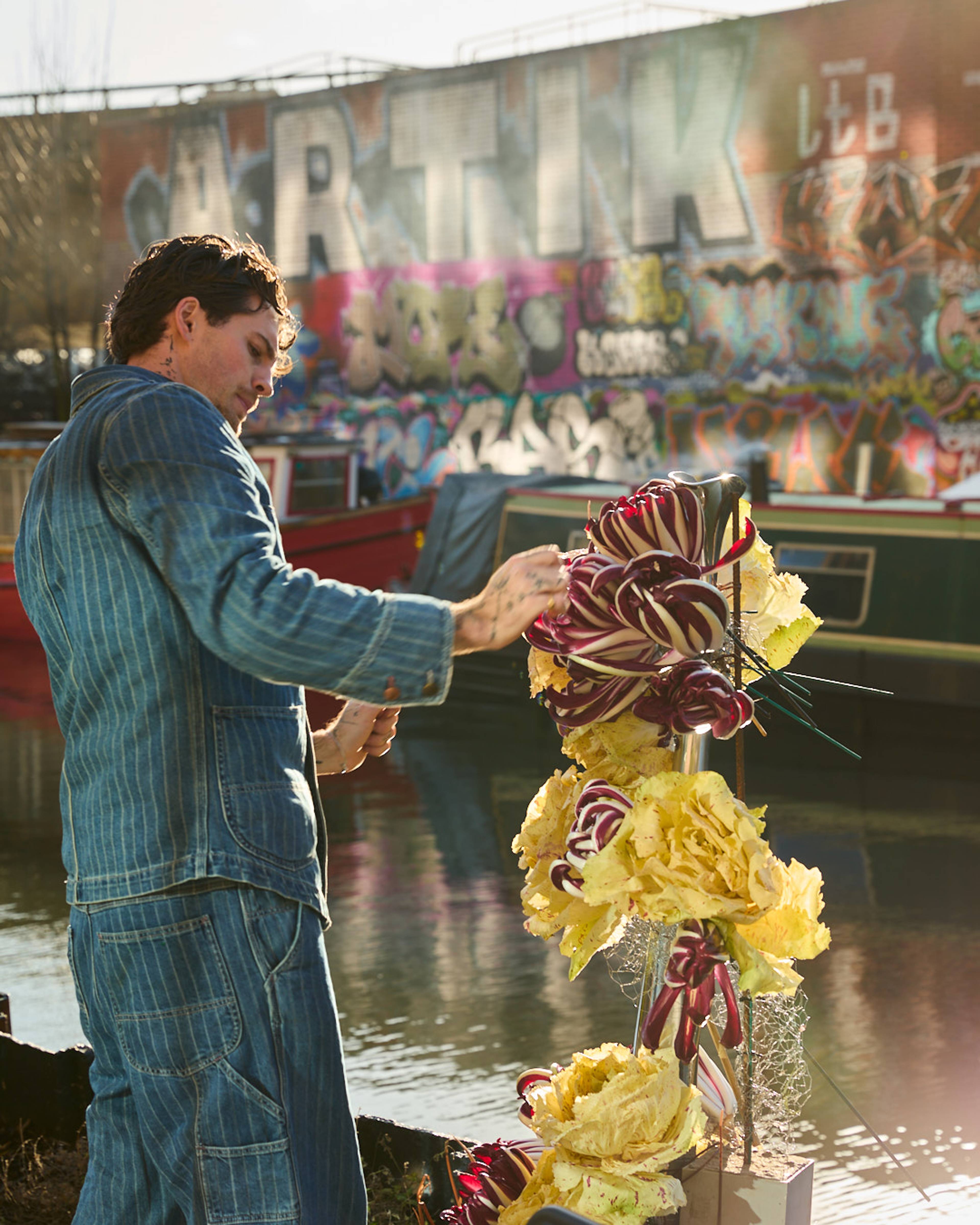
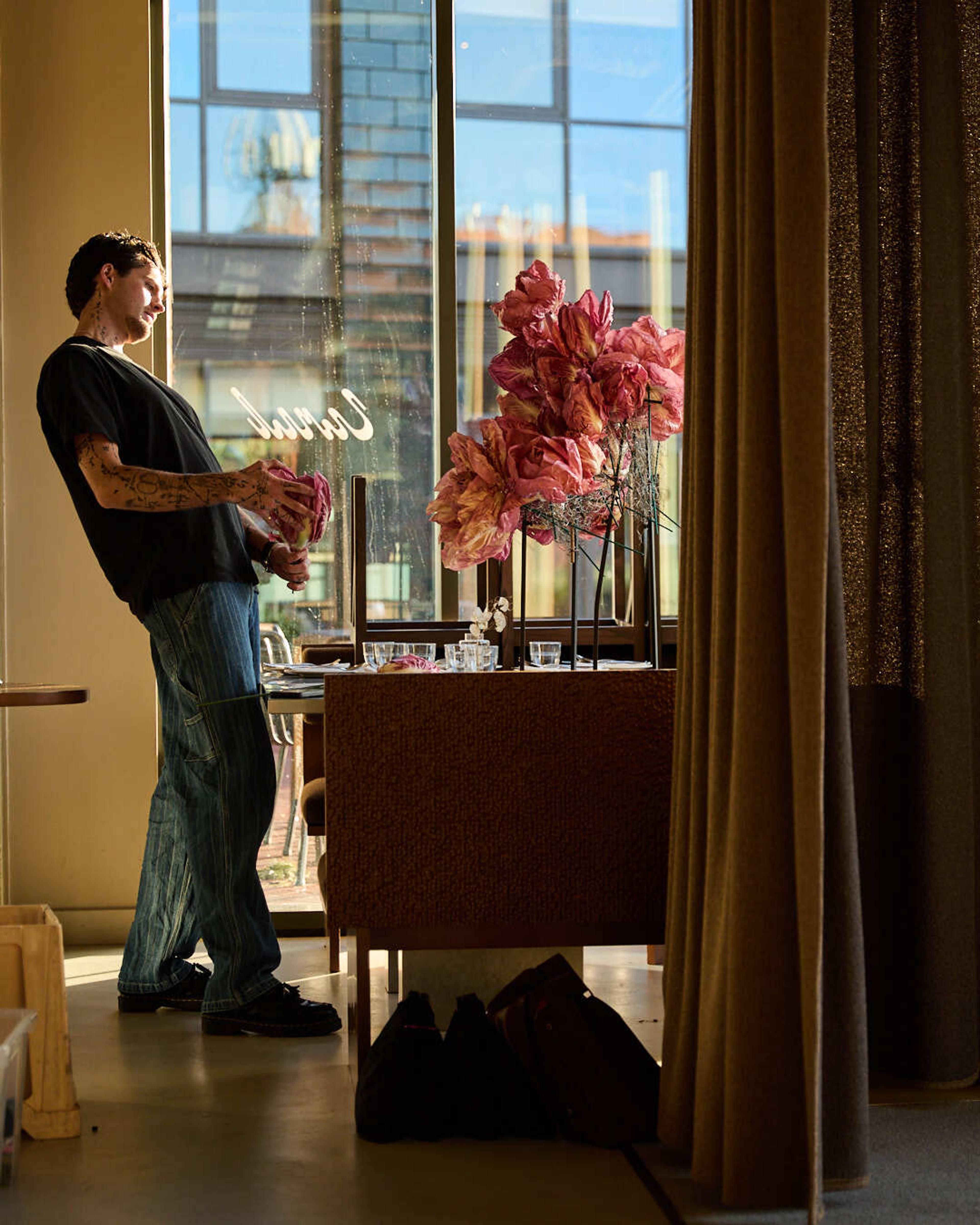
When we first approached Hamish about collaborating on Radicchio not Roses, his response was a welcome one. He told us he’d been waiting for his time to work together. A sentiment that made the collaboration feel all the more meaningful. He brings his philosophy to Canal in West London, transforming winter Radicchio into a striking sculpture both inside the restaurant and outside along the water’s edge.
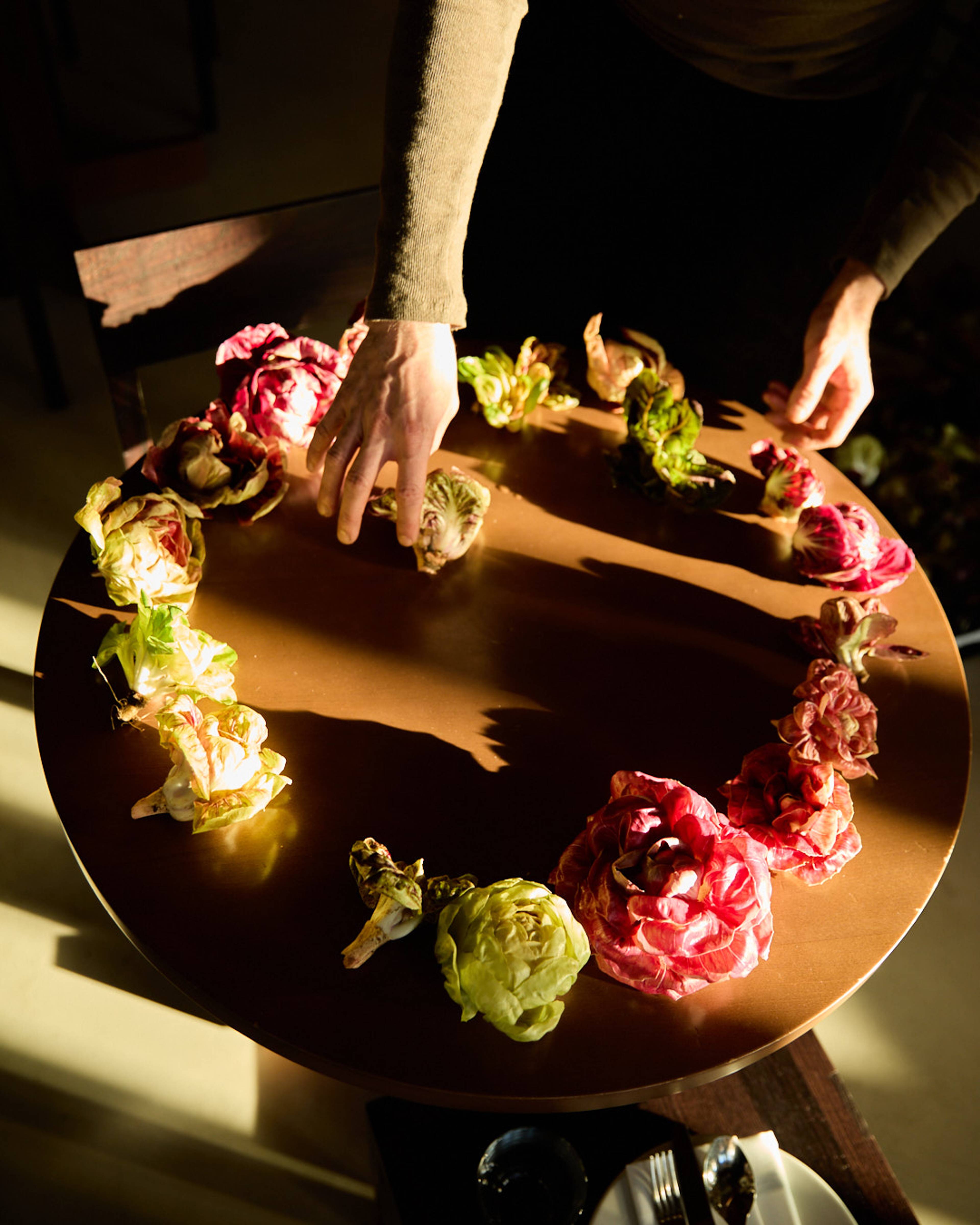
Some Radicchio heads are large and bountiful, balanced on wires like lollipops; others take the form of small and whimsical, peach-toned scrunches. As Hamish quietly arranges them, he speaks of how “they have a life of their own”. Thick, crisp purple varieties sit in contrast to lighter, leafier forms, creating a composition that feels both considered and alive. To witness the work taking shape is a privilege, an act of artistry grounded in attention.
In the depths of winter, a time often defined by greys, the deep pinks and purples of Radicchio offer a reminder that beauty doesn’t disappear in winter; it simply shifts. Seasonal and surprising, fragile and deeply expressive, the vegetable becomes a stand-in for Hamish's wider practice, reawakening our connection to nature by asking us to look again.
In this conversation, Hamish reflects on his deep respect for living materials, the joy of seasonality, and what it really means to work in alignment with nature.
What first drew you to floral artistry?
I didn’t come to flowers in a very traditional way. I started as a biologist, so I was interested in how living things behaved, how they grow, age, and eventually disappear. Flowers became a way to work with that in real time. To make something beautiful while knowing it wouldn’t last.
How does your background in botanical science shape the way you handle living materials?
It’s given me a lot of respect for the materials. Understanding how plants are structured, how they take in water and how they break down means I’m not fighting them. I’m paying attention to what they want to do and working with that rather than against it.
Your installations have appeared everywhere from luxury fashion houses to intimate spaces. Could you tell us about some memorable projects you’ve worked on over the years?
Last year was a big year for me, testing the limits of materials and brand guidelines alike. Something that felt like a revelation for me was a commission for Hermès in July. I mixed meticulous sculpting of thousands of thistles with hand sculpted aluminium metal sheeting. They worked together so well, despite being manmade versus nature. It opened my eyes to mixed media work – combining flowers with other mediums. And then it made me think, will it always be flowers? Am I slowly edging to ‘artist’ and not just ‘floral artist’?
Another important one for me last year was Charli xcx’s wedding. Not only was it a big personal achievement, because I love her, but it was a big moment for my sense of style. Charli and I worked towards a floral mood that was airy and un-arranged. It was lovely, but I didn’t know if it was very ‘me’. Yet still, even before I shared anywhere that I did her flowers, people were excitedly messaging me asking if I was behind them. It gave me a sense that there was already a voice running through my work, even before I could name it.
How central is seasonality to the way you create?
Seasonality is really important to me, but not in a rigid or dogmatic way. It’s more about letting the time of year set the tone: the colours, the textures, even the energy of the work shifts naturally when you pay attention to what’s around you. I like that it removes the pressure to force a look. Instead, the work becomes a response to a moment, a place, and what’s actually available.
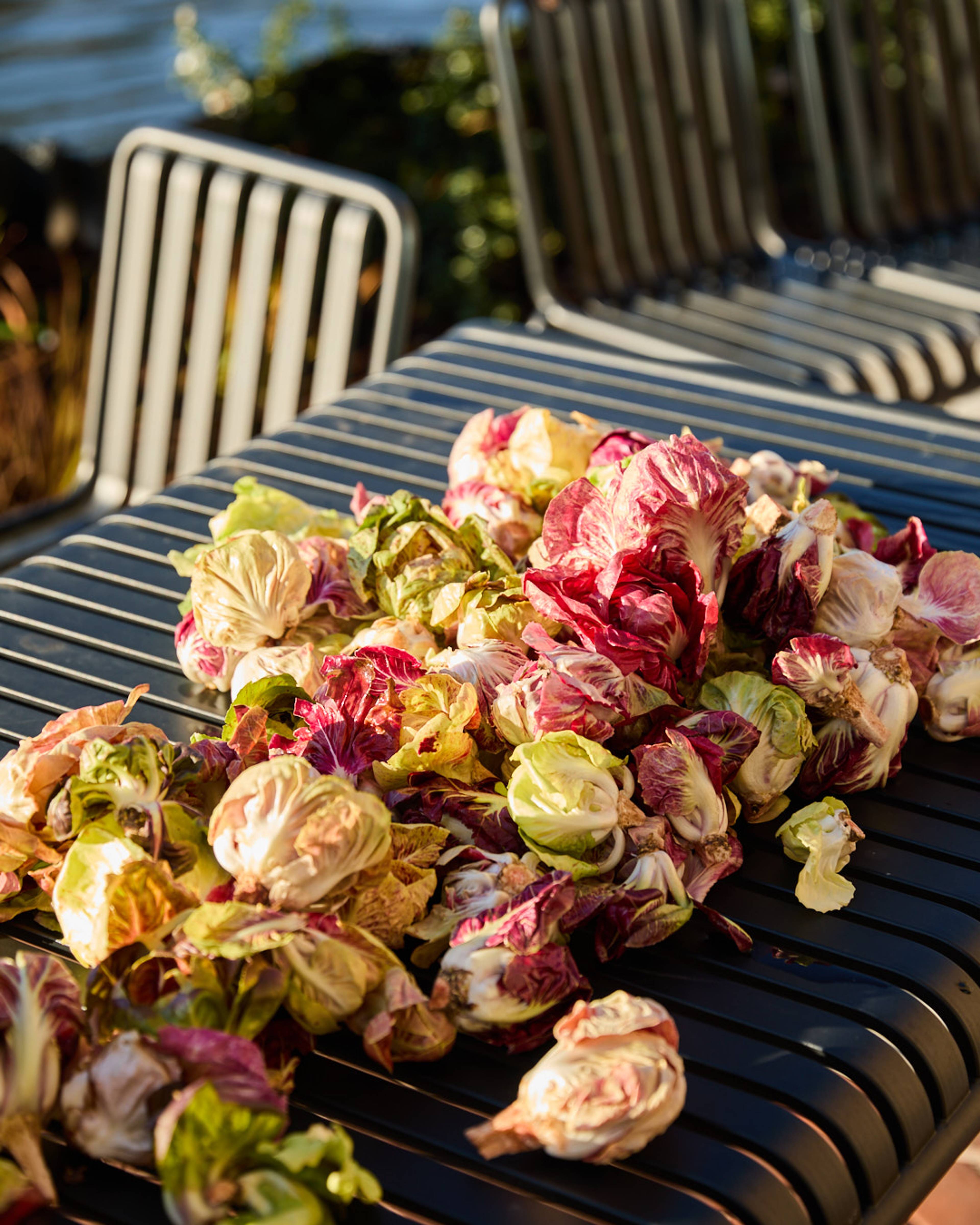
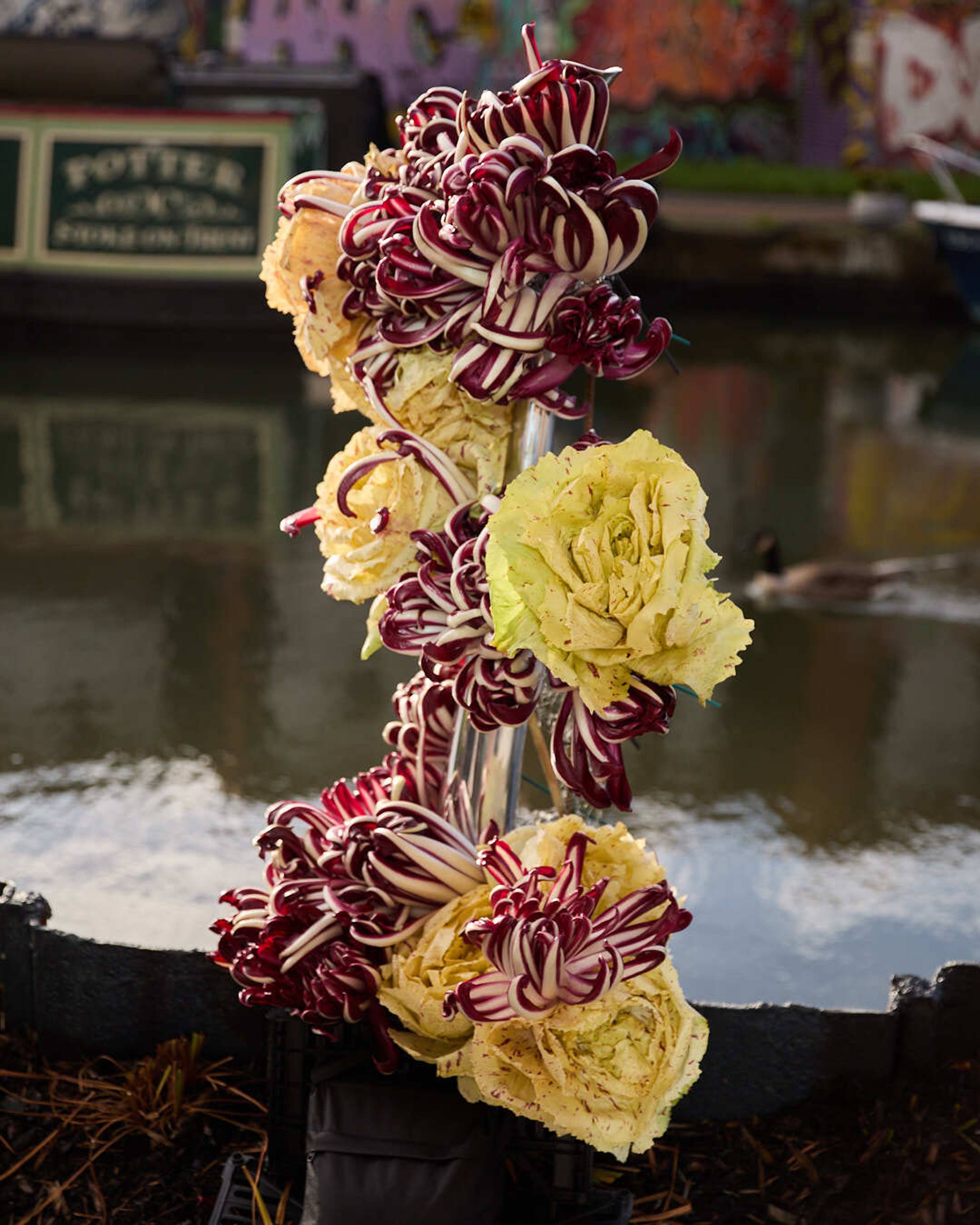
“I had to keep pinching myself to remind us all that these are vegetables. Some of them really looked like flowers. They have this incredible colour and structure.”
How does working with what’s available and in season sharpen or direct your creativity?
It simplifies things. When you’re not choosing from everything, you make clearer decisions. You respond more instinctively, and the work tends to feel more honest. I really believe that challenges curate creativity – any form of restriction forces a redirection of thought, and a more explorative approach.
In a world where flowers are often mass produced and flown across continents, what do we lose when we ignore seasonality? And what do we gain when we honour it?
When flowers are flown around the world to meet a fixed idea of what’s ‘right’, something gets lost. Not just environmentally, but emotionally. Everything starts to look interchangeable. A wedding in winter can look the same as one in summer, in London or elsewhere, and you lose any sense of place.
Working seasonally brings character back. It introduces variation, surprise, even limitation, and those things give the work depth. You’re responding to what the land is offering rather than imposing an image onto it. The result feels more honest, and often more memorable.
Radicchio is typically associated with the plate. What excited you about using it as your primary material in this campaign?
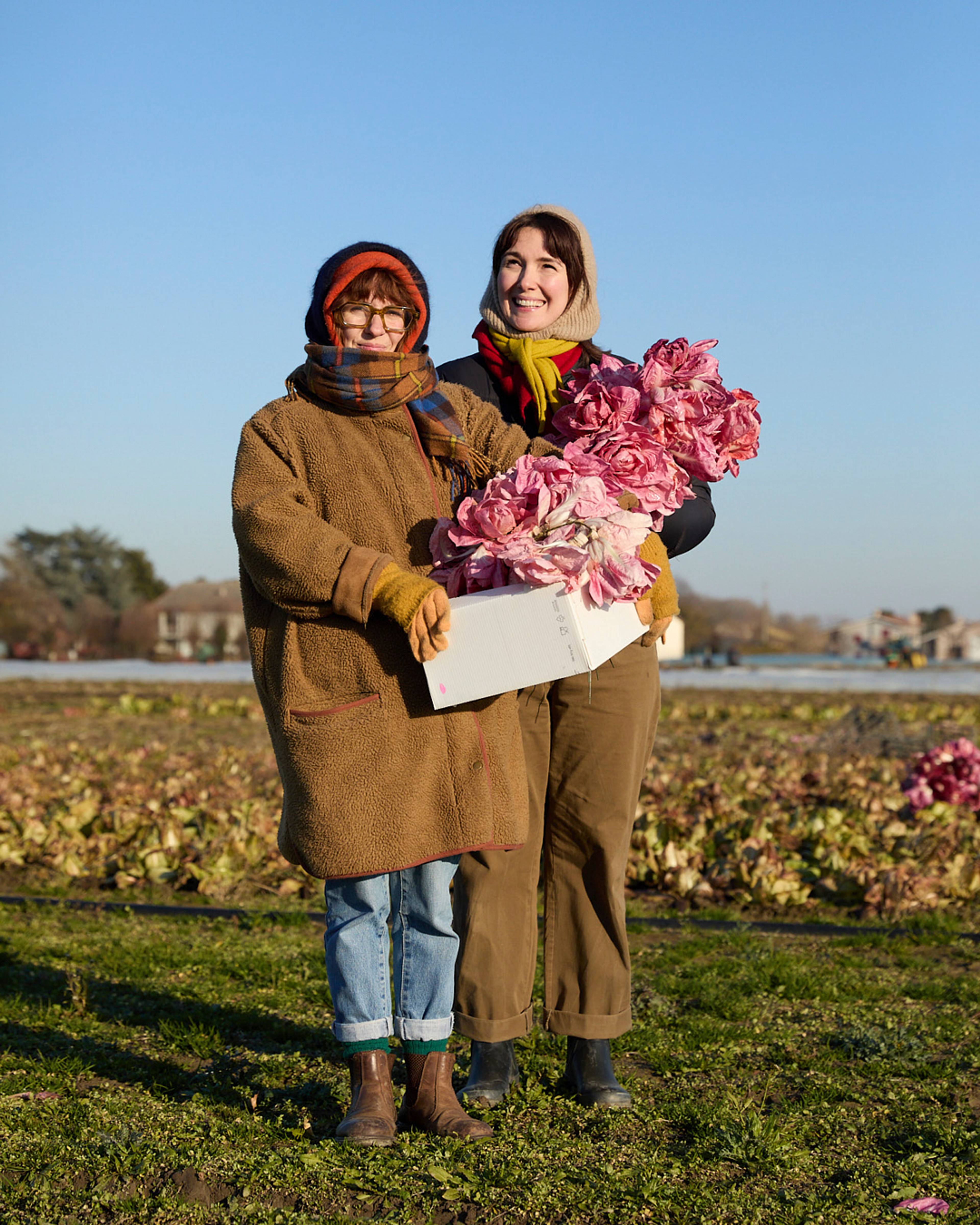
Gosh, I was so excited to be working with it. I’ve met Radicchio before, but never like this. I HAD to keep pinching myself to remind us all that these are VEGETABLES. Some of them really looked like flowers. They have this incredible colour and structure, but are also quite fragile and quick to wilt. That tension really appealed to me. It felt like a material that could hold form for a while, then slowly let go.
“Hopefully this makes people look at everyday things a bit differently. To see that something simple and seasonal can still feel special if you give it time and care.”
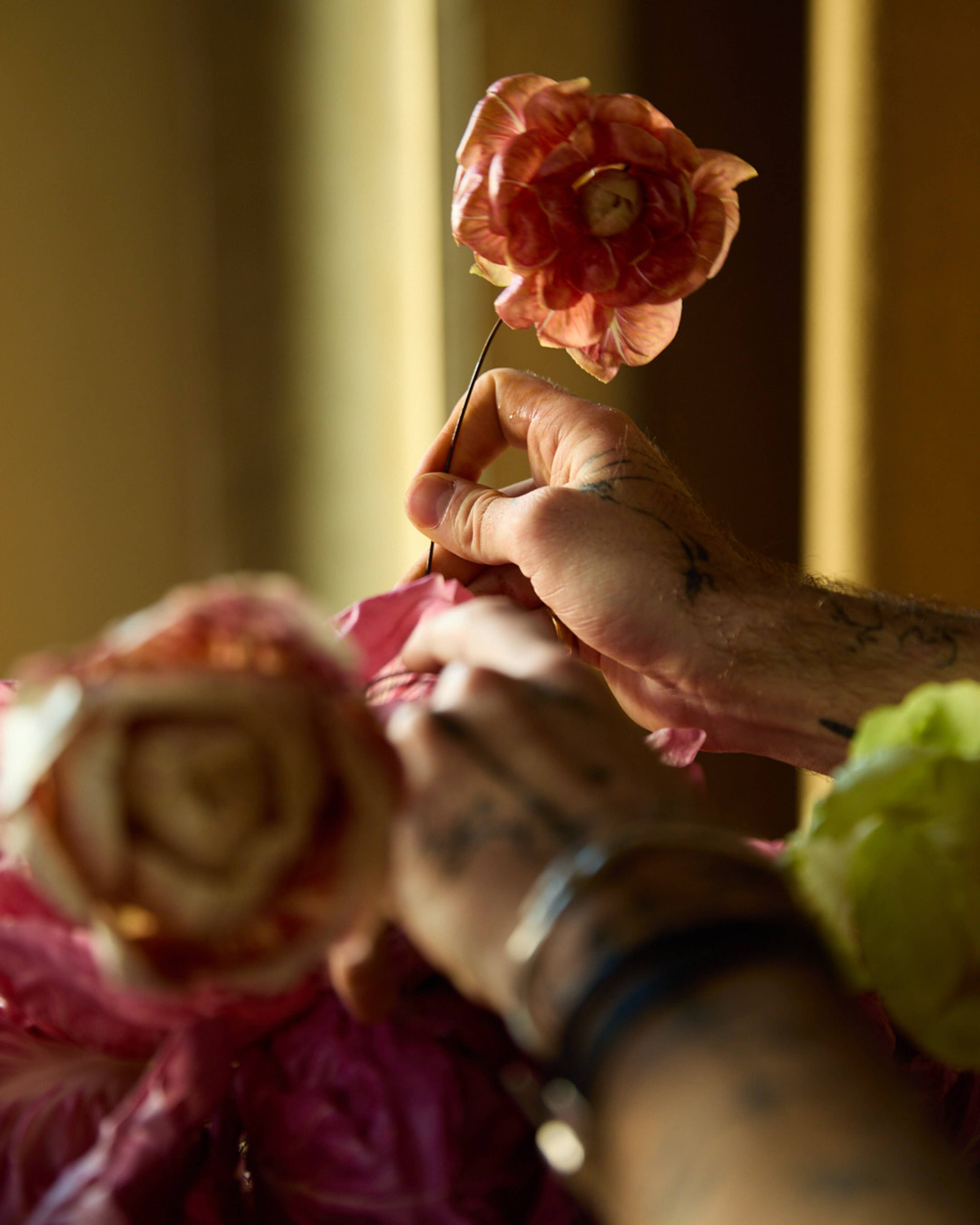
When someone encounters one of your creations, what do you hope lingers with them after the materials are gone?
I don’t necessarily want people to walk away with a clear takeaway or message. I’m more interested in how the work makes them feel in the moment. Maybe it slows them down or makes them look twice at something familiar. If it creates a small pause, or a quiet shift in how they’re seeing things. That feels enough. Something like this Radicchio project would offer that moment: how can these vegetables be arranged? Are they flowers? How are they pink?
What do you hope people will take away from this campaign?
Hopefully it makes people look at everyday things a bit differently. To see that something simple, seasonal, and familiar can still feel special if you give it time and care.
Outside of florals, what’s inspiring you right now?
I’m really really really into scent right now. I mean, I always have been, but it’s alchemising itself into new forms of inspiration. I want to create things that interpret scents or that produce their own interesting aroma. I think there’s this draw in me to reification. To instantiate a concept into something tangible.
What styling tips would you share for creating beautiful dining experiences at home?
I think Radicchio is so incredible, it really doesn’t take much. I would say give the material the respect it deserves – maybe raise it a little by putting it on a box or riser. You could zhuzh up the Radicchio by opening up their leaves like I did in my sculpture in Canal. By gently peeling open the outer layers they double in size and look really rose-y. Let the material sing, it will remind people that beauty doesn’t need to be complicated, it just needs attention.
Stories
Voir tout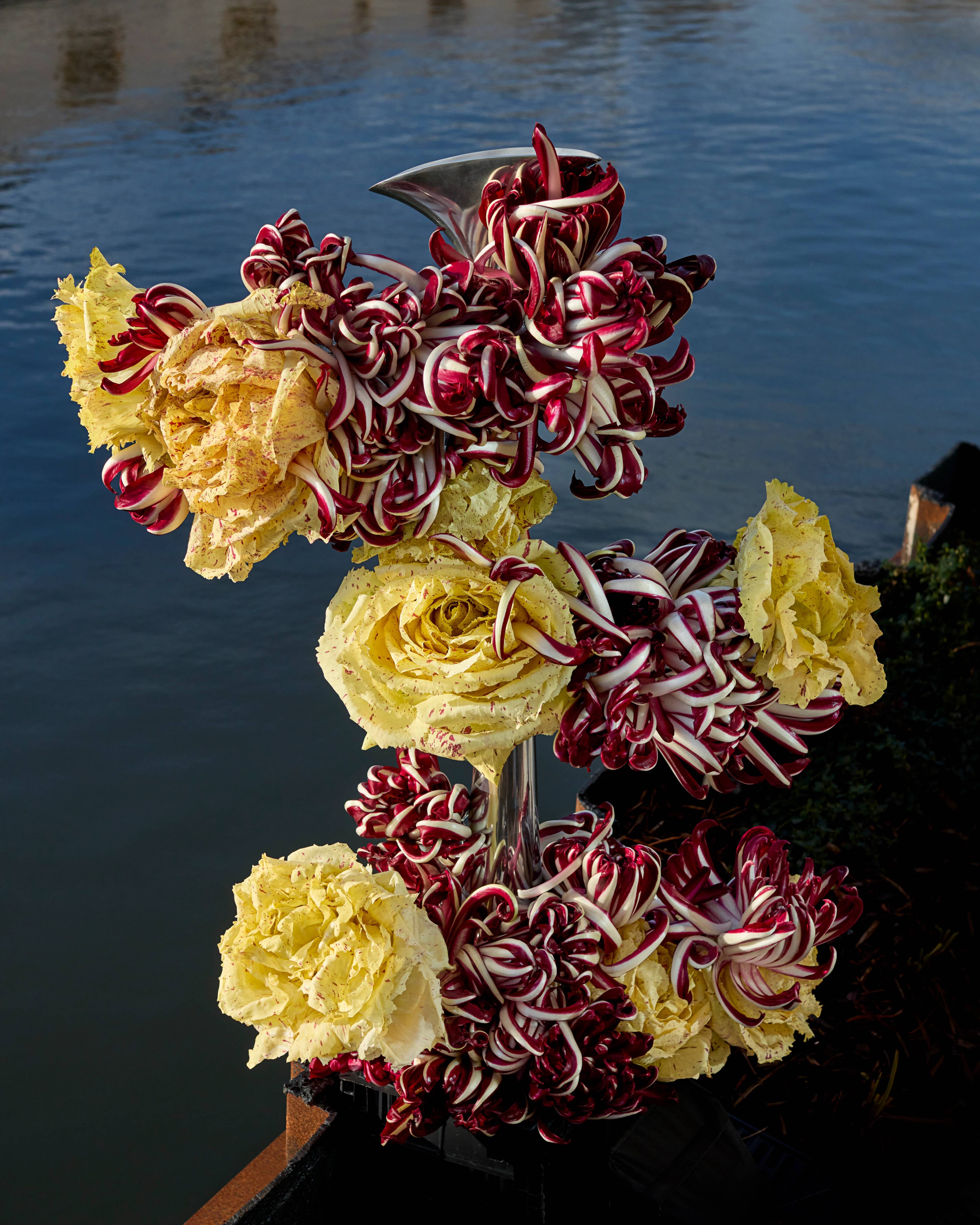
We exist to fix the food system.
People are more cut off from the origins of their food than ever. This makes flavour, nutrition and farming practices that protect the planet, almost impossible to find.
By working directly with growers, we create a more sustainable way forward for farming. By giving everyone the tools to understand the power of our food choices, we empower everybody to become drivers of change.
Now is the time for action. Join the food system revolution.

Go beyond four seasons
Each fruit and vegetable has its own season, with subtle shifts which happen every day. Follow their microseasons to unlock flavour at every stage.
WHAT’S IN SEASON?

Know where your food comes from
We know the name of the people behind everything we source. Recognise their growing artistry to find out exactly where your food comes from (and why that matters).
MEET THE GROWERS

Make your diet diverse
Our growers work with varieties chosen for quality and nutrition, not yield. By selecting their crops you keep heritage seeds in play, add to ecosystem biodiversity and preserve unique flavours.
PEAK SEASON BOX
United Kingdom
© 2026 Natoora Ltd.