AT THE TABLE WITH NAZ HASSAN
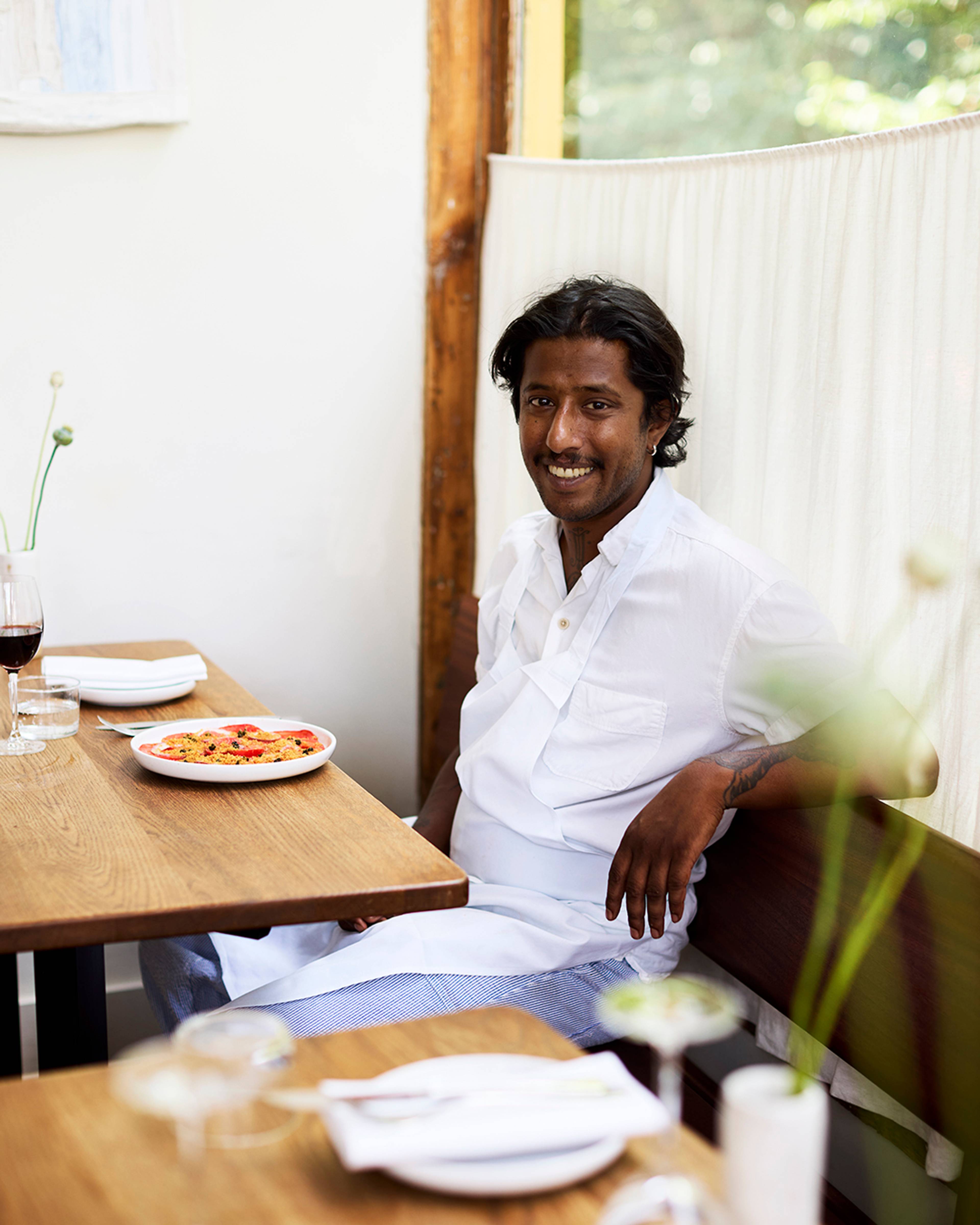
It takes us a while to begin the interview. Not because the restaurant is busy – there are still a few hours to go until service – but because every so often, someone passes the open front door who Naz knows. A neighbour. The lollipop man from the crossing outside. A familiar face returning from the school run...
He runs out onto the Highbury Park pavement, arms stretched wide. "Maggie!" he calls, embracing a friend he hasn't seen in a while after spending the early summer opening Lupa's sister restaurant, Ornella, a couple of miles away. Moments later, he's shaking hands with the lollipop man, asking how he's been while children weave around them on their way home.
It's hard to imagine a better introduction to Lupa.
From the mustard-yellow frontage to the cosy dining room inside, Lupa feels like a warm corner of the community. Large windows frame the leafy street outside like paintings. Linen café curtains move gently in the breeze from a fan humming against the summer heat. Wine bottles line a high wooden shelf. Pink flowers lean lazily from their cream ceramic vase. Melted candle wax still clings to the holders from the night before.
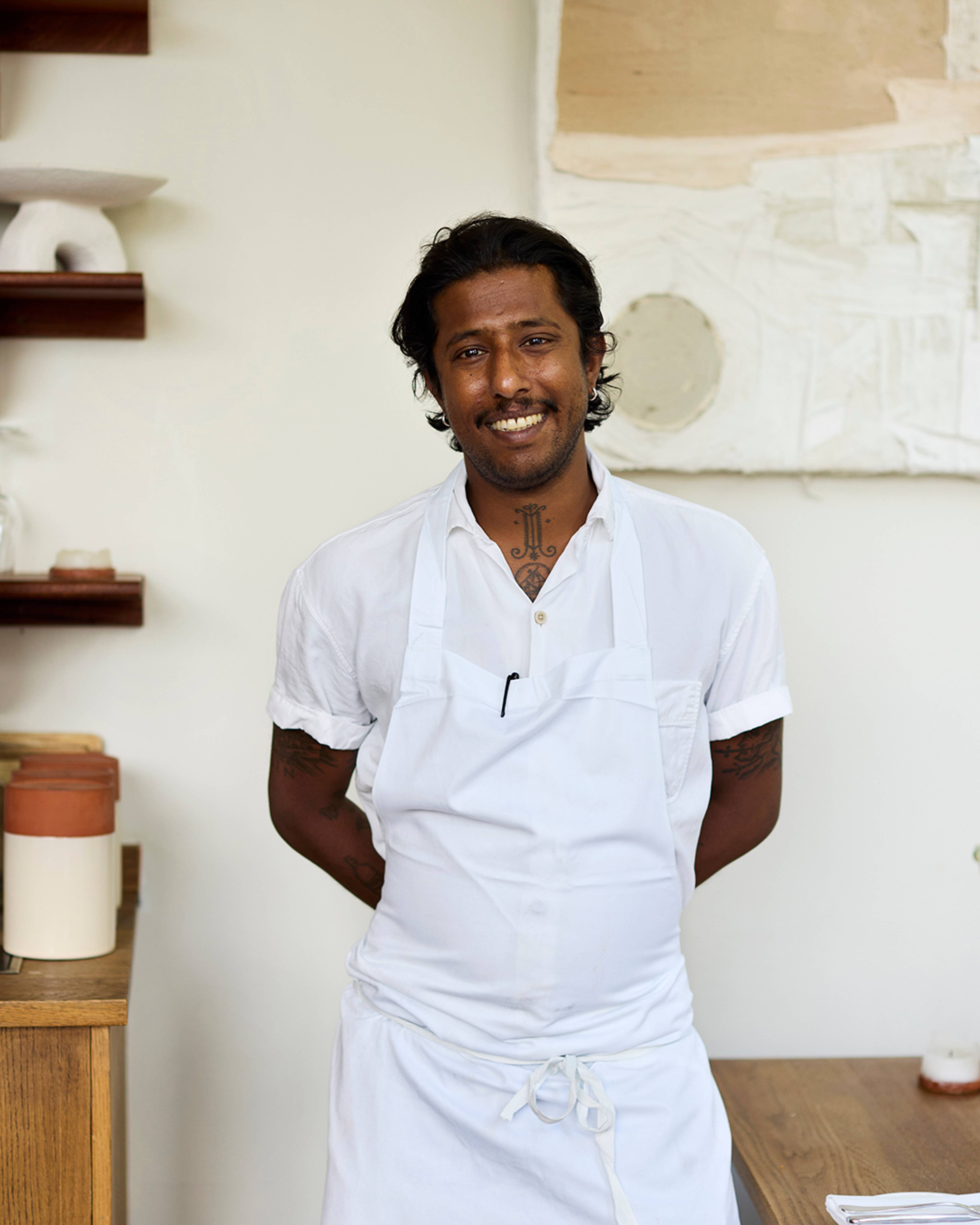
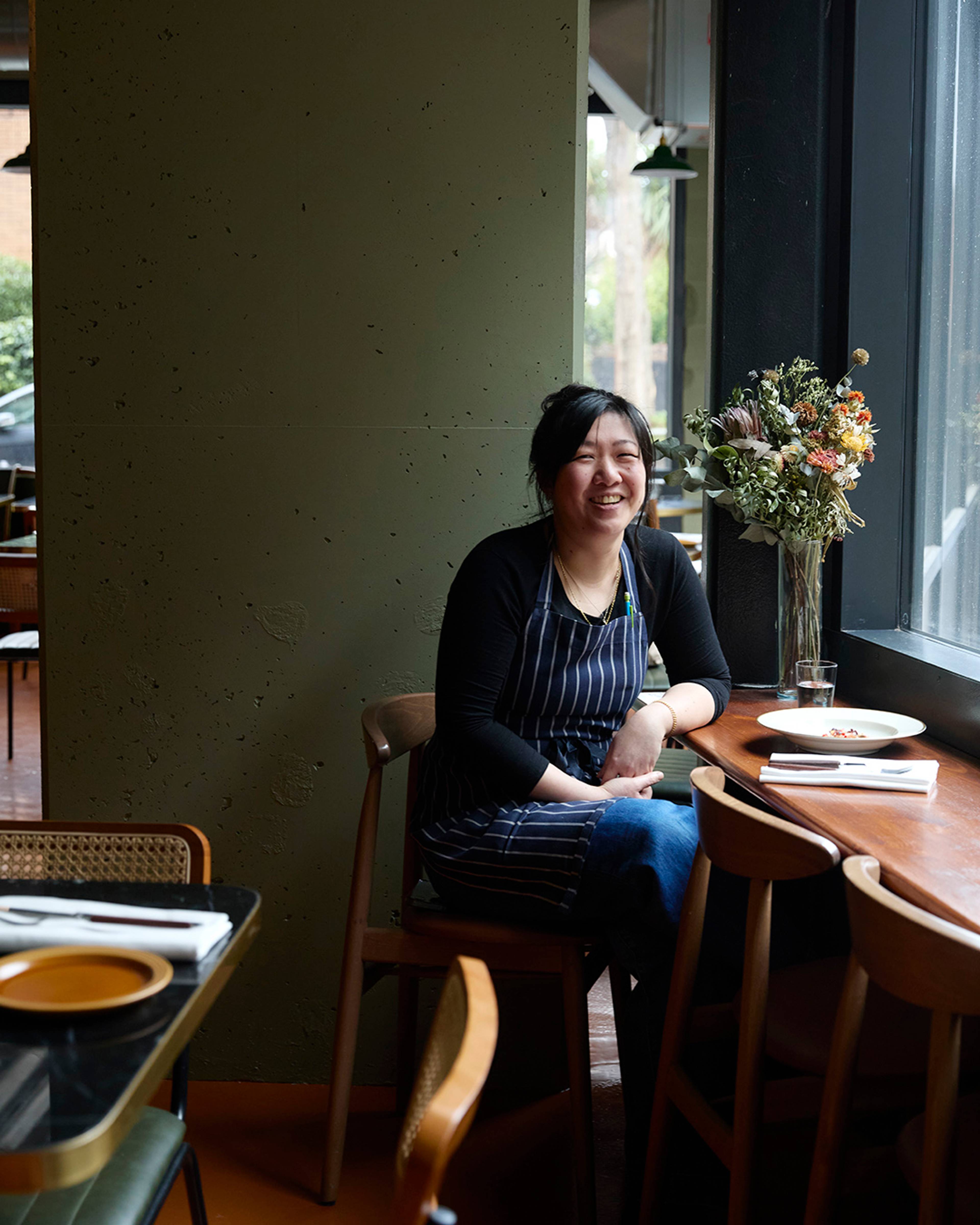
The kitchen is small – just enough room for three chefs and a porter. Terracotta walls glow warmly behind the pass, where dishes emerge through a small opening into the dining room. It's compact, but calm.
For head chef Naz Hassan, that's exactly the point.
"We wanted people to come in and almost forget they're in a restaurant," he tells us. "Just enjoying each other's company."
That thinking runs through the menu, too. Roman cooking, he says, is built on simplicity with a handful of exceptional ingredients, treated with care. Rather than disguising them, the cooking allows each one to speak clearly.
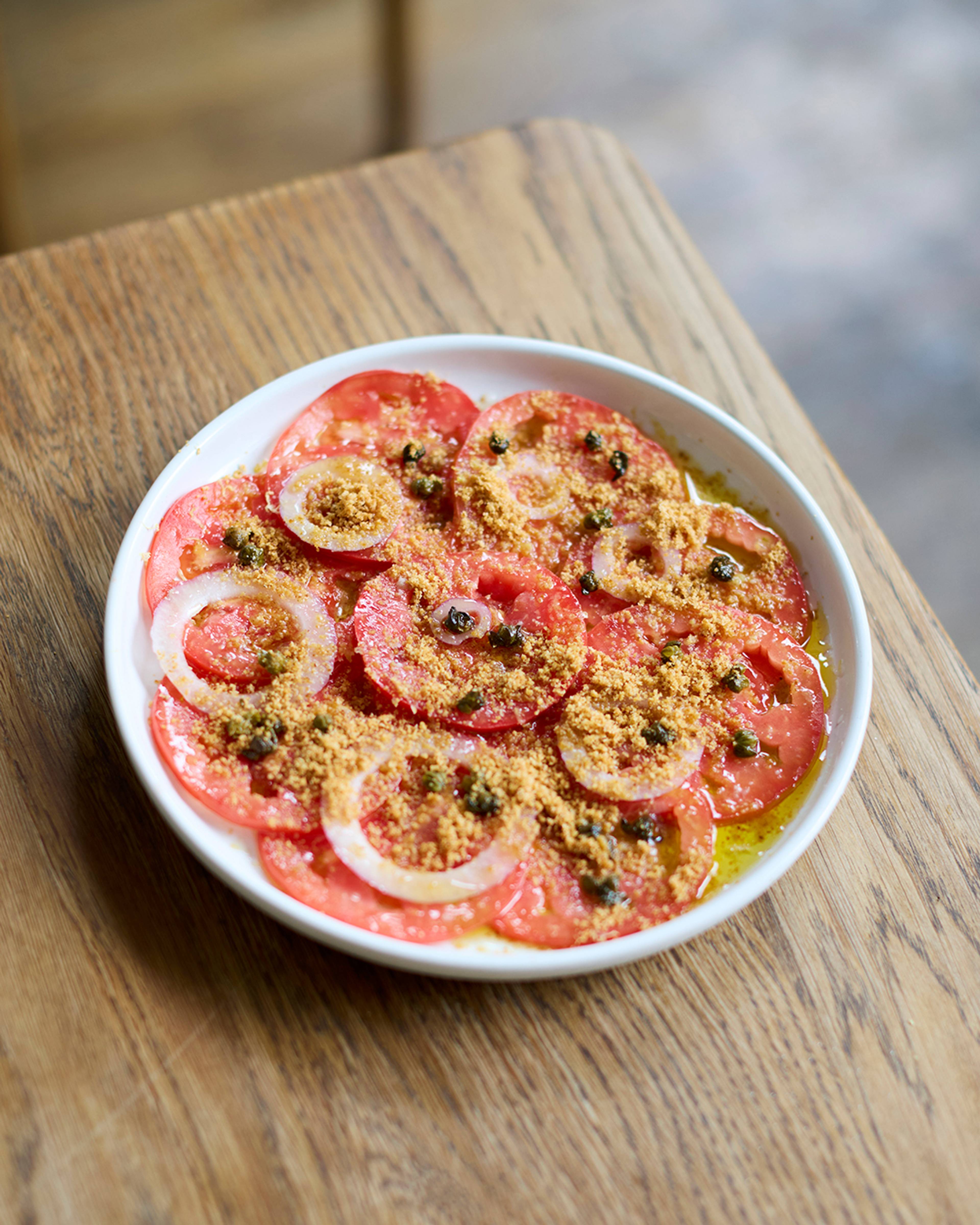
Today, he puts that philosophy into practice with a Cuore del Vesuvio Carpaccio.
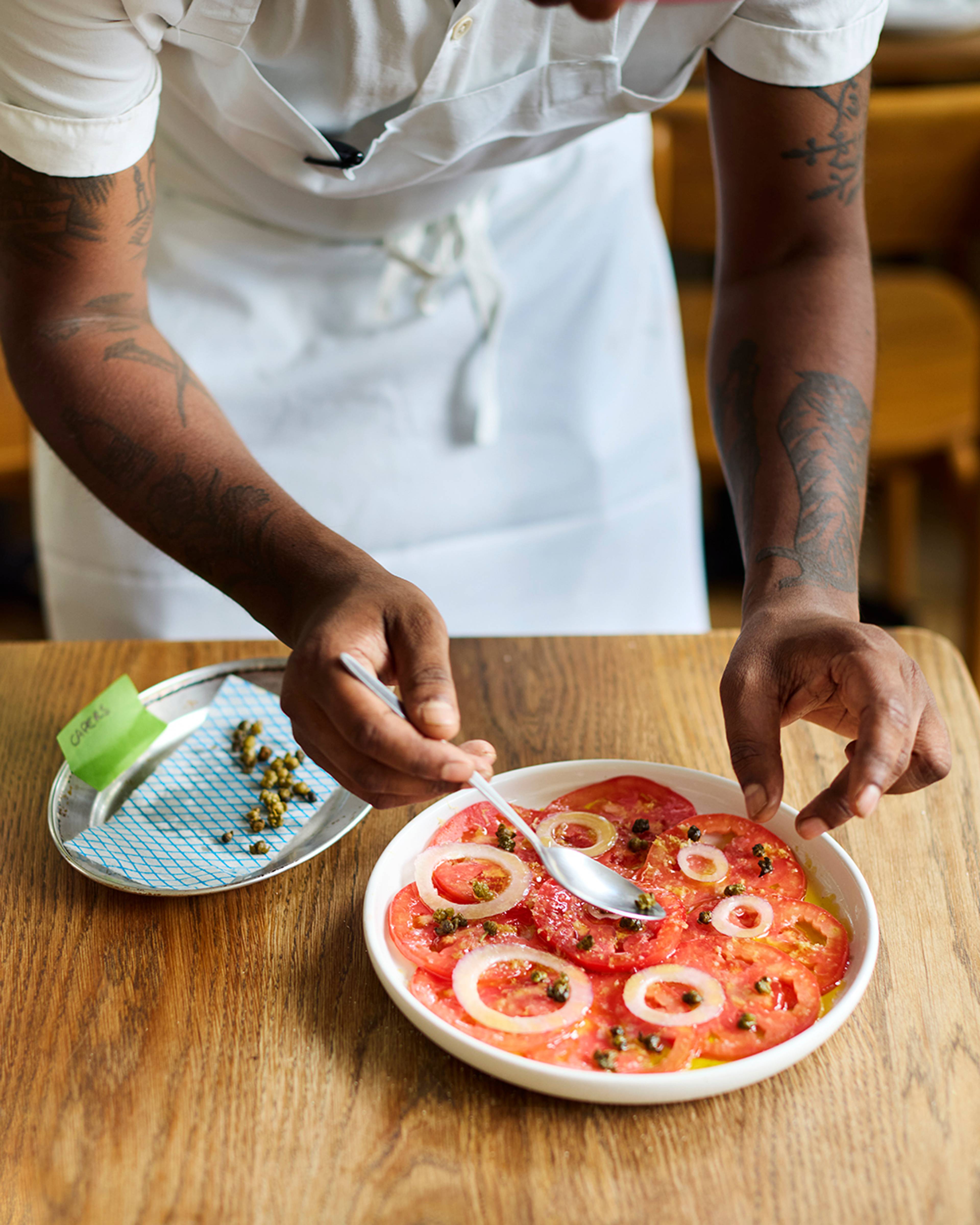
Naz begins to prepare the dish, slicing scarred tomatoes on a wooden chopping board. As he does so, they reveal a bright red flesh, each piece layered carefully across the plate.
Next, fine rings of sweet Breme Onion are scattered over the top before a generous sprinkle of zest from an Unwaxed Leafy Lemon – Naz's preference for its especially fragrant oils – bring brightness and perfume.
Half the lemon is then squeezed over the tomatoes, followed by flaky grey salt, clusters of capers and a lavish pour of Senia Extra Virgin Olive Oil that pools gently beneath the fruit.
Buttery golden breadcrumbs made from yesterday's focaccia are the final flourish, dusted generously over the top.
"The quality of the Cuore del Vesuvio is incredible...The minerality, the acidity, the sweetness they develop as they mature."
A great tomato, as he puts it, is about more than just sweetness. Aroma matters just as much. Texture matters. The way it yields without collapsing.
As we talk, chunks of warm, salty focaccia arrive from the kitchen. The crumb is soft and airy, perfect for sweeping through the olive oil left behind on the plate, collecting breadcrumbs, capers and the last traces of tomato juice. We finish up every drop.
Later, Naz reflects on the journey each ingredient has taken before arriving here. The growers, the pickers, the drivers, the suppliers and the people whose work rarely makes it onto the menu but whose hands shape every dish that reaches the table.
"That tomato started as a seed," he says. "It was watered, grown and picked. There's so much work behind it. I think it's important to respect that when you're developing a dish."
Watching him step outside to greet familiar faces, it's clear that same respect extends beyond the ingredients.
To start, could you tell us about the dish you've chosen today? What drew you to these particular ingredients?
We opened Lupa in the summer and wanted a vegetarian dish that really celebrated the season. Tomatoes are one of the best products you can get in Italy – they're some of the best tomatoes in the world – and we really wanted to showcase that.
Working with Natoora gives us access to some of the best tomatoes in the world, so when we were developing the menu we started thinking about what we could do. Oli very kindly gave me some to work with, and that's where the dish came from. We worked on it for a couple of weeks before we got it really balanced, but it was always something we really wanted to do.
Cuore del Vesuvio tomatoes are a key ingredient in the dish. What is it about this variety that makes it special to cook with?
The quality of the Cuore del Vesuvio is incredible. The land where they're grown is very important to us – the minerality, the amount of acidity, the sweetness they develop as they mature. Those are the key factors we look for when choosing tomatoes.
A tomato is a fruit, so it needs to have that fruit element, but the flavour and the smell are just as important. The difference between an average tomato and a really good tomato is the whole experience: the flavour, the aroma, the taste, the texture.
Cuore del Vesuvio has a firm, meaty texture, but at the same time it gives you that comforting softness a tomato should have without becoming mushy. Those are the key elements we look for.
Where did your love of cooking first come from? Was there a particular person, place or moment that set you on this path?
I wasn't the best student. I used to skip school and didn't really do much. My mum and dad, being South Asian, really wanted me to become a doctor, an accountant or a pharmacist. I wanted to go to art school, but my dad didn't want that. He took me by the ear and said, "You need to come and learn a trade because art isn't going to pay the bills." So I started working in the kitchen.
After that, I just ended up enjoying it, especially when I left my dad's kitchen to work abroad. I found myself in a kitchen where everyone was young, everyone was passionate about cooking, and I really loved it.
It was a place where you didn't need your passport or your identity, you just showed up with your knife, and that was enough. I struggled a lot with my identity as a teenager, being both Italian and Bengali. Once you're in a kitchen and you're good at what you do, people tend to forget where you're from. That sense of camaraderie and unity is what really made me fall in love with cooking.
Lupa is rooted in Roman cooking. What is it about Roman cuisine that inspires you?
I was at the Carousel Christmas party when Ed approached me. He said, "We're opening an Italian restaurant. Do you know any chefs who could help?" I said, "Yeah!" He told me they were opening it with a Hollywood actor, and I went home to my wife saying, "I'm opening an Italian restaurant with a Hollywood actor!" She just told me to go to sleep because I was drunk.
The next day, everyone remembered the conversation and said, "We're doing it." We waited until February, so for a while we weren't sure if it was really happening.
When they told me they wanted to open a Roman restaurant, I found it quite funny because I'm Milanese by training, and there's always been a bit of rivalry between Milan and Rome. I thought it was hilarious that a Milan-trained chef from Bangladesh was going to cook Roman food. I almost did it just because I wanted to annoy the Romans.
But then I really fell in love with Roman cooking. You have the four classic pasta dishes: Carbonara, Amatriciana, Gricia and Cacio e Pepe, and they're all built from just a handful of ingredients. By changing one or two things you create something completely different.
They're comfort food. They're dishes people already know and love. We wanted to create a restaurant where people don't have to spend ages choosing what to eat, they already know their favourites. They can just come in, enjoy each other's company and almost forget they're in a restaurant. That was always our goal: to create something simple, comforting and rooted in the neighbourhood. We wanted Lupa to feel like somewhere people could come back to again and again, and Roman cooking felt like the perfect way to do that.
When you're creating a new menu at Lupa, where do you begin? Is it the season, a particular ingredient, a memory, or something else entirely?
For us, especially having two very distinctive restaurants based around Milanese and Roman cooking, we wanted to take the dishes that really represent those cities in the best way possible, then bring our own personality to them and our own knowledge as chefs.
From there, it trickles down into the selection of the products, the suppliers and what they have available. We have a very open conversation with the people who are bringing us the products because they're the first people we speak to when we're developing a dish.
Italian cooking is very produce-led, so we have to listen to the people who bring these to the table. We value the work of the farmers and producers, but we also value the drivers who move everything from the farm to the warehouse, from the warehouse to the supplier, and from the supplier to us. We don't forget that they're all key parts of the process.
When we develop a dish, we try to think about the best way to respect every single person who has worked before us. By the time a plate reaches the table, that ingredient has already passed through the hands of ten or fifteen people. That tomato started as a seed, it was watered, grown and picked – there's so much work behind it. I think it's important to respect that when you're developing a dish.
Are there particular flavours or ingredients you find yourself returning to time and again? What keeps drawing you back to them?
There are three things we never try to save money on. The first is really good salt. For us, the flavour of the restaurant starts with the salt, so we've spent a lot of time trying different kinds before settling on grey salt. We use it across both sites.
The second is olive oil. In Italian cooking it's one of the most important ingredients. You can't just say, "It's olive oil." Different olive oils bring different flavours to different dishes, so we choose them very carefully.
The third is Parmigiano Reggiano. The age of the cheese, the texture, the producer, the milk used to make it – those things are all incredibly important to us. We've done a lot of research to find the producers we work with. At Lupa we use two different ages of Parmigiano from the same producer.
We're very careful about where it comes from, what the cows eat and how the animals are treated. Animal welfare is very important to us. Those are probably the three staples you'll always find in our kitchens.
Is there a dish, or even a drink, on the current menu that you think captures what Lupa is about right now? What shouldn't people leave without trying?
That's a difficult question because choosing one dish you've developed is like choosing between your children.
I'd probably say the Carbonara. It was the driving force behind the menu and the first dish we ever talked about developing. It was also the most difficult one. Theo had an amazing Carbonara at Pipero in Rome that stayed with him, and one of our goals was to create something that came as close as possible to that experience in London.
From the reactions of our guests, I think we've done something that really satisfies people, and we're very proud of it.
Is there a dish from your childhood that still influences the way you cook today, or one you find yourself returning to for comfort?
As a child, I loved chicken schnitzels. My dad used to make them for me after school when I'd go to the restaurant and wait for my mum to finish work. It felt like such a treat because he would get them from the restaurant just to cook them for me.
That memory has stayed with me. Growing up in a Muslim household, I didn't have salami sandwiches like lots of other children did on school trips, I had chicken sandwiches instead.
Now chicken schnitzels have made a comeback on my menus, and they're still something I find really comforting. At home my wife makes me a chicken sandwich that's incredible, too.
If we could take you anywhere in the world for dinner, where would you choose and why?
I've never been to South East Asia, and I'm desperate to go to Thailand. As soon as I have a bit of free time, that's where I'll be going. Whenever I travel, I always want to eat where the taxi drivers, tuk tuk drivers and local workers are eating. I like a worker's meal because I'm a worker myself.
There's something really romantic about sitting on a dusty roadside eating noodles while people rush past. Those are always the places I want to find.
My mum always told me that if somewhere is full of locals, even if it looks a little rough around the edges, it's probably going to be good. I've always remembered that, so those are the places I look for.
Finally, what are three ingredients you'll always find in your kitchen cupboard?
Grey salt, definitely. I love grey salt. Black pepper is another one that's incredibly important to me, both at home and in the restaurant. The third would be Italian butter.
Italian butter is very different from French, Irish or German butter. It's much whiter and has a completely different character. I just find it really special.
Stories
Voir tout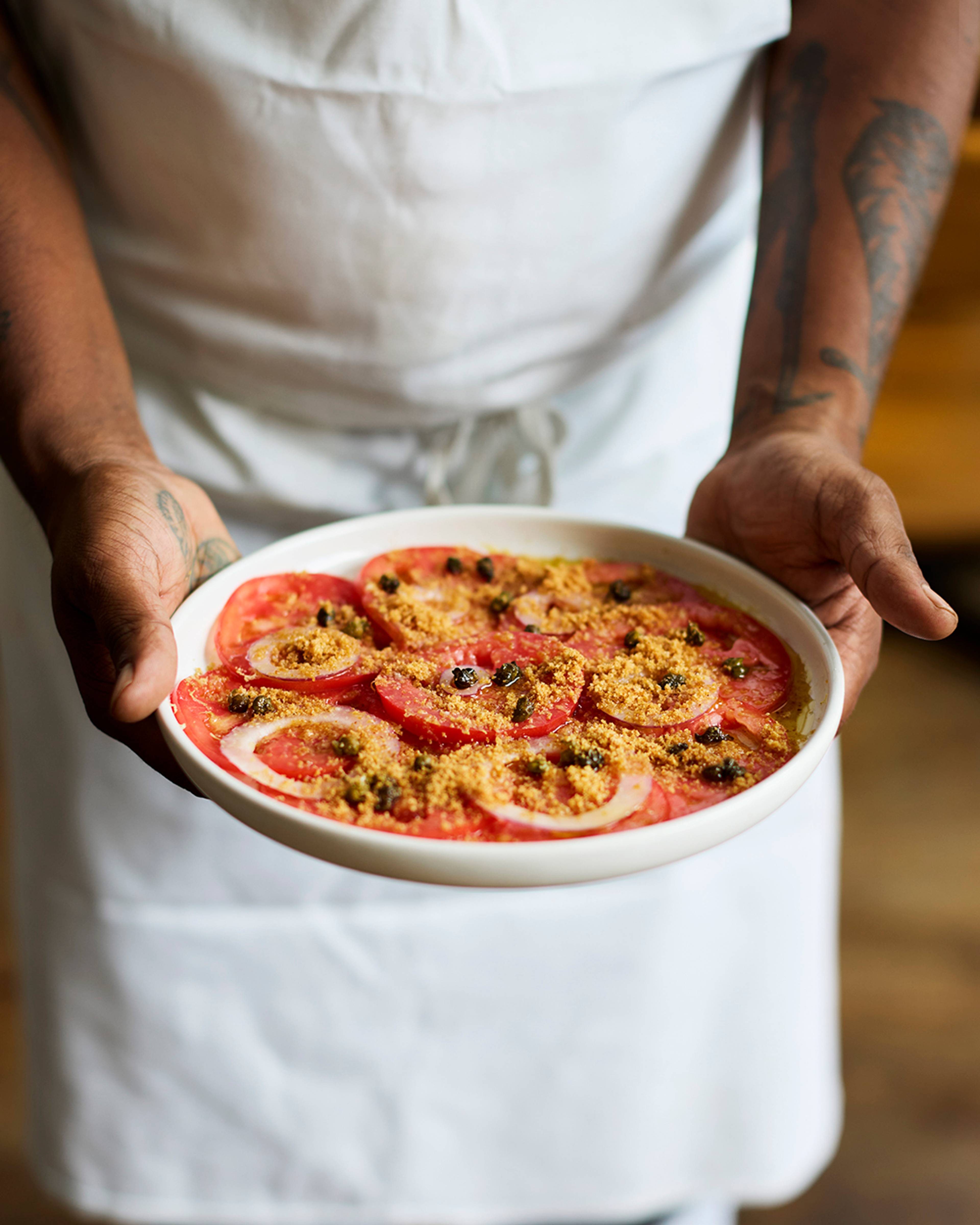
We exist to fix the food system.
People are more cut off from the origins of their food than ever. This makes flavour, nutrition and farming practices that protect the planet, almost impossible to find.
By working directly with growers, we create a more sustainable way forward for farming. By giving everyone the tools to understand the power of our food choices, we empower everybody to become drivers of change.
Now is the time for action. Join the food system revolution.

Go beyond four seasons
Each fruit and vegetable has its own season, with subtle shifts which happen every day. Follow their microseasons to unlock flavour at every stage.
WHAT’S IN SEASON?

Know where your food comes from
We know the name of the people behind everything we source. Recognise their growing artistry to find out exactly where your food comes from (and why that matters).
MEET THE GROWERS

Make your diet diverse
Our growers work with varieties chosen for quality and nutrition, not yield. By selecting their crops you keep heritage seeds in play, add to ecosystem biodiversity and preserve unique flavours.
PEAK SEASON BOX
United Kingdom
© 2026 Natoora Ltd.