AT THE TABLE WITH EMILY CHIA
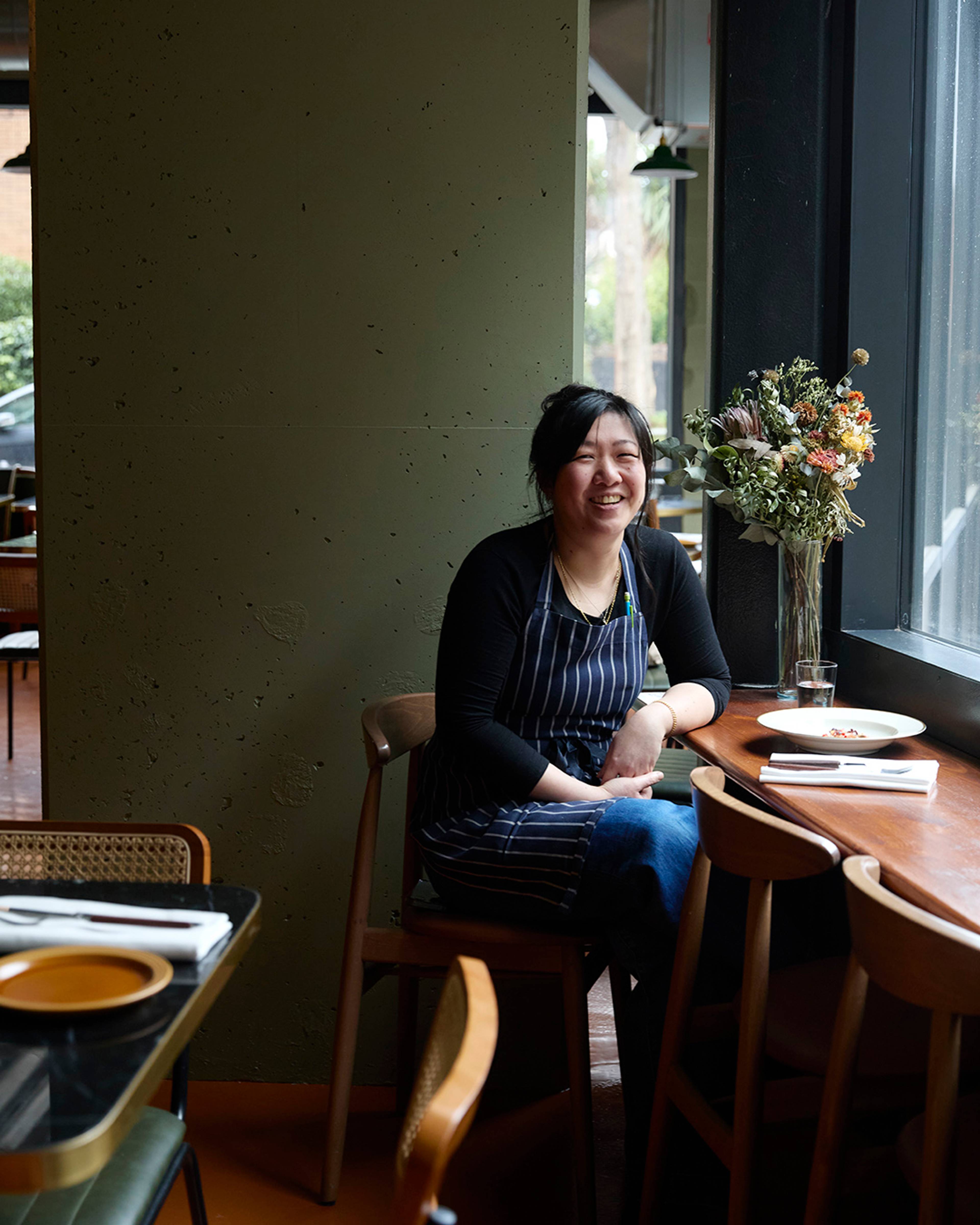
Emily Chia, together with Klaudia Weisz and Alex Keys, founded Dockley Road in October 2025. Between them, the trio have held roles at acclaimed restaurants including St John, Rochelle Canteen, Paris’ Le Grand Bain, and Montreal’s Joe Beef. Now, they’ve come together to open a new neighbourhood eatery.
“We moved in in mid-August and opened our doors around two months later,” Emily tells us. “Cutlery, plates and chairs came from vintage fairs and charity shops – it became part of our ethos and aesthetic, things that have had another life. We’ve had other lives before this too, and now we’re breathing new life into both the space and the things in it”.
Located in Bermondsey’s Spa Terminus, a hidden food hub that we share with a handful of other artisan traders, Dockley Road offers a place to sit, eat, and enjoy food and drink from within the area.
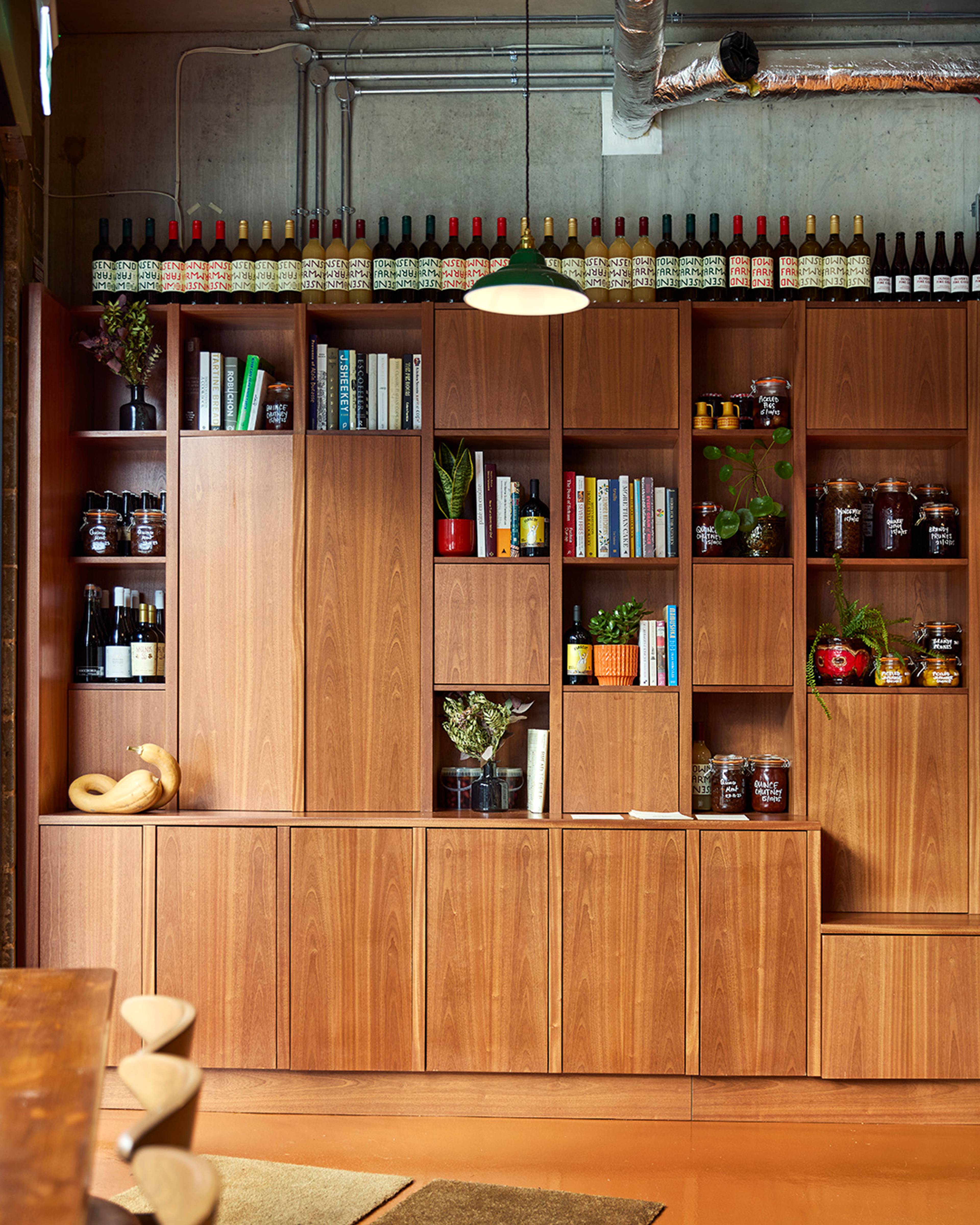
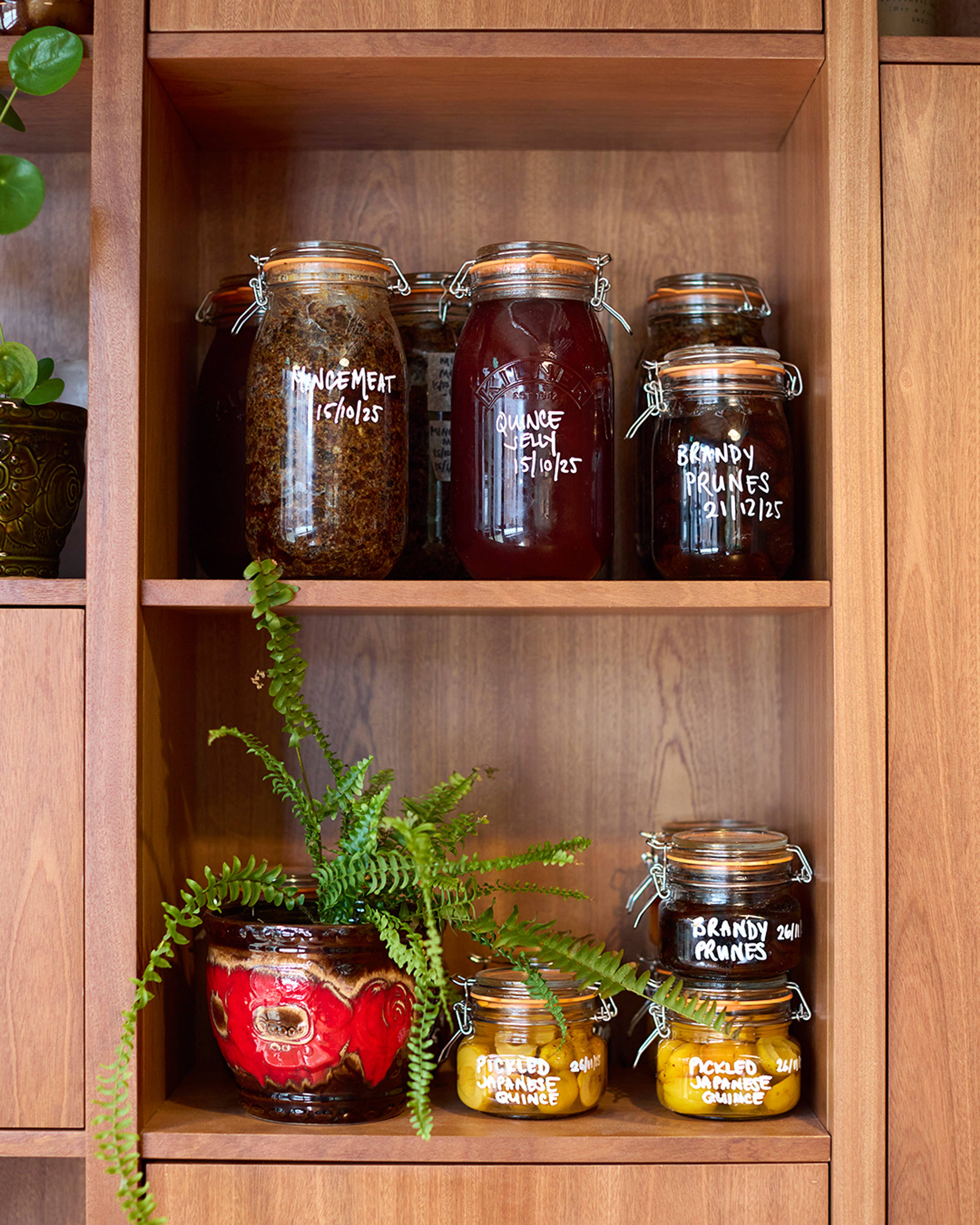
As you walk in through the glass doors, you’ll spot bottles of pale ale from The Kernel neatly tucked onto the shelves of a large ’60s-style wooden cabinet. They sit beside dried flowers, jars of preserved quince meat and stacks of cookbooks, from Fergus Henderson’s Nose to Tail Eating to The Noma Guide to Fermentation.
On the menu: a venison and pickled walnut pie made with venison and beef suet from Farmer Tom Jones Butcher just down the road, alongside seasonal vegetables such as Radicchio, Monk’s Beard, and Fennel sourced from our small-scale growers in Italy.
“When we’re thinking about ingredients or feeling stuck creatively, we think about what’s around us,” says Emily. “Farmer Tom Jones will keep aside really nice things for us because we have such a close relationship. When we pop into The Kernel, we borrow things like you’d borrow a cup of sugar from a neighbour”. It’s these relationships that make it possible to be a true neighbourhood restaurant. The kind that gives ‘local cuisine’ an added layer of depth.
"When we’re thinking about ingredients or feeling stuck creatively, we think about what’s around us..."
Speaking of the menu, Emily explains inspiration is drawn from everywhere. "There’s no box that we live in. You might have a pie with Chinese spice, or something braised with beer instead of wine, using French technique”.
The gratin dauphinois with black pepper and the bánh mì terrine are said to be two must-try dishes at the moment – equal parts classic and creative.
It’s easy to sense that the atmosphere at Dockley Road is warm. Down to earth. It shines through the food, the furnishings, the people, the stories.
In the bathroom, a wall is decorated with paper menus. It’s a souvenir collection, inspiration board and legacy gallery all in one, adding to the restaurant’s charm and community-led feel. “Alex has been collecting menus for years,” Emily recounts. “He had boxes full of them from places that inspired him.” Initially, when he started putting them up, she realised it wasn’t just an inspiration wall. It was grounding them in where they’ve come from – a nod to how their careers are shaped by what existed before them.
“We’re part of a long line of chefs, and hopefully we become one of those places people are proud to say they started at”.
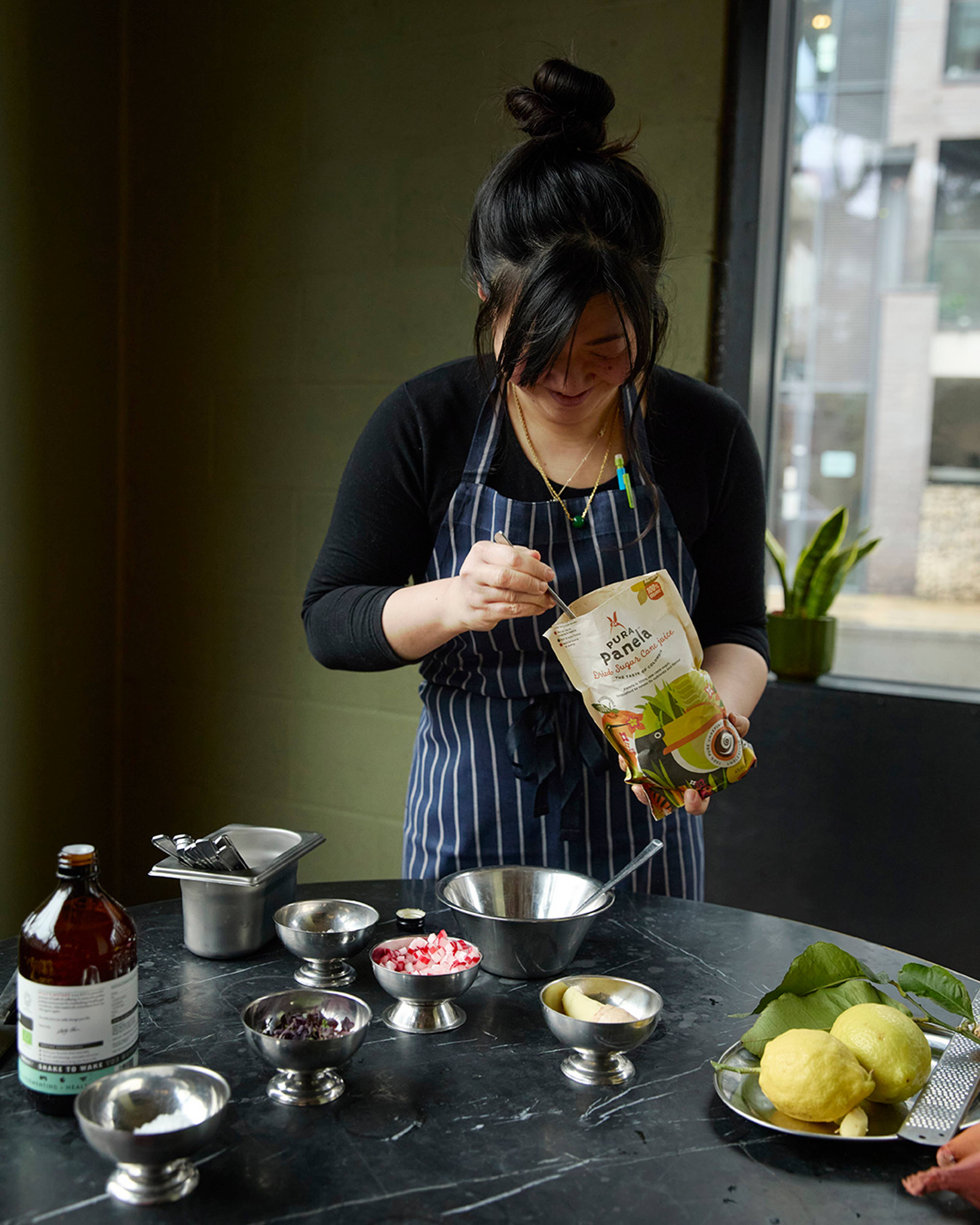
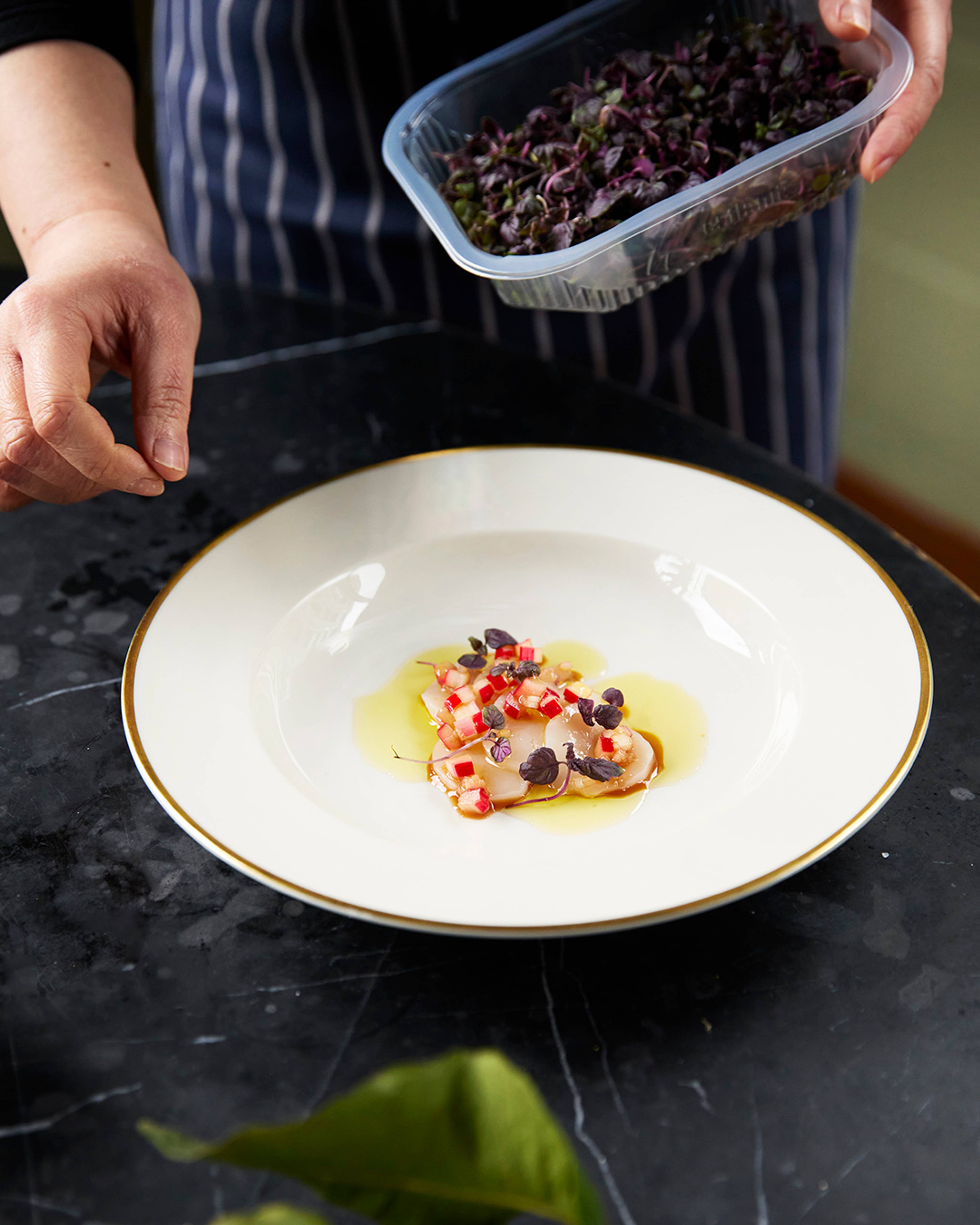
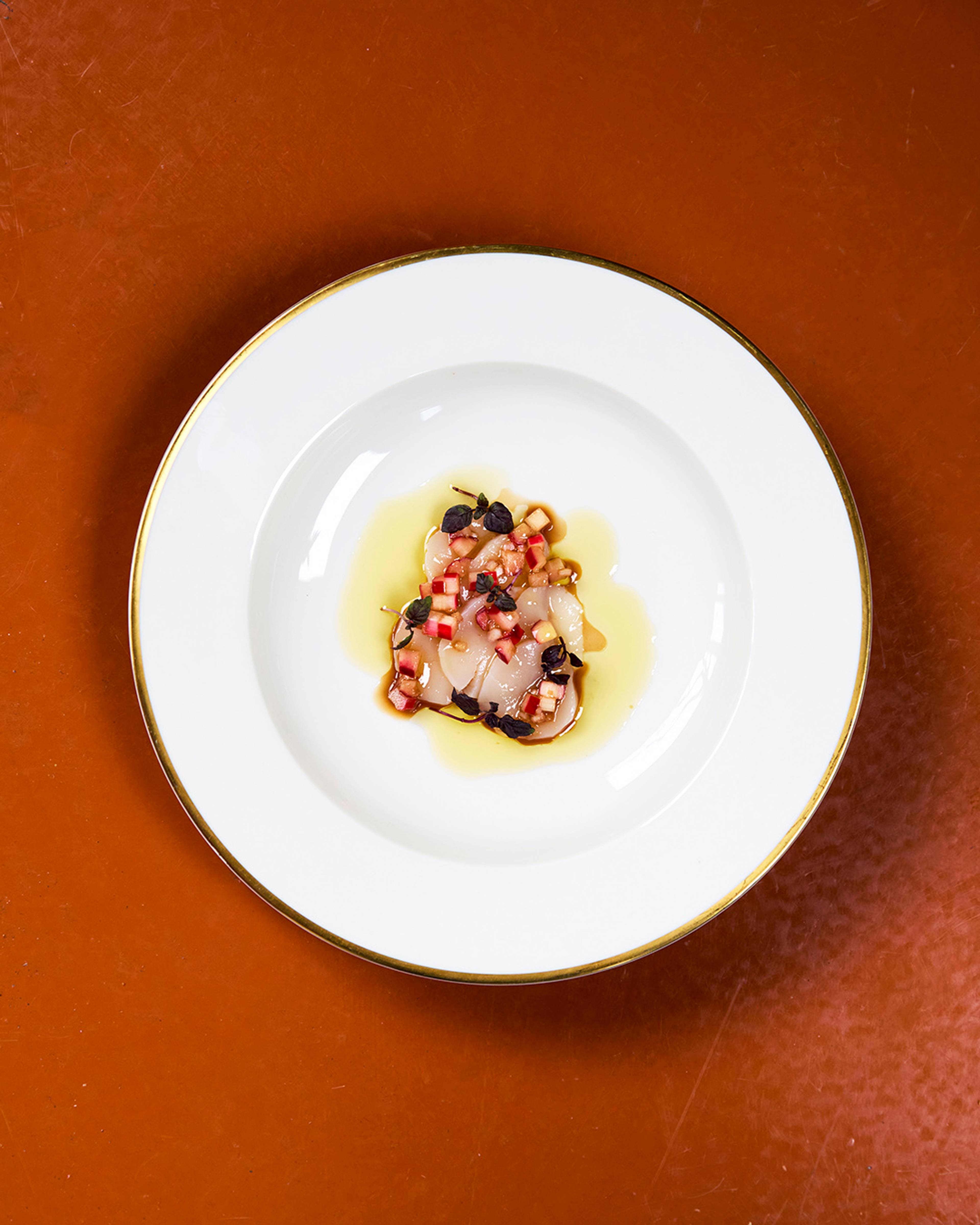
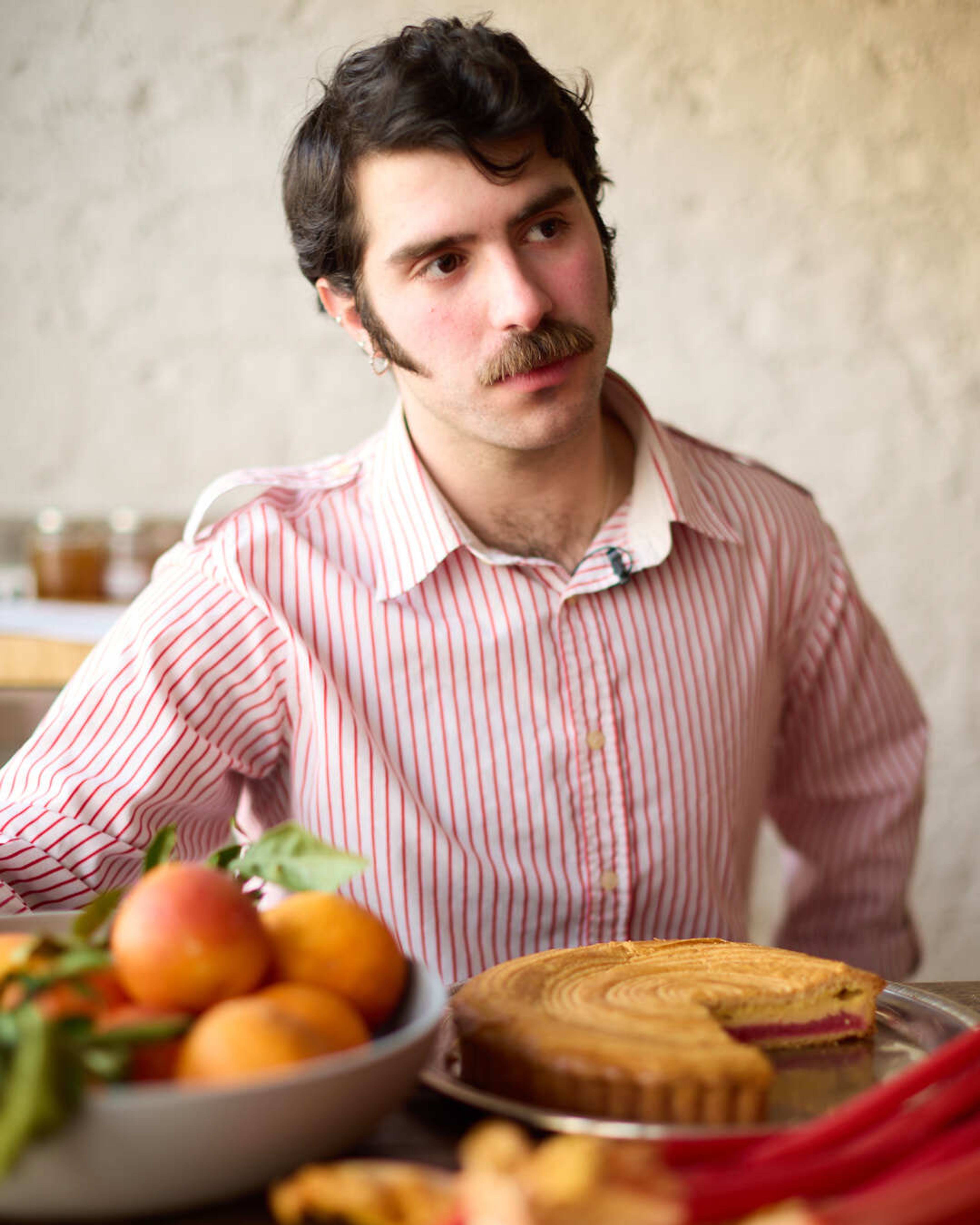
Today, Emily prepares a plate of seasonal Cured Scallops with Forced Rhubarb Mignonette – a dish she describes as an expression of “the first signs of spring,” or “a little bit of sun on a crisp winter’s day". We pull up chairs by the window and talk about her journey into cooking, the role of seasonality in her work, and the story behind opening Dockley Road with Klaudia and Alex.
Let’s start with some background about you. How did you find your way into cooking, or rather, how did cooking find you?
For as long as I can remember, I used to watch cooking shows. It wasn’t something I was interested in doing as a career, but I knew it was something I was always going to be interested in. I originally went into graphic design and documentary filmmaking because I wanted something creative and practical. When I couldn’t find the perfect job in Vancouver, where I’m from, I decided to go to a government-funded culinary programme that lasted a year, so it wasn’t a big time investment.
Out of that, some of the teachers offered me jobs. It was kind of incidental in a way – I didn’t really choose it, it kind of chose me. And it’s kept me employed all these years, in different places. I’ve been able to travel, be creative, and meet a lot of people along the way. I don’t know if I could have chosen another career path that would have allowed me to travel as much as I have and just naturally settle into a workplace and social sphere straight away.
Hospitality is so tied into being social. You build bonds very quickly, and I think that’s what’s kept me in the industry for so long.
Dockley Road opened its doors in autumn last year. What did it feel like opening your own restaurant alongside Klaudia and Alex?
Alex and I worked together more than ten years ago at St John. We were both sous chefs there at different points, and we kept in touch all these years. When people think of chefs to call for something, I’m often on that list, which is really nice. It’s great to have your contemporaries respect you and want to work with you.
I got a call about the possibility of opening a restaurant. There were a lot of times before where I’d been offered the chance to open my own place, but it never felt right. When we sat down and met Klaudia – who I’d never met before this project – it felt like the right time. All the pieces of the puzzle were coming together in the right way.
We dived straight into it, and we’re still working everything out, but that’s kind of the best way for me. If it were too pristine, it wouldn’t feel like my own. Because everything’s new for all of us, we’re not afraid to make mistakes with each other. The hospitality feels really genuine, and we’re not jaded by big investors or business pressures. That feels like a real feat, and something we can be proud of.
Was there anything in particular that inspired the décor?
That late ‘60s and ‘70s feel is something I’ve always been really drawn to. It’s mid-century, but not on the nose – mid-century can be very minimalist, and I’m a maximalist. That crosses over into the way I cook as well.
St John is very minimalist in its plating, and I fully believe in that approach. But I also come from a traditional Chinese food background, with huge, bold flavours. I live between those two worlds, and hopefully that translates onto the plates.
Bermondsey and Spa Terminus are such a special food hub. What’s it like being part of that ecosystem?
The amount of support we’ve had has been extraordinary. We couldn’t feel more at home. It feels like we’ve been here for years.
Dockley Road is very much a neighbourhood restaurant. How do you foster that sense of community?
It’s about recreating something that can feel rare in London. I worked in Margate before, and the restaurant community there is very tight-knit. If you need something, someone has your back. To recreate that atmosphere here feels like a big deal.
How central is seasonality to the way you cook?
It’s really central to what we’re doing at Dockley Road. Our suppliers work seasonally, so it only makes sense for us to do the same. You’re only going to get the best flavour when ingredients are in season. There’s no other way.
When you’re not cooking, what brings you joy?
I watch a lot of films. In another life, I’d love to continue being a documentary filmmaker. Wes Anderson films are always favourites – the colour, warmth, and attention to detail all connect with what I love about restaurants too.
What’s inspiring you right now?
Film director Chloé Zhao is a huge inspiration. She works in an industry that under-represents women and women of colour, and seeing the progression of her career and the recognition of her talent is incredibly inspiring. That level of representation is still lacking in so many industries.
Can you recall a meal you’ll never forget?
One of my favourite dishes of all time was at Asador Etxebarri in the Basque country near San Sébastien. At the end of the meal, they served a reduced milk ice cream with beetroot juice. The plate came out this deep purple, with the ice cream perfectly white in the middle.
You know it should work, but it’s only when you taste it that you realise how brilliant and simple it is. It was a revelation – that something doesn’t need to be categorised as sweet or savoury. At the time, I’d never seen anything like it. They were really ahead of the curve.
Stories
Voir tout
We exist to fix the food system.
People are more cut off from the origins of their food than ever. This makes flavour, nutrition and farming practices that protect the planet, almost impossible to find.
By working directly with growers, we create a more sustainable way forward for farming. By giving everyone the tools to understand the power of our food choices, we empower everybody to become drivers of change.
Now is the time for action. Join the food system revolution.

Go beyond four seasons
Each fruit and vegetable has its own season, with subtle shifts which happen every day. Follow their microseasons to unlock flavour at every stage.
WHAT’S IN SEASON?

Know where your food comes from
We know the name of the people behind everything we source. Recognise their growing artistry to find out exactly where your food comes from (and why that matters).
MEET THE GROWERS

Make your diet diverse
Our growers work with varieties chosen for quality and nutrition, not yield. By selecting their crops you keep heritage seeds in play, add to ecosystem biodiversity and preserve unique flavours.
PEAK SEASON BOX
United Kingdom
© 2026 Natoora Ltd.